Why Partner Focus and Operational Playbooks Drive Real Growth
Expert advice from Danny Porter at Coport.co and Justin Zimmerman.
Snapshot
Every partner manager recognizes: more partners equals more opportunity… on paper, but more chaos in practice. That means the difference between a partner program that hums along and one that stalls, is rarely about signing more logos. It is about how you focus, operationalize repeatable playbooks, and measure whether the activities you run with partners actually move the revenue needle.
Practically, that means deciding which partners map to specific company goals, documenting short playbooks (onboarding, event co-hosting, integration-to-resell) with clear owners and deadlines, and instrumenting those activities so they can be tracked in your CRM and dashboards.
Without these disciplines you end up with a long tail of “nothing‑yet” partners that add noise, distract your team, and hide the true sources of pipeline. With these disciplines, you can prioritize scarce resources, accelerate time‑to‑first‑lead, and compare the ROI of pilot programs, and integrations side‑by‑side.
In short, if building predictable partner‑sourced revenue is important to you, keep reading so you can see how other partner teams focus and build repeatable processes that work.
Creating focus and structure lets you scale without losing the human relationships that make partnerships valuable. -Danny Porter
Table of Contents
- Why partner focus matters
- Alignment: choose the partners that match company goals
- Launch and activation: the lifecycle that produces results
- Playbooks: operational discipline for repeatable outcomes
- Attribution and measurement: tying activities to revenue
- Dashboards and reporting: where to look and why
- Migrating existing templates and reducing switching costs
- Case study: how Lifescivery found focus
- Practical playbook examples you can implement tomorrow
- Checklist: 10 things to do this week to improve partner outcomes
- Common pitfalls and how to avoid them
- How to decide what to automate and what to keep human
- Working with consultants and ready-made templates
- Resources and trial options
- FAQs
- Conclusion
Starts with alignment: choose the partners that match company goals
Start by making alignment explicit. Ask four direct questions about every potential partner:
- Which company goal does this partner affect?
- What outcome are we asking the partner to help deliver?
- Which internal teams need to be engaged?
- What is the earliest measurable milestone of success?
Mapping partners to company goals solves two problems at once. First, it helps you prioritize where to spend your limited time. Second, it gives you a built-in way to demonstrate value to marketing, sales, and executives. Instead of a vague “this partner will be helpful,” you can show a list of partners that directly influence the objectives that matter most right now.
How to do alignment practically
- Create a simple table that lists active partners and the company goal(s) they influence.
- Add a primary KPI for each partner (pipeline, closed revenue, leads, integrations enabled).
- Assign an internal owner for cross-functional coordination (marketing, product, sales).
- Run a weekly or bi-weekly review that highlights partners who should be prioritized for the next sprint.
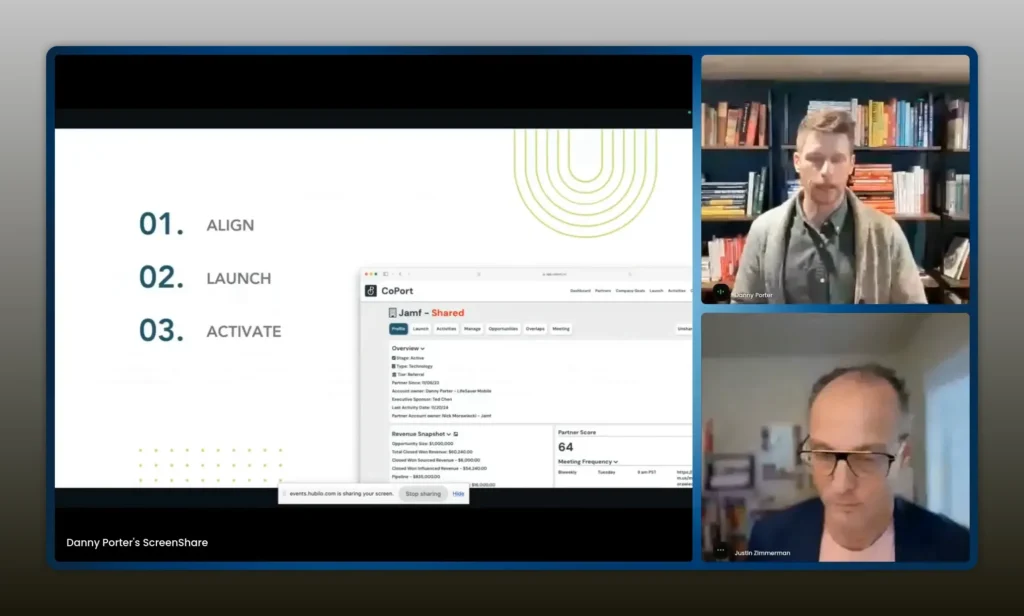
When you can slice your partner program by goal, you can see where to allocate resources next. -Danny Porter
Launch and activation: the lifecycle that produces results
Signing a partner is a milestone, not a finish line. The crucial sequence is what happens after the signature. You need a clear lifecycle that structures the launch and activation phases so both sides know the path to a productive relationship.
A practical lifecycle includes these stages: prospecting, qualification, onboarding, activation, and growth. Each stage should have visible checkpoints and a small number of non-negotiable tasks that must be completed before moving to the next stage.
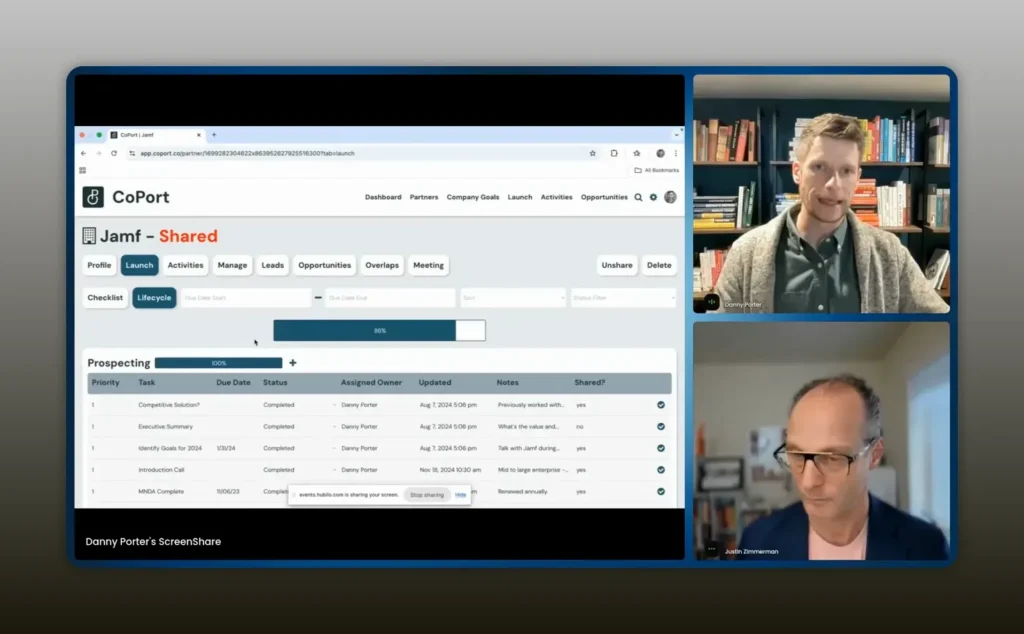
Set non-negotiable milestones during launch so mistakes happen early and cheaply, not later when rework costs more. -Danny Porter
What each lifecycle stage should include
- Prospecting: Initial fit assessment, value hypothesis, and mutual interest confirmed.
- Qualification: Account mapping, technical feasibility, and executive sponsorship checked.
- Onboarding: Access to portals, documentation, training sessions, and a shared launch plan.
- Activation: First joint activities executed (lead sharing, co-marketing content, pilot deployments).
- Growth: Scaling activities with attribution, recurring programs, and an expanded playbook.
Make these stages shareable with your partner so they know exactly where they are in the process. That transparency is also your best vetting tool: if a partner is uncommitted, that will show up quickly in the lifecycle checkpoints.
Playbooks: operational discipline for repeatable outcomes
Playbooks turn strategy into repeatable, observable work. They contain the sequence of tasks, the owner for each task, the expected outcome, timeframes, and the artifacts that prove the task was done.
Without playbooks, you rely on tribal knowledge and hope. That results in inconsistent partner experiences and unpredictable outcomes. With playbooks, you get consistency, scale, and the ability to bring anyone into a program and have them contribute quickly.
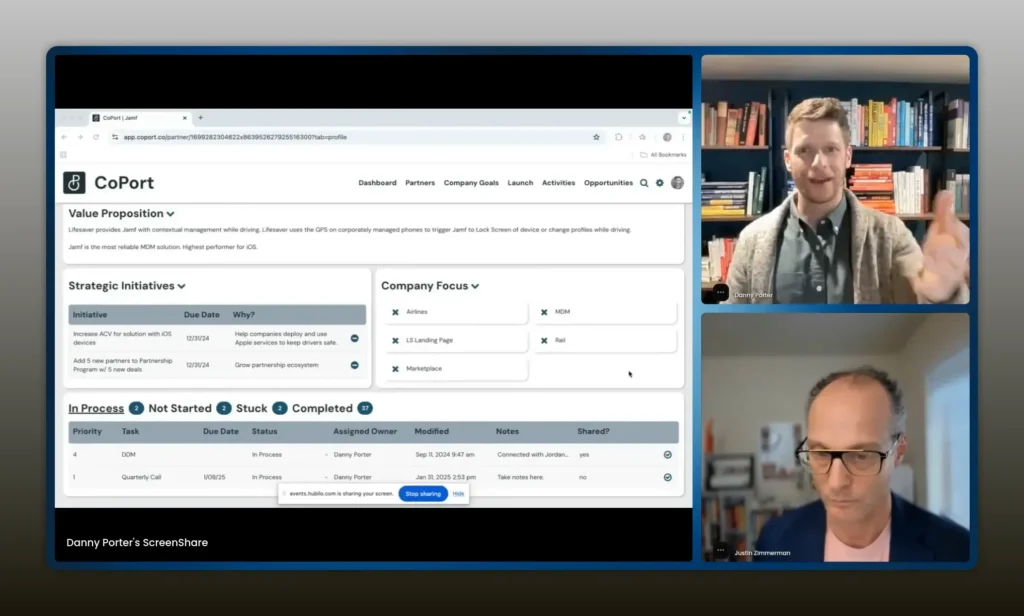
If you can’t operationalize your best playbooks, they will never deliver predictable revenue. -Justin
Designing playbooks that actually get used
- Start small: pick a single repeatable activity that already works (for example, lead referral follow-up).
- Document the exact steps, roles, and expected deliverables.
- Link tasks to an outcome metric (e.g., lead to opportunity conversion rate).
- Make the playbook shareable and executable with your partner.
- Audit results and iterate every 30 to 90 days.
Playbooks are living. As partners change, market conditions shift, and new tactics emerge, update them. Your goal is to create templates that are easy to copy, reuse, and improve.
Attribution and measurement: tying activities to revenue
One of the hardest problems in partnerships is proving that the work you do together actually contributed to company goals. You need to connect partner activities to your CRM or other source-of-truth systems so you can attribute revenue and pipeline to particular partner actions.
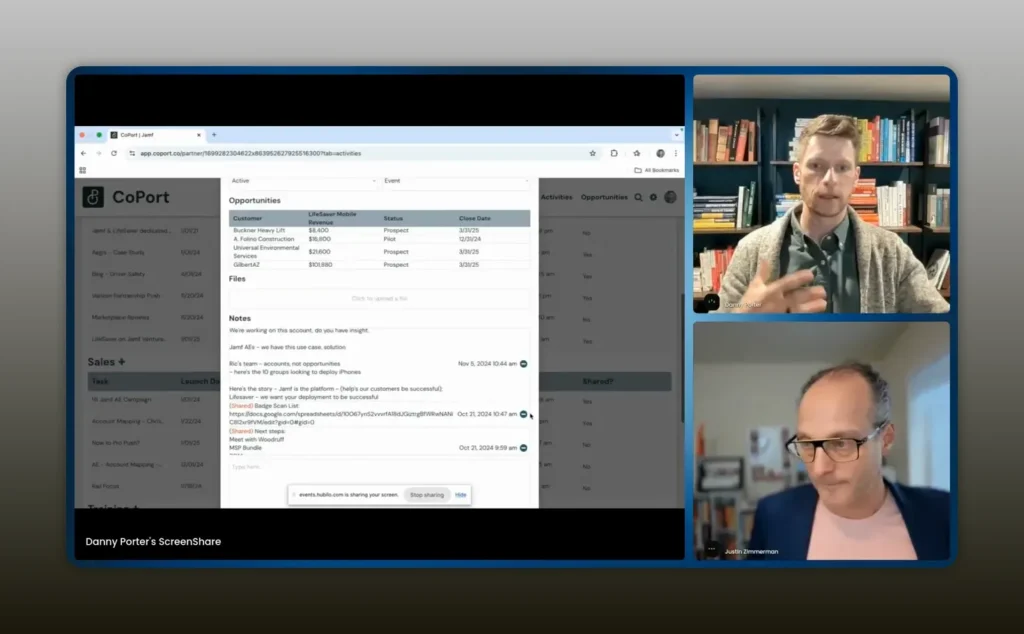
When you tie activities like events back to revenue, you stop guessing and start making strategic investment decisions. -Danny Porter
Practical attribution steps
- Decide on the attribution model you will use for partner-sourced and partner-influenced deals (first-touch, multi-touch, influence-based).
- Tag opportunities in your CRM with partner IDs and activity markers.
- Track the activities associated with those partner tags (e.g., event co-host, demo co-run, joint campaign).
- Report on both short-term impact (leads, pipeline) and long-term impact (closed revenue, churn differences).
Attribution lets you compare investments across partner activities. For example, if events produce little revenue while pilot integrations generate high conversion, you can reallocate budget and effort accordingly.
Dashboards and reporting: where to look and why
Dashboards give you a single pane of glass for partner status and pipeline. When dashboards are designed well, they answer three questions at a glance:
- Which partners are progressing along the lifecycle and which are stalled?
- Which activities are generating measurable pipeline or revenue?
- Where should you request additional resources or pull back?
Key dashboard metrics to include
- Number of partners by lifecycle stage
- Pipeline attributed to partners (by stage and by quarter)
- Revenue closed by partner
- Activity completion rates for playbooks
- Time-to-first-lead or time-to-first-opportunity after onboarding
Use filters to answer targeted questions, such as “Which partners are driving a specific company goal?” or “Which region needs more enablement resources?” Dashboards become the neutral ground for prioritization discussions with sales, product, and marketing.
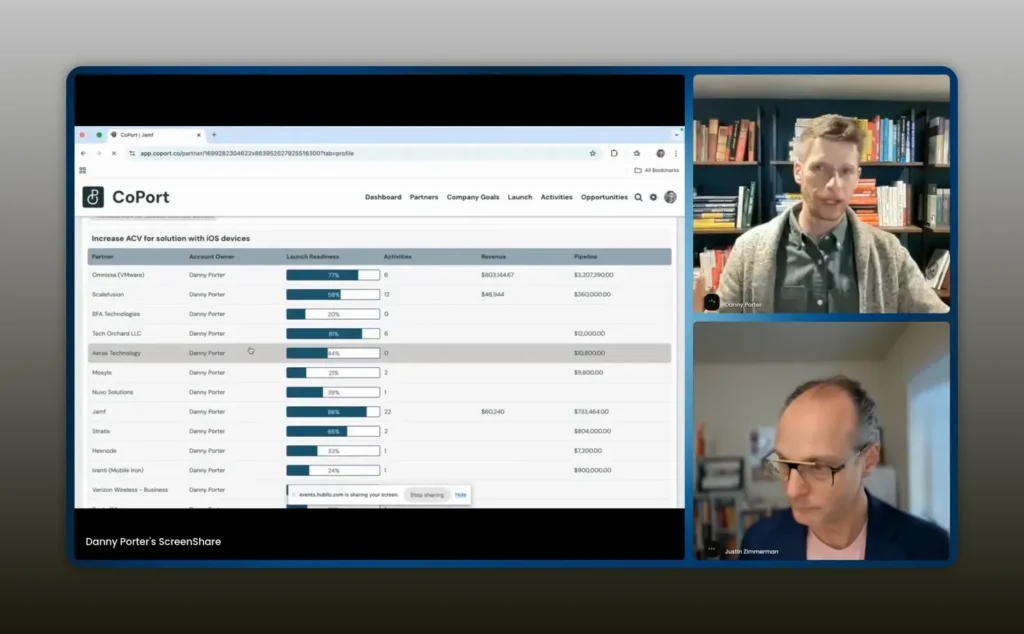
Good dashboards don’t just show activity. They show the returns you get for activity. -Justin
Migrating existing templates and reducing switching costs
Migration reluctance is real. Many teams already manage partner activities in Jira, Asana, Monday, or a collection of spreadsheets. The switching costs can be a major barrier even when you know a better system exists.
How to migrate with minimal friction
- Inventory your current playbooks and templates across tools.
- Decide which playbooks are core and which are experimental.
- Map existing tasks and fields to the new template structure.
- Import or recreate high-priority playbooks first, keeping others archived for later.
- Validate imports with a small pilot of real partners before full rollout.
If you work with external consultants, ask them to map your Jira or Asana workflows into the new platform so you can start with what you already know. That lowers resistance and speeds up the time to value.
Case study: how Lifesaver found focus
Livesaver was typical of many growing partner programs: a long list of relationships, scattered activities, and mixed results. The turning point came when they applied a focused lifecycle, clear playbooks, and attribution that tied partner activities to revenue.
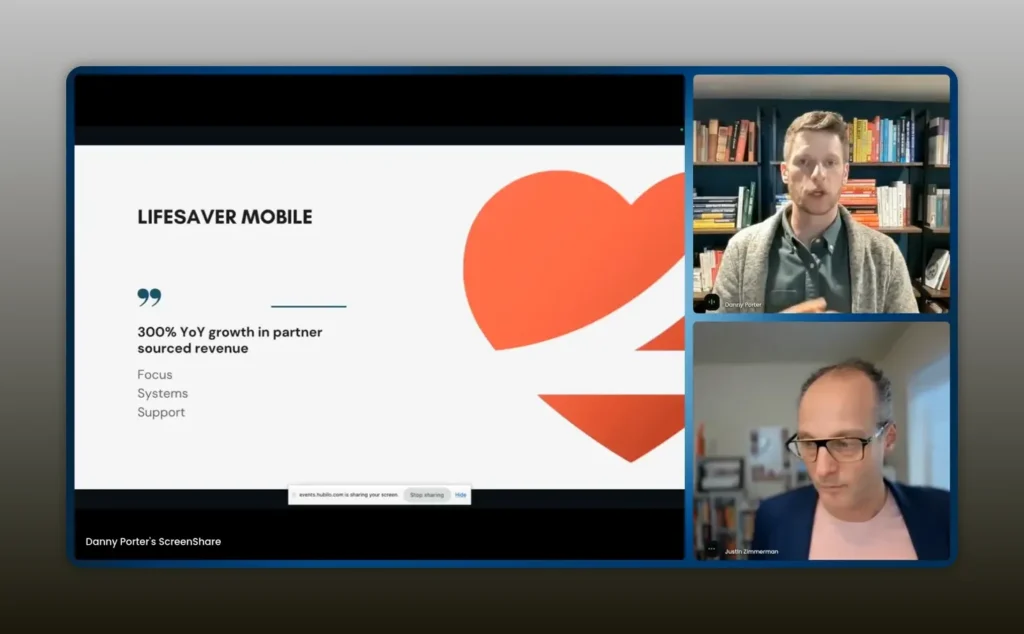
Applying discipline to the partnership process unlocked the revenue that was already hiding in plain sight. -Danny Porter
What changed for Lifesaver
- They mapped partners to specific company objectives and stopped trying to treat every partner the same.
- They implemented a small set of playbooks for onboarding and first-activity execution.
- They connected partner activities to opportunities in their CRM and began reporting pipeline by partner and by activity.
- They used those reports to double down on high-impact initiatives and sunset low-return activities.
The result was not magic. It was a predictable, repeatable process that turned scattered effort into measurable growth.
Practical playbook examples you can implement tomorrow
Here are three compact playbooks you can start using immediately. Each playbook is short, repeatable, and designed to produce measurable outcomes.
Playbook A: Partner Onboarding (15 days)
- Day 1: Intro call with sponsor and technical lead. Share program goals and timelines.
- Day 3: Account mapping exercise completed and uploaded to shared workspace.
- Day 5: Portal access provided and first training module assigned.
- Day 10: Joint launch plan drafted (first activities and owner assignments).
- Day 15: First co-execution check-in and measurement setup (CRM tagging and dashboards).
Playbook B: Event Co-hosting (6-8 weeks)
- 8 weeks out: Agree on target outcomes and audience size.
- 6 weeks out: Confirm speakers, booth logistics, and content.
- 4 weeks out: Launch joint promotion and shared registration tracking.
- Post-event week: Tag leads in CRM with partner ID and run follow-up cadence.
- 6 weeks later: Report on lead-to-opportunity conversions and decide on next steps.
Playbook C: Integration-to-Resell (90 days)
- Week 1-2: Confirm technical feasibility and product-level sponsorship.
- Week 3-4: Build minimal integration and documentation for partners.
- Week 6: Run a closed beta with 1-2 mutual customers and collect success metrics.
- Week 8-12: Create a go-to-market bundle and sales enablement pack.
- Quarterly: Measure revenue and adoption; iterate on promotion and packaging.
Checklist: 10 things to do this week to improve partner outcomes
- Document the top three company goals for the next 12 months and map existing partners to those goals.
- Create a simple lifecycle with 4 to 6 stages and define one required task per stage.
- Pick one playbook to standardize and export it from your current tool into the new system.
- Tag all active opportunities in your CRM with partner identifiers.
- Run a quick dashboard that shows partners by lifecycle stage and pipeline contribution.
- Schedule a 30-minute alignment meeting with the top partner owner and cross-functional stakeholders.
- Choose one partner activity to attribute (for example, a co-hosted event) and measure it end-to-end.
- Archive or de-prioritize partners who are “not-yet” and agree on re-evaluation milestones.
- Ask a consultant or internal ops person to map your top playbooks from Jira or Asana into the new platform.
- Run a 30-day pilot with one partner using the new lifecycle and playbook; measure time-to-first-lead.
Common pitfalls and how to avoid them
- Pitfall: Treating all partners the same. Fix: Use alignment to prioritize.
- Pitfall: Having playbooks that live only in people’s heads. Fix: Document and operationalize them.
- Pitfall: Focusing on activity instead of outcomes. Fix: Connect activity to pipeline or revenue metrics.
- Pitfall: Ignoring switching costs. Fix: Migrate high-value templates first and bring consultants into the mapping process.
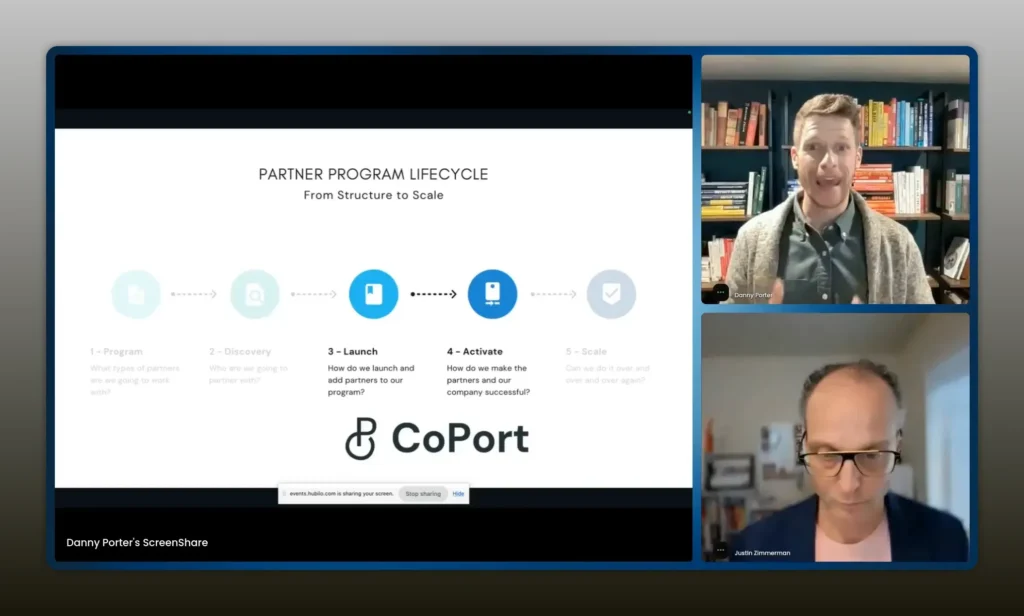
If you treat playbooks as templates, not one-off projects, you build a scalable program. -Danny Porter
How to decide what to automate and what to keep human
Automation speeds repeatable tasks but cannot replace human judgment in relationship building. Use this rule of thumb:
- Automate status updates, reminders, and data synchronization with your CRM.
- Humanize initial outreach, strategic planning, and escalation conversations.
- Automate measurement and reporting so humans can spend time on strategy and coaching.
Automation should reduce administrative overhead so you have more space for the high-value partner conversations that win deals and build trust.
Working with consultants and ready-made templates
Consultants can accelerate your launch by providing tested playbooks and helping map your existing workflows into a new system. When working with consultants, look for two things:
- Templates built from actioned outcomes, not just theory
- Experience migrating playbooks from common tools like Jira, Asana, and Monday
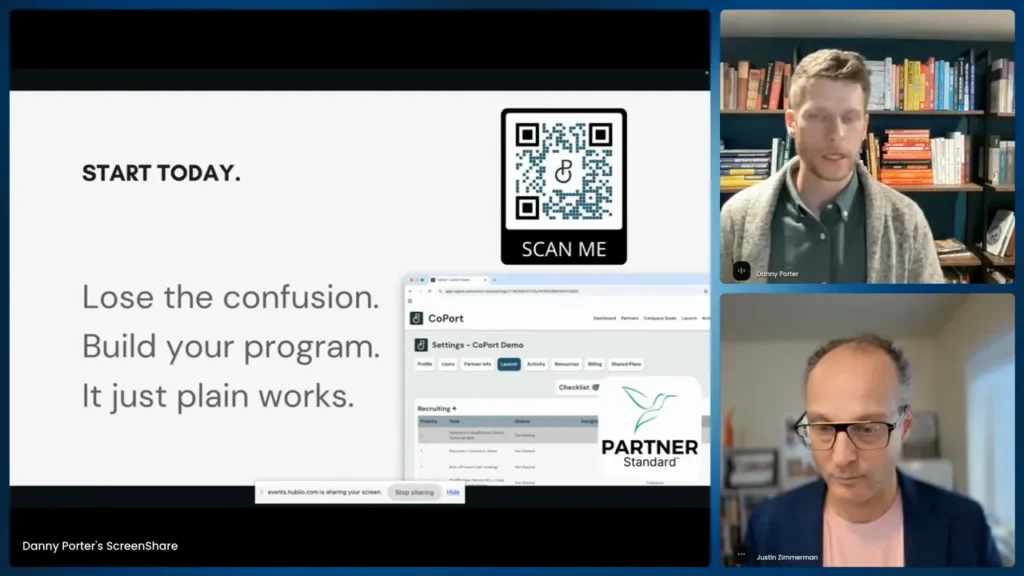
Try Coport before full-scale migration. Start with a proven template and adapt it to your program. It is faster and less risky. -Danny Porter
FAQs
How do I prioritize which partners to focus on when my list is long?
Prioritize partners by mapping each partner to your top company goals, estimating the partner’s potential impact, and evaluating the readiness to execute (technical integrations, marketing capacity, and executive sponsorship). Focus on partners that score high in both potential impact and readiness.
What are the essential elements of a partner playbook?
A partner playbook should include the sequence of tasks, assigned owners, measurable outcomes, required artifacts, and timeframes. It should be short, repeatable, and tied to a specific business outcome such as lead generation, pipeline creation, or product adoption.
How do I prove that partner activities drive revenue?
Connect partner activities to your CRM by tagging opportunities with partner IDs and activity markers. Choose an attribution model, track activity-to-opportunity conversion, and maintain dashboards that show pipeline and closed revenue by partner and by activity. This creates the evidence you need for strategic decisions.
Can I bring my Jira, Asana, or Monday templates into a new partner management platform?
Yes. Start by identifying your core playbooks, map fields and tasks to the new platform, and import the highest-priority templates first. Work with a migration specialist if available to reduce friction and preserve the structure you already use.
How much process is too much process for partners?
Process becomes a problem when it adds friction without value. Keep playbooks short and outcome-focused, and make the process optional where appropriate. Use the lifecycle checkpoints to enforce only the tasks that materially increase the chance of success.
Conclusion
The most successful partner programs are not those with the most partners. They are the ones that create focus, document the repeatable plays that produce outcomes, and measure the impact of those plays. By aligning partners to company goals, operationalizing playbooks, attributing activity to revenue, and using dashboards to guide prioritization, you make partnerships predictable and scalable.
Start small: map your top partners to the goals that matter, standardize one onboarding playbook, and tag your next 10 CRM opportunities with partner IDs. The momentum you build from a few focused wins will give you the credibility and resources to scale more confidently.