Nearbound 101: How Trust & Marketing Drive Partner-Sourced Revenue

Expert advice from Jared Fuller, Isaac Moorehouse, and Elliot Haralambous.
Introduction
You probably noticed we’re living through a shift in go-to-market. For years, companies built great products and then tried to buy attention through paid channels, cold outreach, or brute force sales motions. That approach is breaking down. B2B buyers no longer respond to anonymous ads and random cold emails. They trust people and communities they already know. That trust is now the scarce resource that determines who wins in distribution.
This matters because partnerships—when done right—aren’t just another channel. Partnerships create trust-led distribution that scales far beyond ad spend. When you combine partner-first marketing with deliberate customer advocacy, media-minded content, and modern AI tooling, you can build predictable partner-sourced revenue and durable competitive advantage.
If you agree with even a fraction of this sentiment, this article will help you understand how to leverage trust-led GTM.
I want you to think about trust the way you think about data—it’s the new currency of distribution. -Jared Fuller
Table of Contents
- What Nearbound means and why it matters
- The core principles: trust, media, and watering holes
- Start with marketing not sales
- OpenEd case study: partner-led growth in practice
- Customer advocacy and ambassador programs
- Designing your Nearbound playbook
- Measuring partner-sourced revenue and pipeline
- How to organize partner motions across teams
- Tools and AI: making partner signals actionable
- Practical checklist to launch or level up Nearbound
- Common pitfalls and how to avoid them
- FAQs
- Conclusion
What Nearbound means and why it matters
Nearbound reframes go-to-market. Instead of thinking only in terms of outbound (targeting) or inbound (attracting), Nearbound is about surrounding the buyer with messages and endorsements that already trust. It treats partners, customers, and creators as the channels through which you reach your ideal buyers.
Nearbound shifts the question from “How do we sell to X?” to “Who does X already trust and how can we participate in those relationships?” The tactics are varied—co-marketing with agencies, highlighting curriculum partners in education settings, leveraging community advocates—but the logic is the same: buyers act on recommendations from people and places they know.

Partner sourced revenue is not a nice-to-have KPI; it’s frequently the number people are held accountable for. -Justin Zimmerman
The core principles: trust, media, and watering holes
There are three levers that make Nearbound work across industries.
- Trust is the new data. As Jared puts it, data used to be the most important commodity. Now the ability to transfer trust is the differentiator. If someone you trust tells you to try something, you listen. That’s what makes partner and community endorsements powerful.
- Be a media company. Treat your organization like a platform that elevates other voices. Produce content that speaks to the market’s problems, not your product. Platforming partners and customers becomes a force multiplier for distribution.
- Find the watering holes. Go where your buyers already gather—LinkedIn, specialized Slack groups, Facebook communities, WhatsApp threads, local associations. Listening in those places gives you real-time signals and entry points for authentic conversations.

Language is a network effect. Call the motion Nearbound and your audience instantly understands the new play. -Isaac Moorehouse
Start with marketing not sales
One of the biggest mistakes organizations make is building partner programs purely as a sales motion. When people think co-sell first, they create friction. Sales-led partner programs expect closed deals as a first-order output; that makes recruitment and enablement requirements unrealistic.
Instead, design partner initiatives as marketing-led programs that generate warm conversations for sales. Marketing has permission-less actions you can start today: featuring partners in newsletters, interviewing them on podcasts, promoting their stories, and seeding new markets through partner audiences. Those activities create warm leads, trust transfer, and shared narratives that sales can later convert.

Get your CMO on the phone before you go recruit 100 partners. Start with co-marketing because partners already own audiences you need. -Jared Fuller
OpenEd case study: partner-led growth in practice
OpenEd is a practical demonstration of Nearbound at scale. The company acquired a 15-year-old education platform and then used partner-led principles to expand aggressively into new states. The product is a platform offering curriculum choices, so the growth motion depends heavily on curriculum providers and parents who act as advocates.
Here are the mechanisms OpenEd used and the results those mechanisms drove.
Launch strategy mapped to territory thinking
Treat state launches like territory expansion in B2B. You do not have a database in the new state. Find partners that do—curriculum providers, local creators, community learning platforms—and market with them. Rather than stealing lists or cold emailing, OpenEd co-marketed with creators who had existing audiences, such as marketplaces that sell classes. Those partners promoted OpenEd in exchange for increased awareness and incremental purchases from their communities.
Platform not product
OpenEd positioned itself as a platform that enables choices. Parents join because they can personalize education for their children, and partners join because OpenEd amplifies their reach. This multiplies adoption: as partners share OpenEd with their audiences, parents engage, purchase partner offerings, and become the best advocates for the program.

We launched Facebook groups in every new state. Parent-to-parent trust is the most powerful acquisition channel we have. -Isaac Moorehouse
Customer advocacy and ambassador programs
Customer advocates are the ultimate Nearbound asset. They create authentic social proof, answer skeptical questions, and amplify your message within the contexts buyers trust most.
Steps to create an effective ambassador program:
- Start with your happiest customers. Interview 20 to 30 of your most enthusiastic users to learn why they love you.
- Ask who they trust. Invite those customers to speak in local groups, join applicant communities, or be on a podcast.
- Keep it simple and compensated. Offer modest part-time compensation or perks that make advocacy easy and worthwhile. The goal is five hours a week of honest, volunteer-style advocacy from people who truly care.
- Place advocates in the watering holes. Put them where your prospects already gather—Facebook groups, Slack channels, community newsletters—so advocacy lands in context.
- Measure actual impact. Track referrals, applications, or pipeline activities that are directly attributable to advocate interactions.
Hire your happiest customers as ambassadors. They’re the only people who will answer tough questions honestly in front of strangers. -Jared Fuller
Designing your Nearbound playbook
You need a simple framework that everyone can use. Nearbound is not a program for partners only. It is an approach that all functions can adopt. Use the following playbook as a starting point:
- Who: Define the exact buyer persona and the outcomes you want them to achieve.
- Who do they trust: Map the vendors, creators, community leaders, and existing customers connected to that buyer persona.
- Where they gather: Identify the watering holes for that persona—LinkedIn vertical groups, WhatsApp communities, local meetups, trade associations, forums.
- How to engage: Decide whether you will lead with media (podcasts, newsletters, interviews), co-marketing (content swaps, joint webinars), or customer referral programs.
- Activation path: Start permissionless: feature partners in your media before you ask for anything formal. Use those early wins to build trust that leads to deeper co-marketing and eventually co-selling.
- Measure: Track warm conversation metrics, partner-sourced pipeline, customer-originated referrals, and trust signals (frequency of interactions, SMS-level engagement, shared customer mentions).
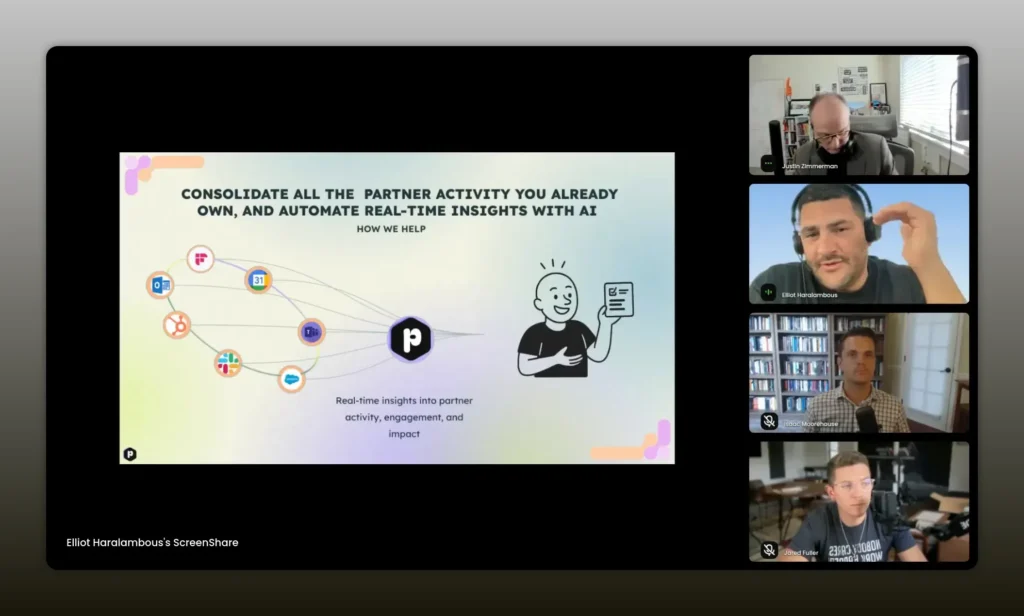
You need a single source of truth for partner interactions. The AI era finally gives you the ability to find who actually cares and why. -Elliot Haralambous
Measuring partner-sourced revenue and pipeline
Partner-sourced revenue is the metric people increasingly get measured on, but it is often the lagging indicator. Start by measuring leading indicators that predict partner-sourced revenue:
- Warm conversations created: Number of co-marketing touchpoints, joint webinars hosted, or partner-audience promotions.
- Customer introductions: How many customers did partners directly introduce to you, whether through events, social posts, or messaging groups.
- Advocate engagements: Time spent by ambassadors answering questions, participating in panels, or sharing referrals.
- Co-marketing conversions: Landing page conversion rates from partner campaigns, vs baseline conversions.
- Sales conversions from warm leads: Pipeline velocity and win rates for partner-warmed leads versus cold leads.
Use these metrics to build the narrative that earns budget. When you can show that co-marketing drives higher-quality conversations and that advocates materially raise conversion rates, CROs and CMOs will fund expanded Nearbound programs.

Start with pipeline metrics and attribute upstream to marketing activities. Sales alone will not scale partner-sourced revenue. -Jared Fuller
How to organize partner motions across teams
Nearbound is cross-functional. You cannot silo partners in a single partnership team. Marketing, customer success, sales, and product must all share responsibility for partner outcomes.
Practical structure options:
- Guild model: Keep a central partnerships coordinator, but embed partner goals into each functional team. Marketing manages co-marketing, CS manages advocates, sales handles co-selling, product owns integrations.
- Media-first hub: Build a content and media team that acts as the platform for partner voices. This team can seed credibility before formal partner agreements exist.
- Ambassador ops: Run an ambassador program inside customer success but coordinate with marketing on amplification and with sales on referrals.
The key is to remove handoffs. If a partner story starts in marketing, make sure sales and CS can use it immediately to nurture deals and onboard customers.

Partnerships cannot be a side-hustle in your org chart. Nearbound requires a collaborative operating model. -Isaac Moorehouse
Tools and AI: making partner signals actionable
As partner programs scale, you need systems that surface both activity and intent, like Perser.ai. Raw spreadsheets and one-off notes do not work. Modern tools can consolidate calendar, email, call transcripts, and CRM data to tell you which partners are showing real propensity to co-sell.
What to look for in tooling:
- Automated partner enrichment from calendars and email threads
- Call transcription analysis to surface sentiment and mutual action items
- Single-pane health dashboards that combine activity, intent, and outcomes
- Searchable partner conversations that reveal which customers were discussed
Elliot from Perser.ai mentioned, “when you combine these inputs with AI, you can build a heat map of your partner portfolio”. This lets you answer questions like: which partners are actually selling with us, which ones need more co-marketing, and which ones are at risk.
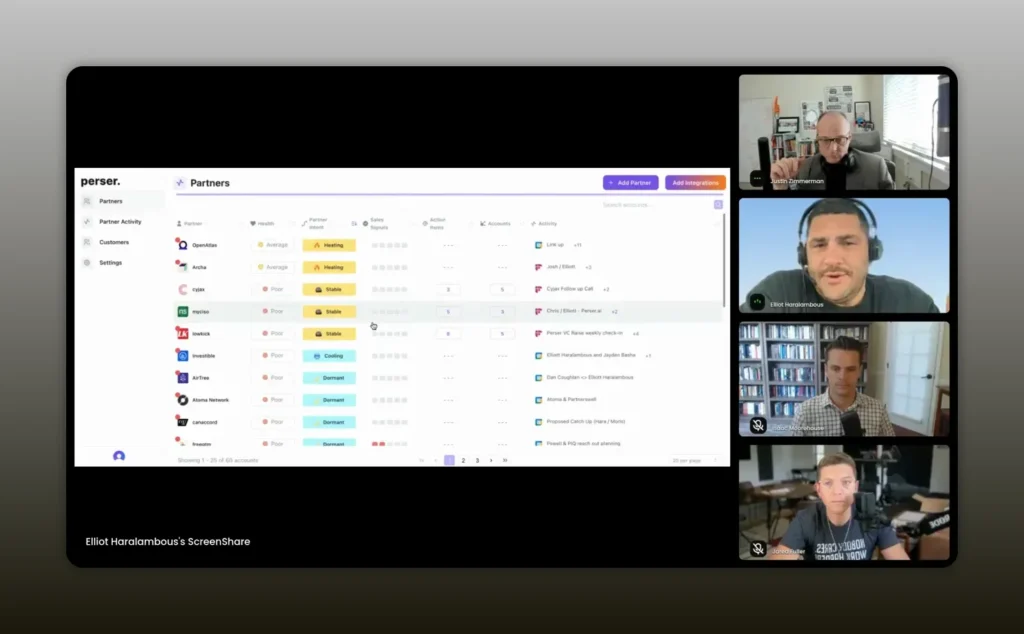
AI turns partner conversations into a heat map of intent — showing who truly cares and where to invest human time. -Elliot Haralambou
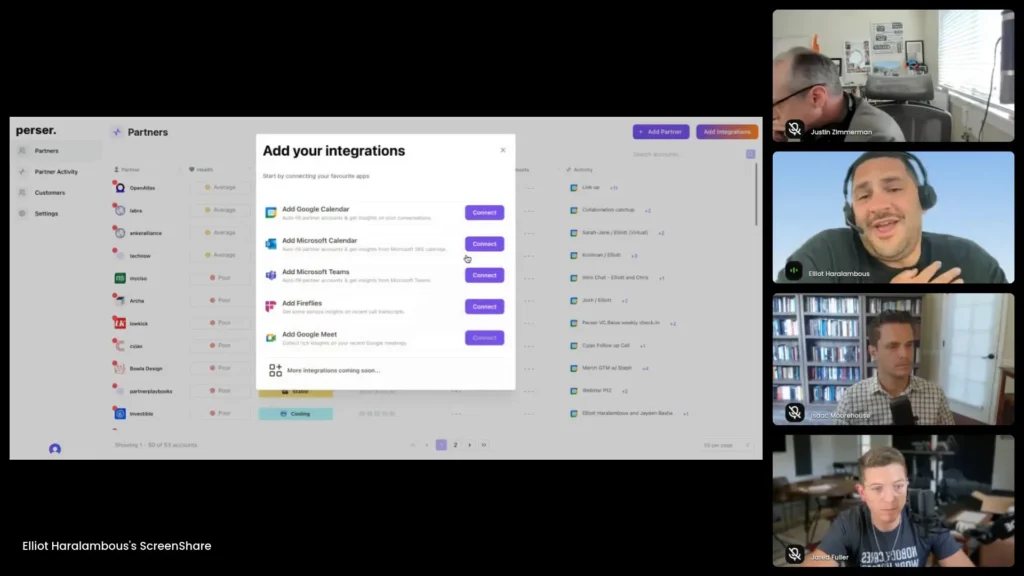
Adding integrations is the fastest way to surface partner signals — every connection turns conversations into actionable opportunities. -Elliot Haralambous
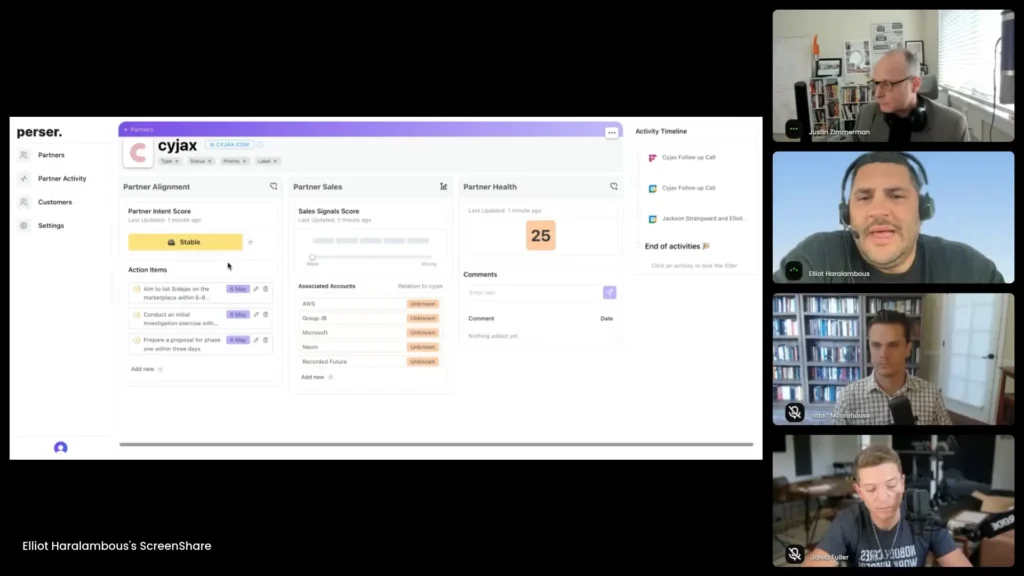
Partner health score should be the signal that tells you where to invest human time — not a vanity metric. -Elliot Haralambous
Practical checklist to launch Nearbound
- Identify target buyer persona and map who they trust.
- Audit existing customers and pick 20 to 30 advocates to interview.
- Create a media calendar that platforms partner voices—newsletter, podcast, case studies.
- Run permissionless co-marketing experiments: feature partners before asking for anything in return.
- Launch warming communities for new markets (local Facebook groups, Slack channels) and invite advocates.
- Implement a partner signal stack: calendar, email, call transcripts, CRM syncs.
- Bring in AI tools to surface partner intent and conversation-derived opportunities.
- Create a cross-functional owners list so marketing, CS, and sales all know their responsibilities.
- Track leading indicators and build a simple dashboard that ties activities to pipeline impact.
- Iterate every 90 days based on what partner types and content formats perform best.
Common pitfalls and how to avoid them
- Starting with sales-only goals: This makes programs brittle. Begin with co-marketing and advocates to create warm demand.
- Overcomplicating partner compensation: Keep referrals and ambassador rewards simple so advocates can act without bureaucracy.
- Thinking partners are a department: Partners are a motion that runs through the organization. Embed partner responsibilities in multiple teams.
- Ignoring the watering holes: If you do not listen to the places buyers live, you will miss cultural signals and opportunities to connect authentically.
- Under-investing in systems: Without tooling to capture partner activity and intent, scaling is impossible. Use AI to surface who matters and why.
FAQs
How do I start a partner program if I have no partners today?
Begin with your happiest customers. Interview 20 to 30 customers to learn what they value and who they trust. Start permissionless co-marketing by featuring relevant partners and customers in your newsletter and podcasts. Use those early placements to open conversations and propose formal co-marketing pilots.
What metrics should I report to get buy-in from the C-suite?
Report leading indicators: number of partner-warmed conversations, advocate-enabled referrals, attendance and conversion rates from co-marketing activations, and pipeline created from those activations. Tie these to conversion rates and revenue over time. CMOs and CROs respond to pipeline velocity and quality, not just vanity partner counts.
How do I avoid partners who say a lot but do nothing?
Measure activity and intent. Use tools that track meeting outcomes, mutual action items, and customer mentions in conversations. Prioritize partners with repeatable co-marketing engagements and measurable conversions. Create a simple health rubric—interaction frequency, intent signals, customer mentions—and invest in partners who score well.
What budget should I allocate to Nearbound activities?
Start small and permissionless: content creation, a modest ambassador stipend, and tools to capture partner signals. Scale budget once you can demonstrate that co-marketing produces better conversion rates and shorter sales cycles. Most winning programs start with media and content spend before expanding to dedicated PRM or incentive budgets.
Can Nearbound work for enterprise deals?
Yes. For enterprise, Nearbound means aligning with trusted advisors, systems integrators, and vendor networks that enterprise buyers consult. Use media to surface case studies, invite enterprise practitioners onto content platforms, and develop co-selling motions after you have established trust and shared narratives in the account or vertical.
Which platforms are most effective for Nearbound today?
LinkedIn remains a primary business watering hole, especially for B2B. Vertical Slack communities, specialized Facebook groups, WhatsApp threads in some regions, and creator platforms are all important. Map channels to personas and be where the buyers already invest their time and trust.
Conclusion
Nearbound is not a fad. It is a practical response to the breakdown of traditional outbound and noisy inbound marketing. When you orient around trust, build media that platforms partner and customer voices, and instrument partner activity with modern tooling, you create a durable path to partner-sourced revenue.
Start with marketing, listen in the watering holes, recruit advocates, and measure the right leading indicators. Use AI to scale insights and focus human time on the partners who truly matter. Do that and you will not only grow faster—you will build relationships and distribution that are resilient as channels evolve.