How to Choose a PRM In 2025: Faster Time to Value, CRM as Single Source, and Partner Engagement That Actually Works
Expert advice from Justin Zimmerman and Andreas Geamanu (Introw).
Snapshot
Partnership programs can be a strategic revenue engine and the tools you choose can either accelerate that momentum or create friction that kills it.
There a lot of considerations when choose the right partner relationship management solution. It can touch onboarding, deal registration, attribution, commission payouts, content distribution, and day-to-day collaboration.
The wrong tool creates unnecessary manual handoffs, stale data, and frustrated partners. The right PRM that centers around your CRM, automates repetitive work, and meets partners where (email, Slack, Teams) makes your motion faster, more reliable, and far easier to scale.
The outcomes are practical and immediate: faster time-to-close when deal stages and partner credits sync correctly, cleaner reporting when attribution is automated, and higher partner retention when engagement is effortless.
But to get everything you can, out of everything you got requires picking the right PRM for where you are now and where you imagine you’ll be! This article will help you see your options and choices, no matter your budget, program type, or number of partners!
Choosing the right PRM is an investment in speed and scale — it centers your CRM, removes manual friction, and turns partners into predictable revenue. – Andreas Geamanu (Introw)
Table of Contents
- Why a PRM matters right now
- When you are ready for a PRM
- Key features to prioritize
- Common pitfalls and how to avoid them
- Four elements of a modern PRM
- How to calculate PRM ROI
- How to run a successful pilot with partners
- Crossbeam, account mapping, and one-click deal sharing
- Implementation best practices to reduce time to value
- How to get budget and internal buy-in
- Step-by-step checklist for selecting a PRM
- FAQs
- Conclusion
Why a PRM matters right now
Your partners are not an optional distribution channel anymore. They are a multiplier for product reach, sales velocity, and customer success. With digital change accelerating, you cannot afford manual partner updates, stale spreadsheets, or siloed communications.
When partners are on different channels and your data lives across multiple systems, you lose visibility and momentum. That delay is an opportunity cost. Every day that partner conversations live in emails and expired spreadsheets, you lose pipeline, lose engagement, and lose the chance to attribute revenue properly.
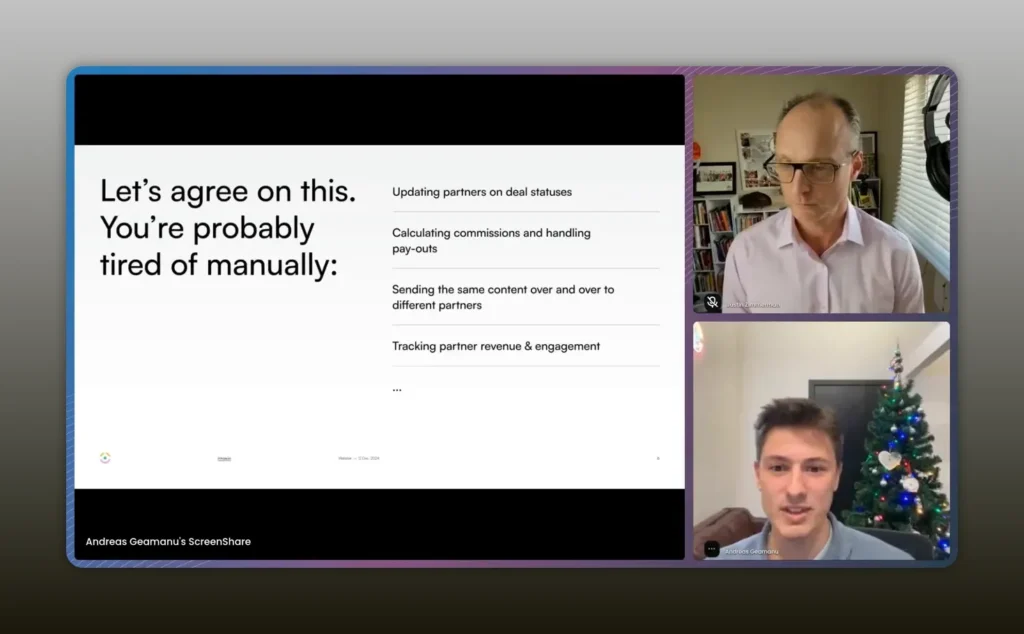
Partners are no longer optional — they’re a revenue multiplier. A modern PRM removes manual friction and makes partner-led growth predictable. – Andreas Geamanu (Introw)
When you are ready for a PRM
Not every company needs a PRM on day one, but many are ready sooner than they think. Two simple signals show readiness:
- You have a clear partner strategy that aligns with company objectives. If your partnerships are connected to measurable company goals, there is budget and purpose for a scalable solution.
- You have a clear path to increasing partner-driven revenue or pipeline. Even if current partner revenue is small, if you can show a reproducible path to growing pipeline and eventual revenue, a PRM is a leverageable investment.
For early-stage companies between $1M and $10M ARR, revenue impact may be modest today. Focus instead on pipeline quality and repeatable partner workflows that will convert as your product and partner motion mature. The PRM becomes the mechanism that turns ambition into predictable outcomes.
Key features to prioritize
When you evaluate PRMs, stop checking boxes and start asking how a feature will change behavior and outcomes. Here are the capabilities that deliver real value.
Deep CRM integration
Your CRM should be the single source of truth. If partnership data lives in the CRM already, the PRM must sync two ways with opportunities, leads, support tickets, and any custom objects you use. A one-click native integration beats custom API mappings every time. Manual syncing creates maintenance debt, inaccuracy, and slower ROI.
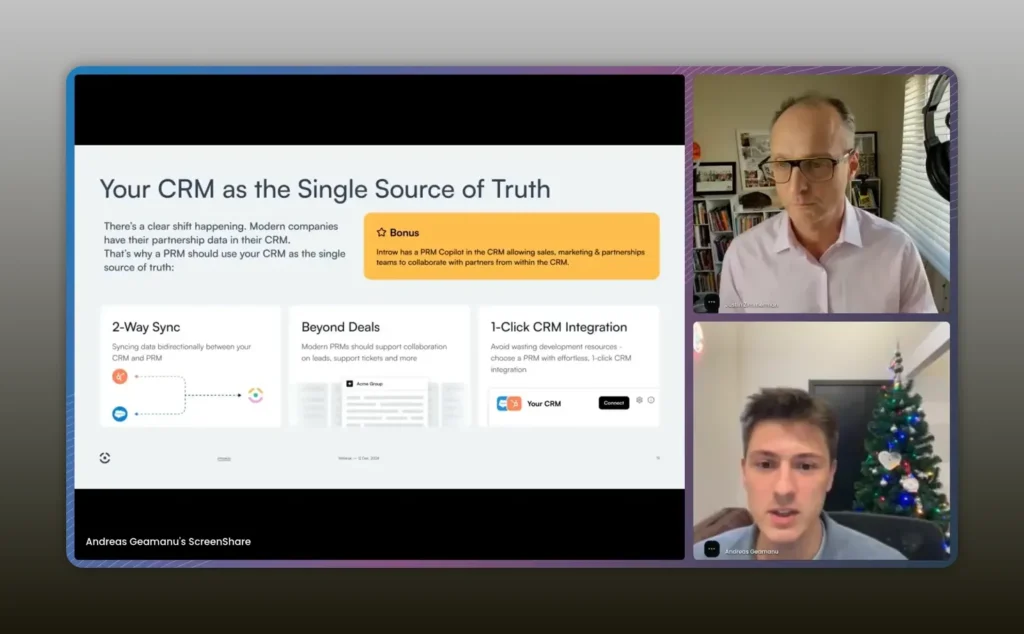
If you have a PRM that also syncs with support tickets, leads, any custom objects that you would like, you will literally go to another partner experience. – Andreas Geamanu (Introw)
Deal and lead registration with attribution
Lead forms are not enough. You need lead and deal registration that automatically ties opportunities to the right partner record, assigns partner account managers, and flows into your CRM with correct attribution fields. That prevents manual rework and protects your revenue crediting.
Commission automation
Commission statements are repetitive, error-prone, and a poor use of partnership manager or finance time. Automating commission calculations, approvals, and payout workflows reduces friction and increases trust with partners. If finance is tired of manual statements, integrate the PRM with your payout process.
Asset sharing and content tracking
Your partners reuse your materials. Track what they open and consume. Content views, downloads, and shared assets feed engagement insights so you know which collateral drives partner behavior—and which pieces are gathering digital dust.
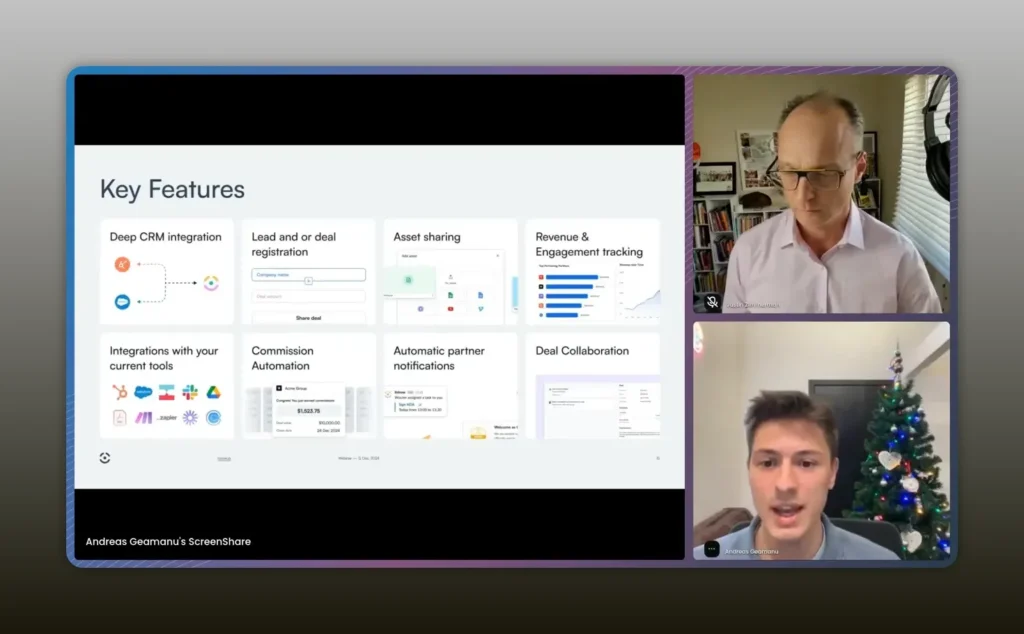
We have a one-click native integration with Crossbeam allowing you to deal share in one click and attribute partnership revenue to your CRM in a few clicks. – Andreas Geamanu (Introw)
Automatic partner notifications and nudges
A modern PRM automates outreach: deal status updates, next-step reminders, onboarding nudges, and content suggestions. Use automatic emails and Slack or Microsoft Teams updates to activate partners where they already work rather than forcing portal logins.
Common pitfalls and how to avoid them
Vendors will try to sell you features. Your job is to avoid long-term costs and short-term disappointment. Here are the pitfalls you will see and how to sidestep them.
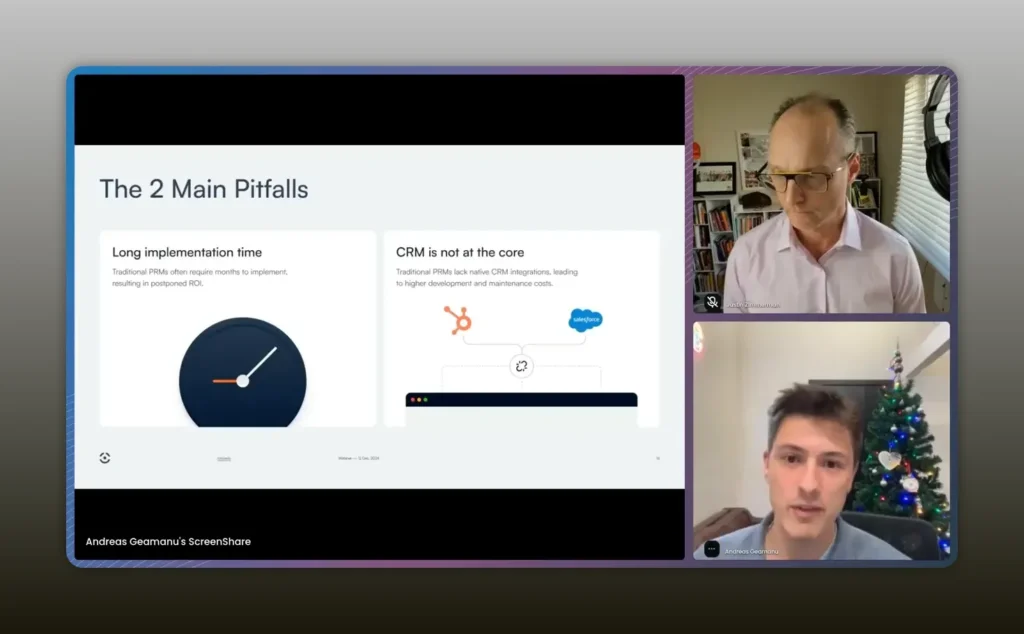
Common traps: long, costly implementations that push ROI out months — and PRMs that treat CRM as an afterthought. Pick fast-to-launch tools with deep, two‑way CRM sync. – Andreas Geamanu (Introw)
Pitfall 1: Long implementation time
Traditional PRMs can take months to launch. That postpones ROI and increases opportunity cost. Reduce risk by choosing tools with one-click CRM integrations, prebuilt templates, and self-service setup. Don’t accept a four-to-six-month timeline unless you truly need custom development.
Pitfall 2: The CRM is not the core
If your PRM treats the CRM as an afterthought, expect higher maintenance and inconsistency. Choose vendors that position CRM sync as the center of their architecture and support syncing opportunities, custom objects, and two-way updates.
Pitfall 3: Assuming partners will log in
Portals are useful, but partners do not live in them. Don’t design a partner experience that expects daily portal visits. Activate partners via email, Slack, or Teams. Allow replies to emails to become two-way updates in your CRM. That dramatically increases engagement and reduces friction.
Four elements of a modern PRM
When Justin and Andreas talk about modern PRMs, they narrow it to four practical elements that determine success.
- Time to value — Quick wins reduce opportunity cost and prove traction.
- CRM as a single source of truth — Two-way, deep syncs are essential.
- Partner engagement beyond portals — Use the channels partners already use.
- Free trial or pilot with partners — Try with a partner, not just a demo environment.
These elements are about outcomes, not feature lists. They shape adoption and determine whether your PRM becomes a tool partners love or a legacy expense you explain away during budgeting cycles.
How to calculate PRM ROI
Budget conversations often stall because ROI feels abstract. Simplify it into two measurable buckets: revenue impact and time savings.
Revenue-driven variables
- Number of active partners
- Average partner revenue per year
- Potential increase in revenue per partner after PRM adoption
- Number of partners you can onboard per quarter with automation
Combine these into a conservative model. For example, if a PRM drives a 10 percent increase in yearly partner revenue and lets you onboard five additional partners each quarter, you can quantify incremental ARR in a board-ready way.
Time-savings variables
- Hours saved per partner onboarding through automation
- Hours saved by eliminating manual commission reports
- Hours saved by avoiding repeated manual partner updates and exports
Multiply saved hours by your partnership team’s blended hourly rate to produce a near-term operational ROI that complements the revenue case.
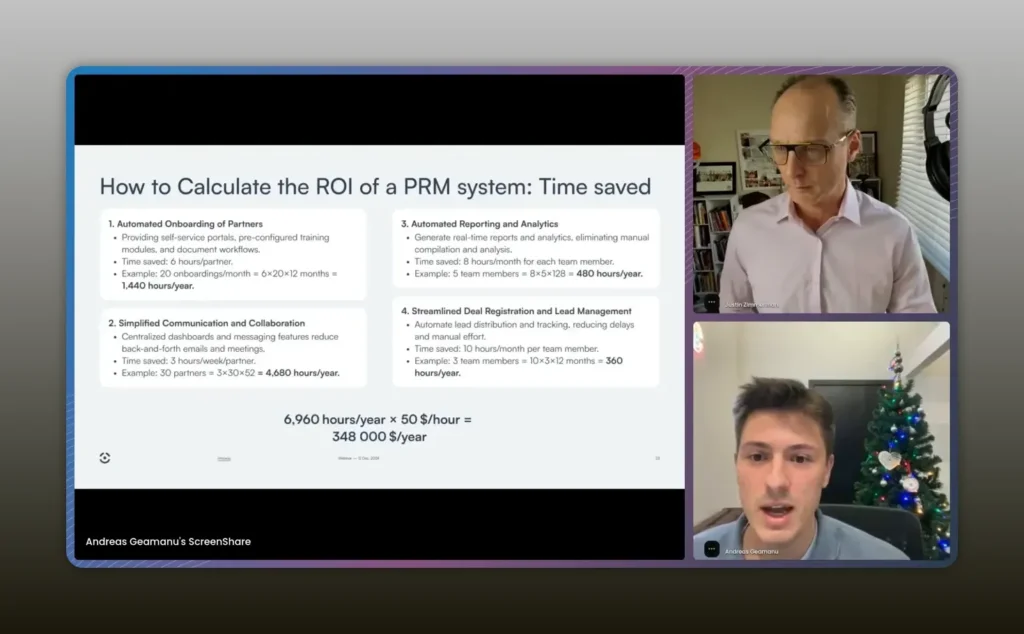
Most business cases from our customers come from two things: how they can increase partnership revenue per partner and how they can onboard more partners with a PRM. – Andreas Geamanu (Introw)
How to run a successful pilot with partners
Running a pilot proves the tool, the workflows, and the impact. But not all pilots are equal. Here’s how to run one that convinces finance and leadership.
- Pick one or two strategic partners who are already engaged and want to move faster. Avoid pilots with passive partners who are unlikely to provide actionable feedback.
- Define clear success metrics such as number of deals registered, time to update on a deal, content engagement, or commission accuracy.
- Test CRM sync thoroughly in both directions. Confirm lead source attribution, linked partner accounts, and deal-stage updates flow into your CRM as expected.
- Enable partner-friendly channels like email replies and Slack so the pilot reflects real working behavior rather than portal logins alone.
- Measure quickly and iterate. Launch fast, gather partner feedback, and make adjustments rather than delaying for perfection.
Justin emphasized the importance of trying the PRM with partners, not just testing in isolation. A realistic pilot must include real partner interactions to surface workflow issues and to prove ROI.
Crossbeam, account mapping, and one-click deal sharing
Account mapping can be a game changer for partner motions. When you know overlapping accounts with partners, you can protect territory, identify joint opportunities, and reduce friction around who owns a lead.
Integrating Crossbeam with your PRM creates frictionless workflows. With one-click deal share you can:
- Identify overlapping accounts with a partner
- Share a deal in one click and keep the partner updated on deal-stage changes
- Automatically attribute revenue and maintain CRM fidelity
Account mapping remains under-adopted in many regions. Where it is used, it dramatically shortens the path to collaboration and reduces guesswork about who the best partner to engage is for a particular account.
Implementation best practices to reduce time to value
Shorter time to value depends on preparation and vendor choice.
Choose vendors that
- Offer one-click CRM integrations
- Provide templates and onboarding workflows you can customize
- Support two-way syncs for opportunities, leads, and custom objects
- Allow self-service portal launch so partnership managers can be champions
Your internal playbook
- Start with the CRM fields you already use for partner attribution.
- Map partner roles and permissions ahead of time so onboarding is quick.
- Decide which channels you will use for partner notifications (email, Slack, Teams).
- Run an internal pilot with Sales and RevOps before inviting partners.
- Capture early wins—first closed deal, first automated commission—then publicize them internally.
How to get budget and internal buy-in
Budget is not an insurmountable barrier. If you can demonstrate even modest early impact, you unlock funding quickly.
- Run a low-cost pilot with one partner that demonstrates faster collaboration, better attribution, or time saved.
- Translate time savings into dollars by quantifying hours saved for partnership and finance teams.
- Build a conservative revenue uplift model from higher partner engagement and additional partner onboarding enabled by the platform.
- Publicize the early wins to Sales, RevOps, and Finance to convert skeptics into advocates.
Justin called this a practical way to create budget: use a product trial to prove ROI rather than fighting for headcount or large capital spend. When you can show a real revenue or efficiency signal, budget conversations become straightforward.
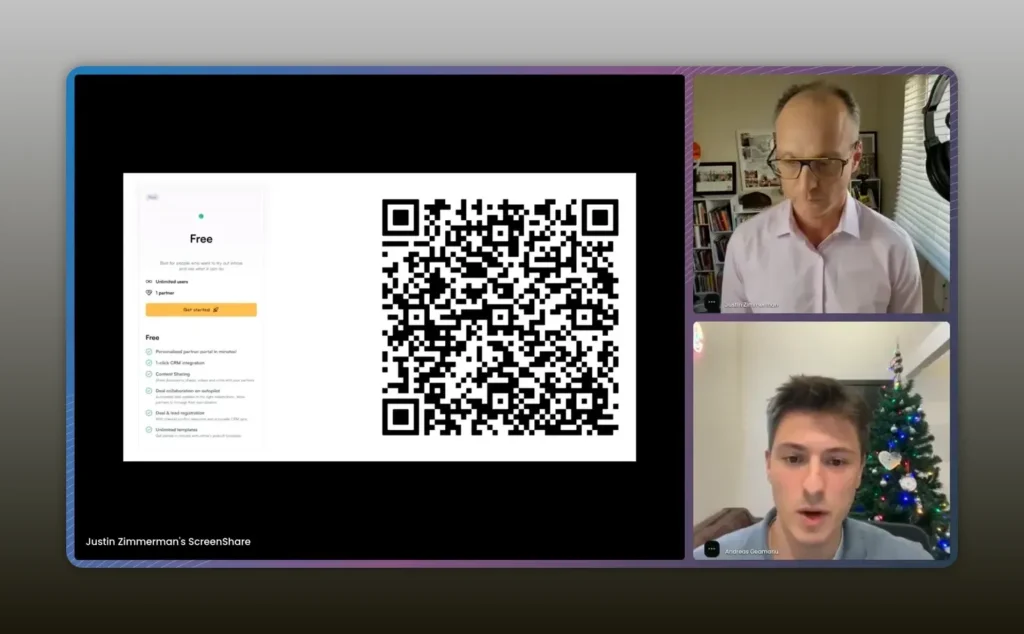
We give you access so you can have a success with one partner fully for free. This makes getting budget even easier than waiting. – Andreas Geamanu (Introw)
Step-by-step checklist for selecting a PRM
- Confirm your partner strategy aligns with measurable company objectives.
- List the CRM objects and fields that must sync (opps, leads, custom objects, tickets).
- Prioritize one-click native integrations and two-way sync capability.
- Design your pilot with a partner and define success metrics up front.
- Choose vendor features that reduce manual work: commission automation, deal sharing, content analytics.
- Plan launch communications for internal stakeholders and partner champions.
- Set a 30/60/90 day measurement plan for revenue and engagement metrics.
FAQs
When should I choose a PRM versus using native tools like forms and shared folders?
If your partnerships involve recurring deal registration, revenue attribution, multiple partners, or if you need to automate commissions and reporting, a PRM is the better investment. Forms and folders are fine for one-off collaborations, but they create manual attribution work and scale poorly.
How important is CRM integration for a PRM?
Extremely important. Your CRM should be the single source of truth. Look for two-way syncs that cover opportunities, leads, and any custom objects you use. One-click native integrations save setup time and reduce long-term maintenance costs.
Will partners actually use a portal?
Partners will use a PRM when it meets them where they work. Use email, Slack, or Teams notifications and allow replies to funnel back into the PRM and CRM. Portals are useful for onboarding and assets, but primary engagement should be channel-driven.
How do I prove ROI to Finance?
Split the business case into revenue uplift and time savings. Quantify expected increase in partner revenue per partner, additional partners you can onboard, and hours saved for onboarding, commissions, and manual reporting. Use a conservative model and run a short pilot to produce real data.
Can I pilot a PRM with just one partner?
Yes. Start with one engaged partner who is willing to collaborate. A focused pilot that measures deal registration, content engagement, and time saved can quickly demonstrate value and unlock budget.
What role does Crossbeam play in PRM workflows?
Crossbeam provides account mapping and overlap intelligence. Integrating Crossbeam with your PRM enables one-click deal sharing, better territory clarity, and faster partner collaboration. It reduces friction in deciding which partner to engage for a specific account.
Conclusion
Choosing the right PRM is not about checking feature boxes. It is about aligning a platform to your partnership strategy, shortening time to value, and embedding partner workflows into the systems your company and partners already use. Focus on deep CRM integration, automation that saves time, engagement strategies that work outside the portal, and pilots that prove real partner impact. Do this and you turn partnerships from a hopeful channel into a predictable engine of growth.