Powerful PRM for One-Person Partner Teams — Greg Portnoy on Give-to-Get
Expert advice from Greg Portnoy at EulerPRM and Justin Zimmerman
Snapshot
You are probably running a partner program with far fewer resources than the results you are expected to produce — a lean team, a thin budget, and a long list of tactical tasks that range from onboarding and contracting to tracking referrals and paying commissions.
Partnerships now command leadership attention, which makes this moment a big opportunity and a big risk: get it right and you unlock investment, influence, and scalable growth; get it wrong and your program is deprioritized, headcount is frozen, and promising revenue and partner goodwill quietly evaporate.
The difference between those outcomes is simple but often overlooked — the ability to measure and demonstrate clear, mutual value (what you give and what you get back).
That requires bidirectional visibility into referrals and deals, automated processes so a one‑person team isn’t buried in “keeping the lights on” work, and crisp health and performance metrics that translate into executive-ready reports.
You can do this! Just keep reading and you will see how to build these capabilities, so you can turn limited resources into disproportionate amounts of predictable partner-sourced revenue.
How can you possibly manage a partner program if you can only see one side? – Greg Portnoy
Table of Contents
- Why give-to-get is the foundation of modern partnerships
- Bidirectional tracking: the difference between guesswork and clarity
- What one-person PRM really means
- Automating the “keeping the lights on” work
- Partner health: move beyond 80-20
- Designing a frictionless partner experience
- Reporting, alignment, and executive visibility
- Practical playbook: fast wins for solo partner leaders
- Implementation checklist and integration priorities
- Common pitfalls and how to avoid them
- FAQs
- Conclusion
Why give-to-get is the foundation of modern partnerships
You have to think of partnerships as a two-way value exchange. The mental model of give-to-get is not a slogan; it’s a playbook. When you give in ways that are tangible, easy to consume, and measurable, partners pay attention and reciprocate with higher-quality introductions, joint deals, and longer-term collaboration.
Justin emphasized that partnerships are becoming competitive as more companies invest in them. That means the programs that succeed will be those that live the ethos of mutual value. Greg Portnoy built this idea into the product design because one-sided partnerships rarely last. If your program only counts inbound leads, you miss the bigger story: what are you sending to partners, and what do they do with it?
Why does this matter now? Leadership is paying attention. CEOs, CROs, and boards ask for measurable contribution. If you can show not only pipeline from partners but also the outbound value you provide, you can make a far stronger case for budget, headcount, and strategic priority.

Give‑to‑get isn’t a slogan — it’s the operating model: give clear, measurable value and partners will give back. – Greg Portnoy
Bidirectional tracking: the difference between guesswork and clarity
You cannot manage what you cannot see. Bidirectional tracking means recording both what partners send you and what you send partners. This is the only way to understand the true balance of value inside a relationship.
Imagine the common scenario: a monthly call where each side opens their spreadsheets and CRM reports and arguments start over who referred what, when, and how much it converted. That’s inefficient. Instead, adopt a system that captures referrals outbound and inbound, syncs to your CRM, and allows partners to accept, reject, and update deal info from their side.
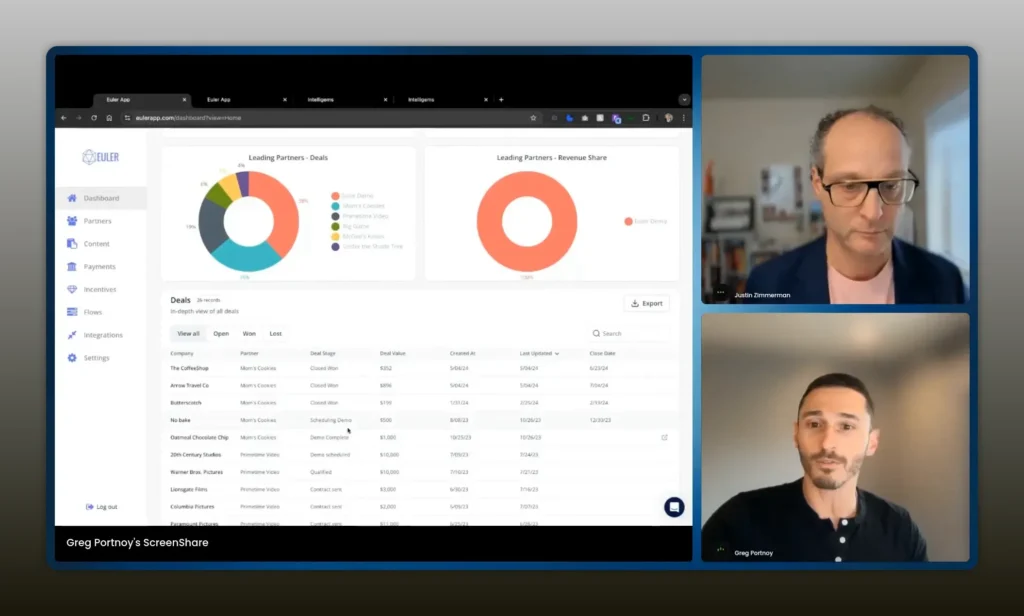
Euler was built as a bidirectional system because there is no such thing as a one-sided partnership. – Greg Portnoy
When you log both sides you gain:
- Real-time visibility into the pipeline and partner activity rather than periodic guesses.
- Accurate performance attribution so you can quantify the ROI of giving value to partners.
- Better prioritization because you know which partners truly reciprocate and which need a different approach.
Technical note: this requires integration. Pulling contact, account, and opportunity information from your CRM into your partner system removes error-prone copy and paste work and ensures consistent data across teams.
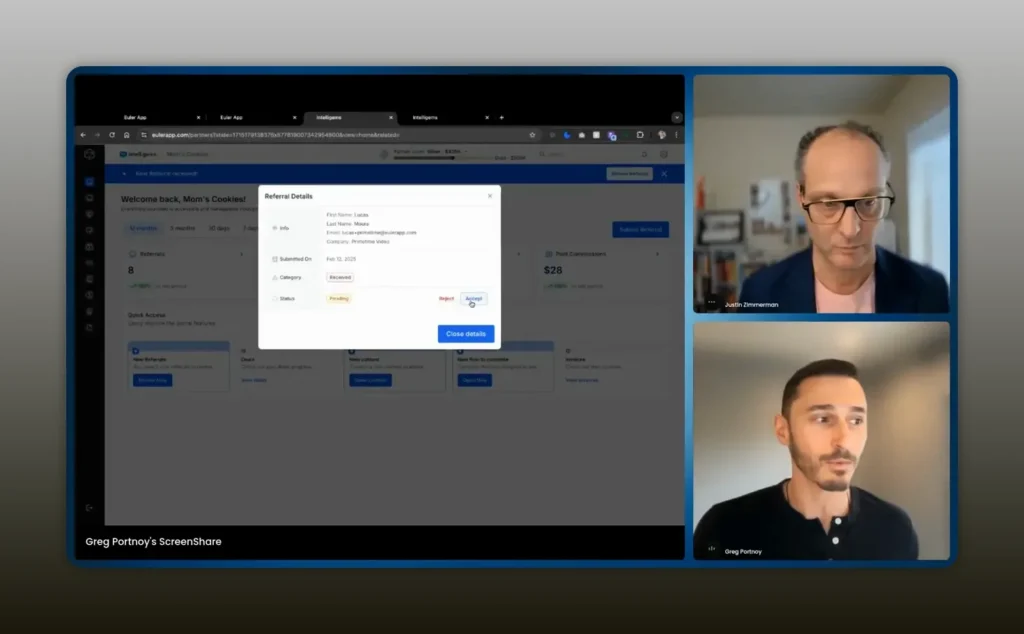
Partners can review referrals, accept or reject, and update deal stages — turning static reports into actionable collaboration. – Greg Portnoy
What one-person PRM really means
You might be a team of one, but you are expected to run programs that historically had whole teams behind them. The “one-person PRM” concept recognizes this reality and designs for it: the goal is to give one person the tools to do everything a full team would do, without requiring massive setup or ongoing manual work.
What does that look like in practice?
Greg describes typical partner managers overseeing 30 to 100 relationships. Most of their time, 30 to 50 percent, is spent on administrative tasks: vetting, onboarding, contracting, enablement, tracking, and paying commissions. Trim that burden with automation and integration, and that same person can focus on strategic work that moves revenue.
- Scalable onboarding using templates, flows, and certification paths that let partners self-serve.
- Automated deal capture with CRM sync so the partner manager isn’t the intermediary for every update.
- Out-of-the-box reporting that shows average contract value, win rates, and sales cycle length without building a custom BI stack.
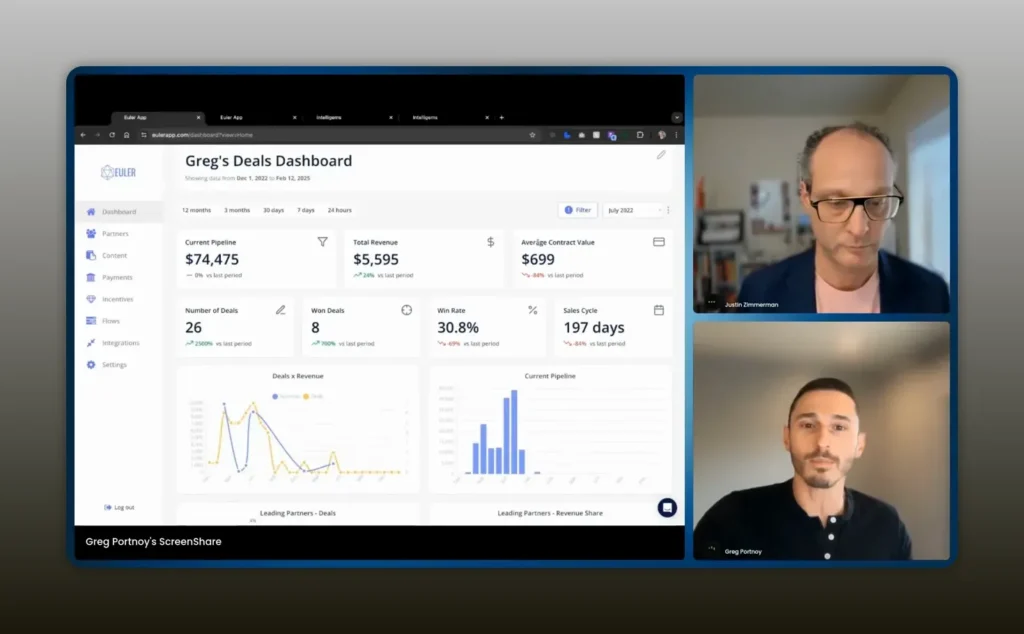
Once it’s set up, everything is pretty much automated or extremely easy. – Greg Portnoy
Automating the “keeping the lights on” work
You need to reclaim the 30 to 50 percent of time spent on maintenance. Automate the mundane, standardize the common, and escalate only the exceptions.
Key processes to automate or systematize:
- Partner applications and vetting with automated scoring.
- Contracting with e-sign integration so agreements are captured and stored automatically.
- Onboarding and certification flows with quizzes and completion tracking.
- Referral capture from partners via forms, extensions, or Slack integrations.
- Commission calculations and invoice visibility by integrating billing systems into your partner platform.
When you build these automations, the partner manager spends less time entering data and more time optimizing strategy, recruiting the right partners, and creating enablement that moves deals forward.
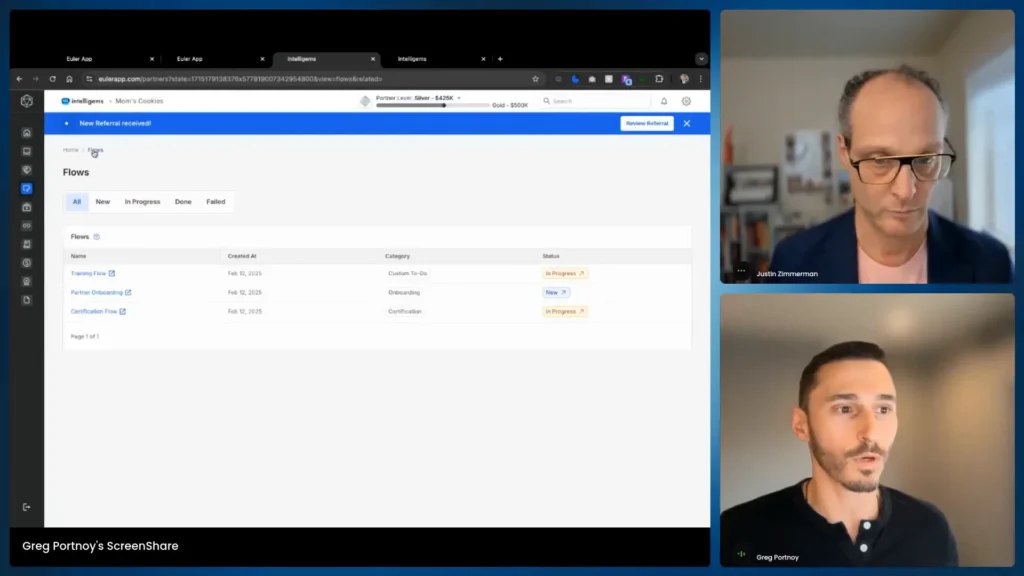
Automating the “keeping the lights on” work frees a one‑person PRM to focus on strategic, revenue‑driving activities. – Greg Portnoy
Partner health: move beyond 80-20
You likely already know the 80-20 rule: 20 percent of partners produce 80 percent of results. That reality exists because partner managers historically only had time to dig into a top handful of relationships. But without objective health metrics, you leave a lot of potential on the table.
Greg suggests building partner health packages based on objective, business-relevant KPIs: revenue, deal count, portal engagement, content usage, and program-specific behaviors. Categorize partners into health buckets — unhealthy, average, healthy, VIP — and take different actions against each bucket.
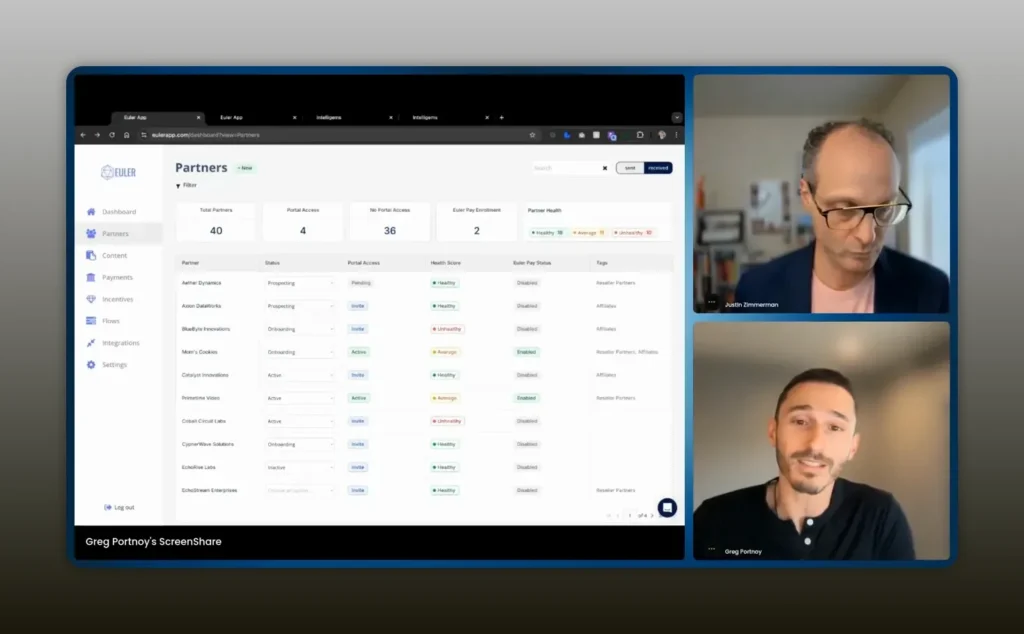
Create health packages based on the objective KPIs that matter to your program. – Greg Portnoy
Use health segmentation to guide time allocation:
- Unhealthy: Identify drainers quickly; decide whether to invest or sunset.
- Average: These are the high-leverage opportunities — small nudges and enablement can convert them to healthy.
- Healthy: Keep them on cruise control with minimal touch and scheduled reporting.
- VIP: Strategic investments and executive alignment to scale joint outcomes.
Data-driven health scores let you turn the 80-20 problem into a portfolio optimization exercise where you systematically move more partners into the “healthy” bucket.
Designing a frictionless partner experience
You must treat your external partners like customers. The partner experience should be beautiful, easy, and actionable. Remove friction and meet partners where they work.
Elements of a great partner experience:
- Clear performance roll-ups on the partner homepage: show where they stand in tiers and what’s needed to reach the next level.
- Quick action buttons for submitting referrals, viewing deals, or accessing content with as few clicks as possible.
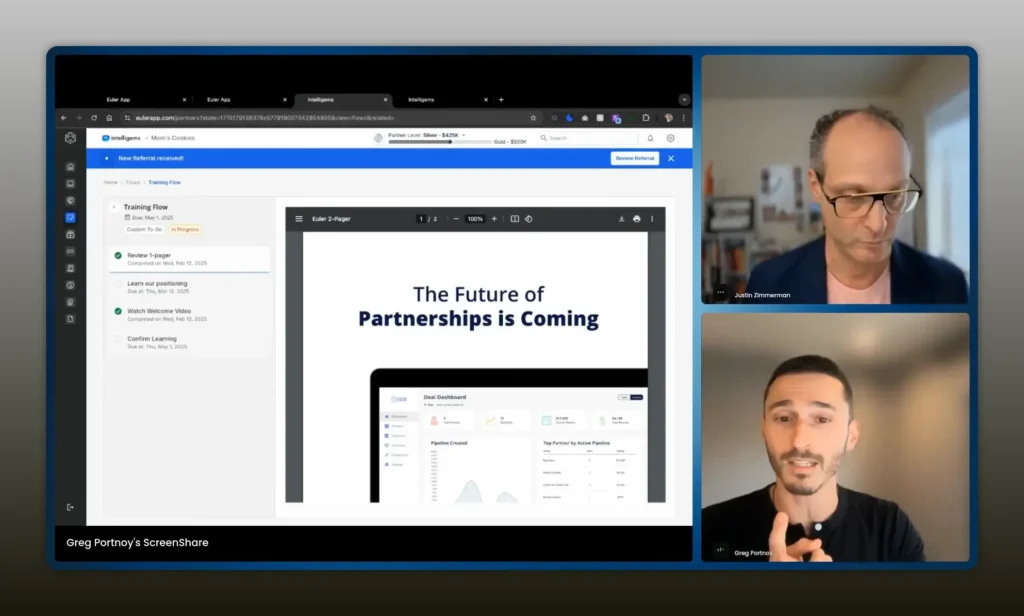
- Flows for onboarding, enablement, and certification that include quizzes and completion records.
- Notifications via email and Slack for updates that matter: new referrals, deals, content, and payments.
- Browser extension and Slack integrations so partners can submit referrals without leaving their workflow.
When partners can self-serve and get immediate, accurate visibility into their earned commissions and invoices, you remove a major source of friction and meaningfully increase engagement.
A partner portal that shows real‑time balances, pending versus paid amounts, invoice history, and a downloadable statement turns opaque bookkeeping into transparent collaboration — partners stop emailing your team for status updates and instead act on clear, timely information.
Practical features that drive adoption include per‑deal commission breakdowns, payout schedules, the ability to raise a dispute or comment on an invoice, and hooks to update payment details or accept e‑signed contracts.
Integrating your billing system and CRM into the partner experience guarantees that numbers match across systems and eliminates error‑prone manual reconciliation.
Automated calculations and scheduled payouts also cut down on disputes and support requests, freeing a one‑person team to focus on recruiting, enablement, and co‑selling rather than chasing invoices.
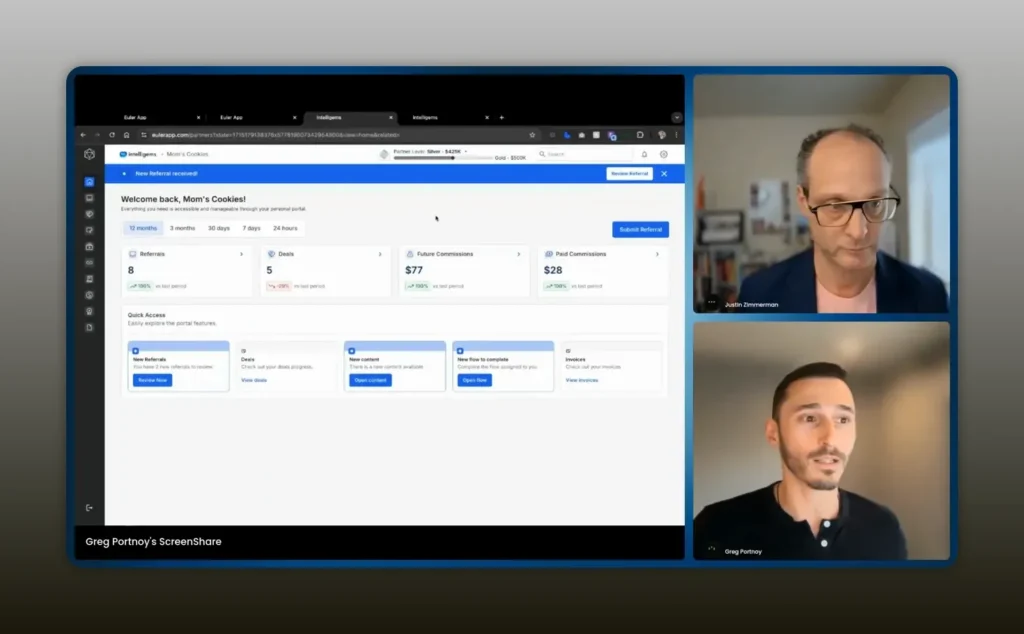
Everything should be in one simple, easy to digest place so partners can find what they want without bothering a partner manager. – Greg Portnoy
Sending referrals
Referrals are the currency of a give‑to‑get program — but they only create value when they are easy to send, simple to accept, and reliably tracked. Treat outbound referrals the same way you treat inbound leads: make the flow fast, instrumented, and integrated so nothing falls through the cracks.
Core principles for sending referrals:
- Make it simple — partners should be able to submit a referral from the portal, a browser extension, Slack, or directly from their CRM with as few clicks as possible.
- Capture the right minimum — require only the fields needed to triage and route the deal, then let partners and your sales team enrich the record later.
- Automate attribution — map fields to your CRM so outbound referrals create or link to accounts/opps automatically and attribution is preserved through close.
- Close the loop — notify partners when a referral is received, accepted, updated, or closed so the give‑to‑get ledger is visible on both sides.
Recommended referral form fields
- Contact name & phone/email — immediate ways to reach the prospect.
- Company / account — allows duplicate detection and CRM linking.
- Estimated opportunity value — helps prioritize follow up.
- Suggested close date / timeline — sets expectations for cadence.
- Product / solution — routes to the right seller or team.
- Brief qualification notes — why this is a fit and next recommended action.
- Referral source & tags — campaign, salesperson, or partner sub-type for reporting.
Automation and integrations that matter
- CRM mapping — automatic account/contact/upsert logic removes manual copy/paste and preserves attribution.
- Duplicate checking — warn the sender if the company or contact already exists to avoid fragmented records.
- Templates & presets — let partners use prefilled forms for recurring account types or common plays.
- Notifications — email and Slack alerts for new referrals, status changes, and close events keep everyone aligned.
- Browser extension / CRM button — reduce friction by letting partners send a referral from the tools they use every day.
When the referral experience is frictionless and backed by integration and clear SLAs, partners send more, your sales team engages faster, and you get the bidirectional data you need to prove the value of what you give — and what you get back.
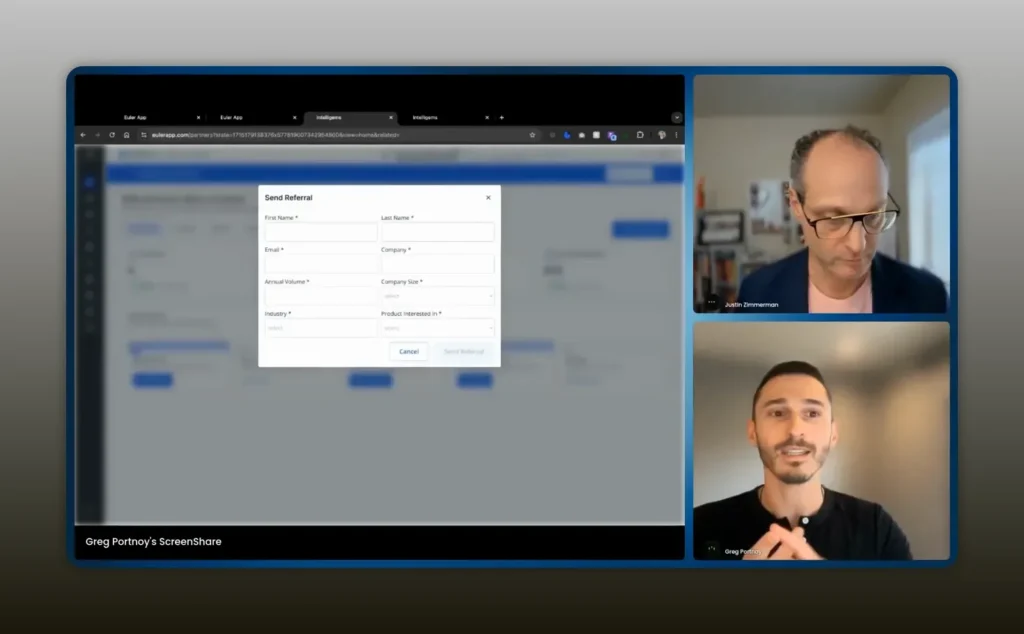
Meet partners where they’re working. They shouldn’t have to leave their CRM or email to submit a referral. – Greg Portnoy
Reporting, alignment, and executive visibility
You need reporting that speaks to two audiences: executives and partners.
For executives, focus on metrics they care about: pipeline influenced, win rates, average contract value, and sales cycle length. Schedule these reports to land in their inbox routinely so partnerships stops being a mystery function and becomes a predictable contributor.
For partners, create customized reports that track their specific performance against goals. Make those reports automatic and scheduled so partners don’t have to request updates. This increases transparency and trust.
Alignment also means connecting partnership data to the CRM and billing systems. When partnerships can show closed revenue and invoices associated with partner activity, the conversation with leadership changes from aspirational to demonstrable.
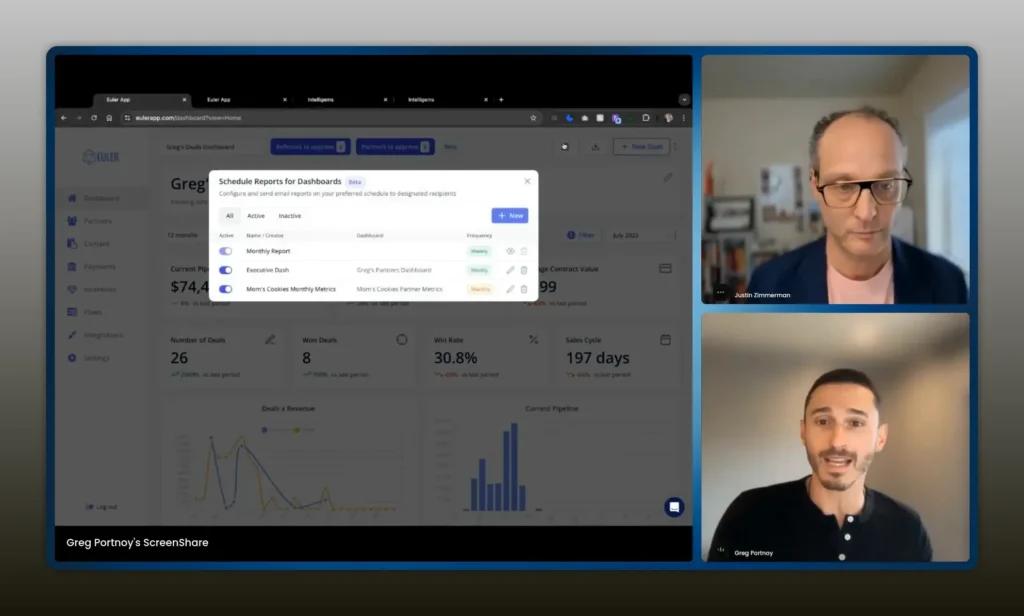
Create executive and partner-specific reports and deliver them automatically. Alignment happens when the right people get the right information regularly. – Greg Portnoy
Practical playbook: fast wins for solo partner leaders
You can make measurable progress quickly if you focus on high-impact, low-effort changes. Below is a prioritized playbook you can execute in weeks, not months.
- Define your give-to-get offer — list what you will routinely give partners (content, leads, training, co-selling) and what you expect in return.
- Standardize one referral flow — create a single easy form partners can use from the portal or via a browser extension.
- Integrate CRM — ensure automatic syncing of accounts, contacts, and opportunity data so updates don’t rely on manual entry.
- Create a health score — pick 4–6 metrics and create thresholds for unhealthy, average, healthy, VIP.
- Automate onboarding — build one onboarding flow with a short certification quiz and required resources.
- Schedule two standard reports — one for leadership (weekly or monthly) and one for partners (monthly).
- Set up commission visibility — connect billing systems so partners can view earned commission and invoices.
- Audit your top 15 partners — use the data to triage time: double down on top performers and re-evaluate underperformers.
Execute these steps with the expectation of faster insight into performance and immediate improvements in partner engagement. Each step reduces manual work and increases measurable outcomes.
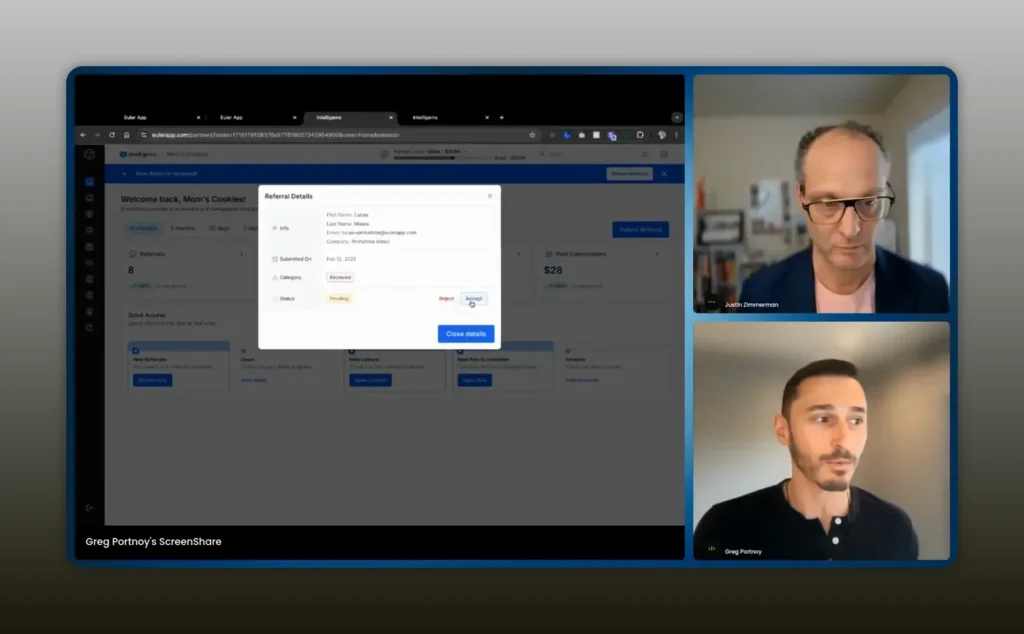
When the partner can update deal stages and amounts from their portal, collaboration becomes real-time. – Greg Portnoy
Implementation checklist and integration priorities
You cannot build meaningful partner operations without a clear integration plan. Prioritize systems that drive the most measurable impact.
- CRM first — account and opportunity sync provides immediate value for attribution and reporting.
- Billing and payments — commission visibility and invoice automation turn good faith into trust.
- Communication channels — email, Slack, and browser extension reduce friction for partners submitting and receiving information.
- Contracting and e-sign — speed up partner onboarding and compliance with integrated signing.
- Content and LMS systems — integrate where possible so certifications and enablement content live in the partner flow.
Plan integrations in phases and prioritize quick wins. A CRM sync and a single referral flow can transform day-to-day operations and unlock the time needed for strategic work.
Common pitfalls and how to avoid them
You will face pressure to either overbuild or under-prepare. Avoid both extremes.
- Pitfall: overcomplicating the launch — don’t wait for perfect. Launch with a single referral flow, basic reporting, and a health score. Iterate quickly.
- Pitfall: ignoring the partner experience — if partners find it hard to submit referrals or access their information, participation will drop.
- Pitfall: siloed data — if your partner system doesn’t sync to CRM and billing, reporting will be inaccurate and trust will erode.
- Pitfall: letting anecdote trump data — build objective health metrics and make decisions based on them, not only on intuition or persuasive partners.
Address each pitfall by setting minimum viable processes, instrumenting them for data, and committing to weekly or biweekly adjustments based on what the data reveals.
There is so much untapped potential in the other 80 percent of partners if you have the right data. – Greg Portnoy
FAQs
What is give-to-get and how do I define it for my program?
Give-to-get is the principle of offering clear, measurable value to partners in exchange for what you want from them. Define it by listing tangible things you will provide (co-marketing, referrals, training, product access) and precise asks (qualified referrals, co-sell participation, feature feedback). Make these offerings visible in partner tiers and portal resources so partners understand value and expectations.
How do I track outbound referrals so I know what I am giving to partners?
Use a partner system that supports outbound referral forms and CRM integration. Capture contact, account, and opportunity fields automatically, send a referral into the partner’s portal, and allow partners to accept or update the referral. This creates a clear record of what you gave and what happened next.
What metrics should a one-person partnerships team report to executives?
Focus on metrics executives care about: pipeline influenced, closed-won revenue attributed to partners, average contract value, win rate, and sales cycle length. Also show partner-level KPIs like top partner performance and tier movement to demonstrate program health and growth trajectory.
How can I automate partner onboarding without losing personalization?
Standardize core onboarding flows for baseline education and compliance, then add optional personalized steps for strategic partners. Include certification modules and knowledge checks for basic onboarding, and reserve manual, tailored sessions for VIPs or strategic accounts.
How do I decide which integrations to prioritize?
Prioritize based on attribution and partner experience. CRM integration is top priority for attribution and reporting. Next, connect billing and payments to provide commission visibility. Then add communication channels like Slack and browser extension to reduce friction in referrals and notifications.
What is an effective cadence for reporting to partners?
Monthly reports are a good default cadence for partner performance, with weekly executive summaries for leaders who want closer visibility. Automate these reports and allow partners to opt into scheduled deliveries so they receive consistent, predictable insights.
How do I scale partner health scoring across hundreds of partners?
Create templates or health packages for different partner types (reseller, affiliate, referral, strategic). Assign packages to groups of partners and automate health calculations. Use thresholds to trigger recommended actions like enablement nudges or escalation to a partner manager.
Conclusion
You are operating at a pivotal moment for partnerships. Leadership is looking for measurable returns, partners expect frictionless experiences, and competition for partner attention is increasing. If you design for bidirectional value, automate the administrative burden, and present crystal-clear metrics to both executives and partners, you will turn a small team into a high-leverage engine.
Justin framed the problem: many partner teams are under-resourced but over-expected. Greg Portnoy offered the practical response: instrument your program to capture both sides of the relationship, automate routine work, surface health signals, and meet partners where they work. Those steps let you preserve the human elements of relationship-building while scaling the operational side.
Start with one clear referral flow, integrate your CRM, set a health score, and automate reporting. Those moves will free up your time so you can do the work that actually grows revenue: recruiting the right partners, creating co-sell plays, and aligning with executives on outcomes.