$1,000,000 Partner Deals – Reverse Engineered
Expert advice from Lior Bukshpan Amir (Strategic Partnerships, Kaltura).
Table of Contents
- Snapshot
- Why your partnership process needs a workflow
- The “better together” mindset (including competitors)
- Step 1: Intelligent hunt with AI research
- Step 2: Validate with Crossbeam (your truth meter)
- Step 3: Mind the gap between signing and revenue
- Step 4: Zero-hour pitching with AI slide generation
- Step 5: Dashboards and operational reality checks
- Personalized outreach at scale with conversational avatars
- Recommended tools to accelerate each step
- FAQs
- Conclusion
Snapshot
We live in a time where the partnership process is too slow, too manual, and too dependent on whoever happens to have the best spreadsheet. You sign agreements, celebrate the announcement, and then revenue stalls because the workflow that turns a “maybe” into pipeline is missing. That is the real stake.
The solution is not “use more AI.” The solution is “design a workflow, then accelerate each step.” Lior’s method starts with intelligent hunting powered by ChatGPT style research, validates overlaps using Crossbeam, and then closes the last mile with execution tools like Gamma for pitch assets, QuickSight for dashboards, and conversational avatars for personalized video outreach. Along the way, you learn a counterintuitive rule: competitors can still be partners when you find the middle zone of “better together.”
If you want to solve the problem of partnership signings that do not convert into revenue, keep reading to learn how Lior Bukshpan Amir and Justin Zimmerman can help you do it.
“AI won’t create partnership results on its own—you need a workflow from intelligent hunt, to Crossbeam validation, to an execution plan that turns a signed deal into real pipeline and revenue.” – Lior Bukshpan Amir
Why your partnership process needs a workflow
If you take one idea from this playbook, make it this: AI cannot improve your partnership process if you do not have a workflow.
Justin Zimmerman’s framing is simple: Think of your current process as a set of steps you already do, even if they are imperfect. If you cannot list those steps, you cannot diagnose where AI should help. If you can list them, you can find the slow parts, the bottlenecks, and the “guessing” moments where your team wastes time.
The approach below is built around that workflow mindset. It is designed for partner managers, business development, and go-to-market teams who need to recruit partners and turn partner activity into customer acquisition.
The “better together” mindset (including competitors)
One of the most valuable lessons in this playbook is that “partner” does not have to mean “non-competitive.” Sometimes the best partnership sits in the overlap area, where both companies speak the same customer language, but deliver different pieces of value.
As Lior outlined, her company Kaltura and Descript were easy to imagine as feature-adjacent competitors. But the real opportunity was the middle zone: webinar or publishing workflows that need editing and iteration, paired with AI editing that helps non-editors actually create usable video.
Use this rule: if the partnership improves your “end-to-end customer experience,” and you can articulate why, you likely have a better together story even when there is feature overlap.
Step 1: Intelligent hunt with AI research
Step one is discovery, not outreach. Lior calls it the intelligent hunt, and the goal is to decide how you will connect to a company and why that connection matters.
Instead of beginning with vague lead lists, you start by researching the company’s use cases, customers, logos, and website positioning. The mindset is like a drone between buildings: you are scanning high-tech terrain efficiently so you can locate the exact addresses you want to go to next.
What you do in practice
- Research the target company in ChatGPT style tools using the company name plus what they do.
- Extract the “why” for partnership. Are they building capabilities you cannot build soon? Do customers want an integration across the AI stack and video workflows?
- Use LinkedIn strategically: Lior suggests copying a person’s LinkedIn profile and pasting it into the AI tool to generate more specific outreach.
- Test tools with intent: she also emphasizes trying products directly to understand fit and use cases, not just reading about them.
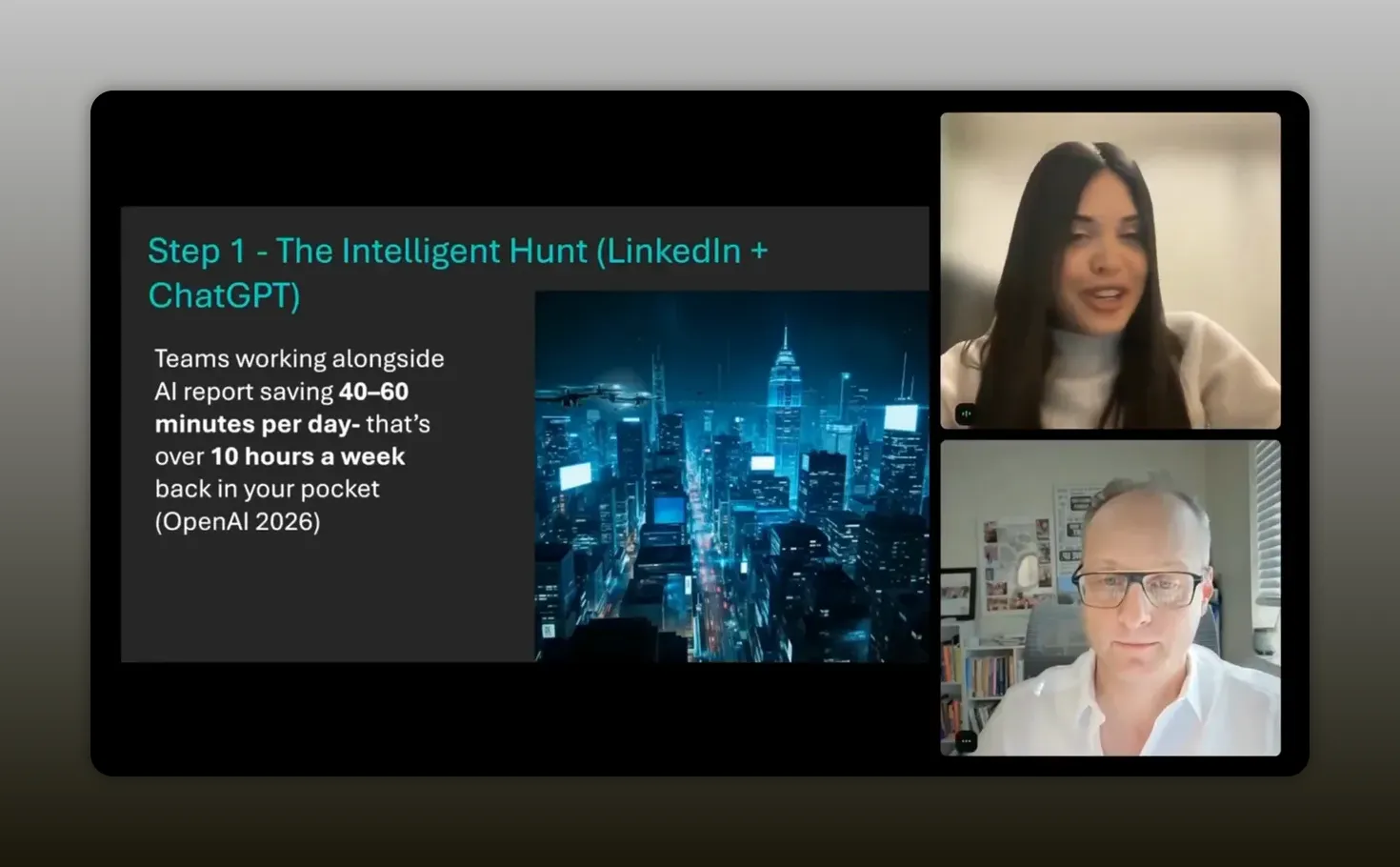
“When you copy and paste a person’s profile into ChatGPT, you can do a more specific reach out.” – Lior Bukshpan Amir
Step 2: Validate with Crossbeam (your truth meter)
Step two is where most teams waste time. They assume the “right company” is the one that looks good in theory. Lior’s truth meter reframes this: you have already hunted, now you validate.
Validation is not only about feature overlap. It is also about overlap in leads, prospects, and customers.
Why Crossbeam matters
Lior describes using Crossbeam to connect her organization’s Salesforce data with the other company’s Salesforce data. The result is a practical overlap scan:
- Prospects that appear in both networks
- Shared or adjacent customers
- Even a contact person in the other company, which speeds up post-agreement motion
She stresses the timing. Validation comes before you invest more than a hunch. If you open the Crossbeam view and the overlaps are minimal, you do not “fail.” You simply learn you are looking at the wrong verticals or markets for this partner fit.
How to approach your next big deal
Lior’s approach for the Descript case study is straightforward and actionable:
- Start with existing customers, especially the biggest ones, because integration work should ideally unlock upsell or cross-sell into your current base.
- Then, look into prospects. She notes that prospect lists can be large, so she focuses on the SDRs who are likely “in the conversation,” not just random contacts.
- Avoid dead ends. If a prospect previously engaged but the conversation stopped, she would not prioritize it. Instead, she looked at prospects where a partner story could be the missing push.
“Don’t invest more than a hunch until you actually go into validation.” – Lior Bukshpan Amir
Step 3: Mind the gap between signing and revenue
This is the section that most partnership teams quietly skip, then pay for later.
Lior calls out a gap between signing partnerships and bringing revenue. Teams celebrate PR, announce the deal, and then execution happens slowly because the “workflow to close” is missing.
Her point is blunt: you need a workflow to go from agreement to action. That means you plan the steps that convert partner intent into joint selling, integration usage, and measurable pipeline.
Turn the partnership into a revenue motion
Lior suggests treating the partnership process like dating or texting: you do not want to waste time or effort without seeing real signals of forward movement. The same applies in B2B.
A practical way to translate this into your work:
- Clarify the integration value in customer terms.
- Identify where the money should appear (upsell, cross-sell, new pipeline, or co-marketing that leads to conversions).
- Define a cadence for joint execution, not just a meeting to “discuss partnership.”
- Align messaging so both companies talk in the same language during the first customer conversations.
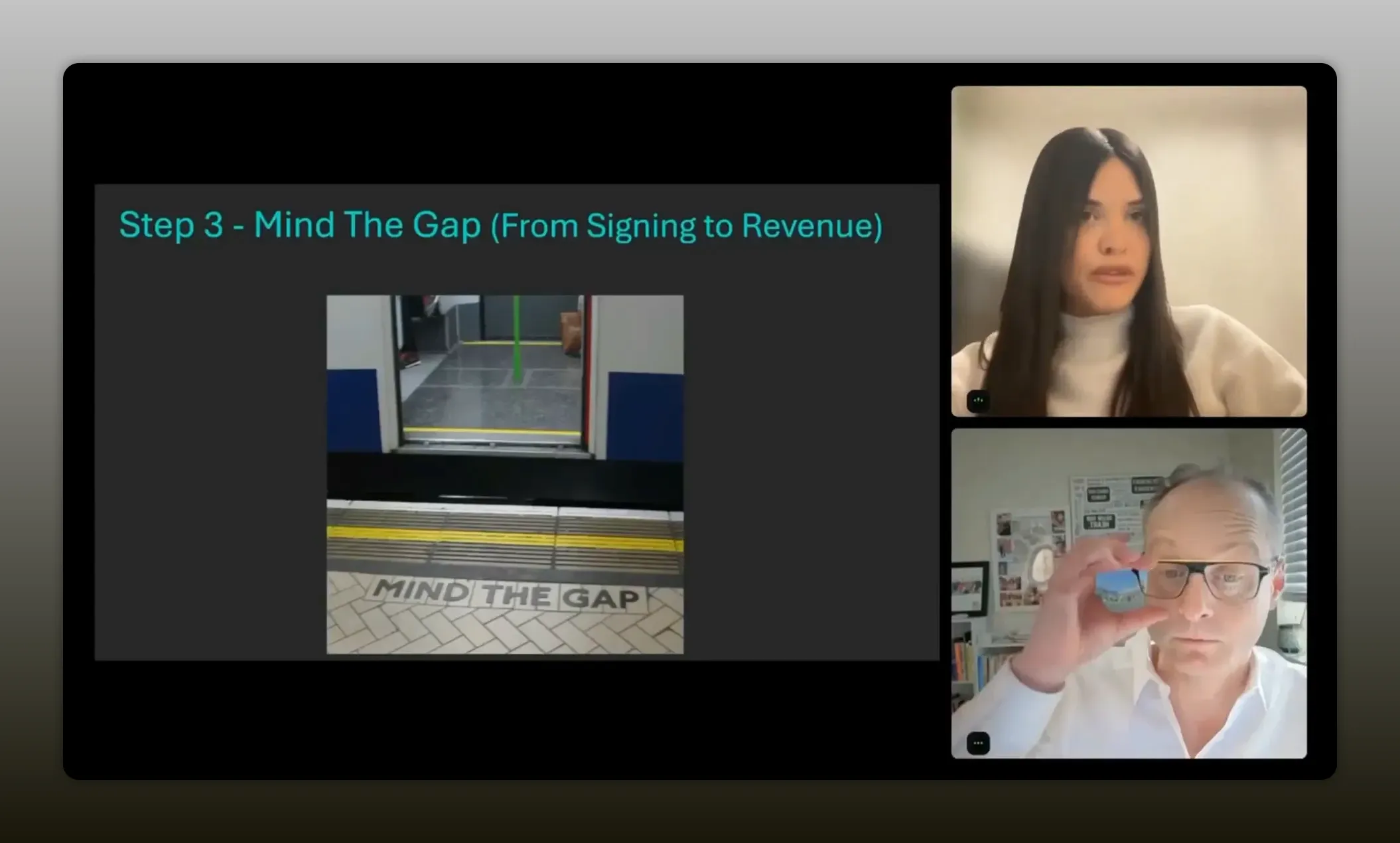
“There’s a gap between signing a partner and actually bringing revenue—so don’t just celebrate the agreement. Mind the gap and build a full workflow to get them into action.” – Lior Bukshpan Amir
Step 4: Zero-hour pitching with AI slide generation
Pitching partners is a time-demanding ritual. And the slides often become a time sink. Lior’s reaction is direct: you do not need to bury yourself in slides for hours and hours. That is wasted time.
Her solution is to use AI slide generation tools so you can draft partner pitch materials quickly, then iterate based on customer and partner feedback.
What “zero-hour pitching” means
Instead of spending half a day designing a deck from scratch, you generate slides in minutes using prompts. The deck becomes a starting point for personalization, not a project by itself.
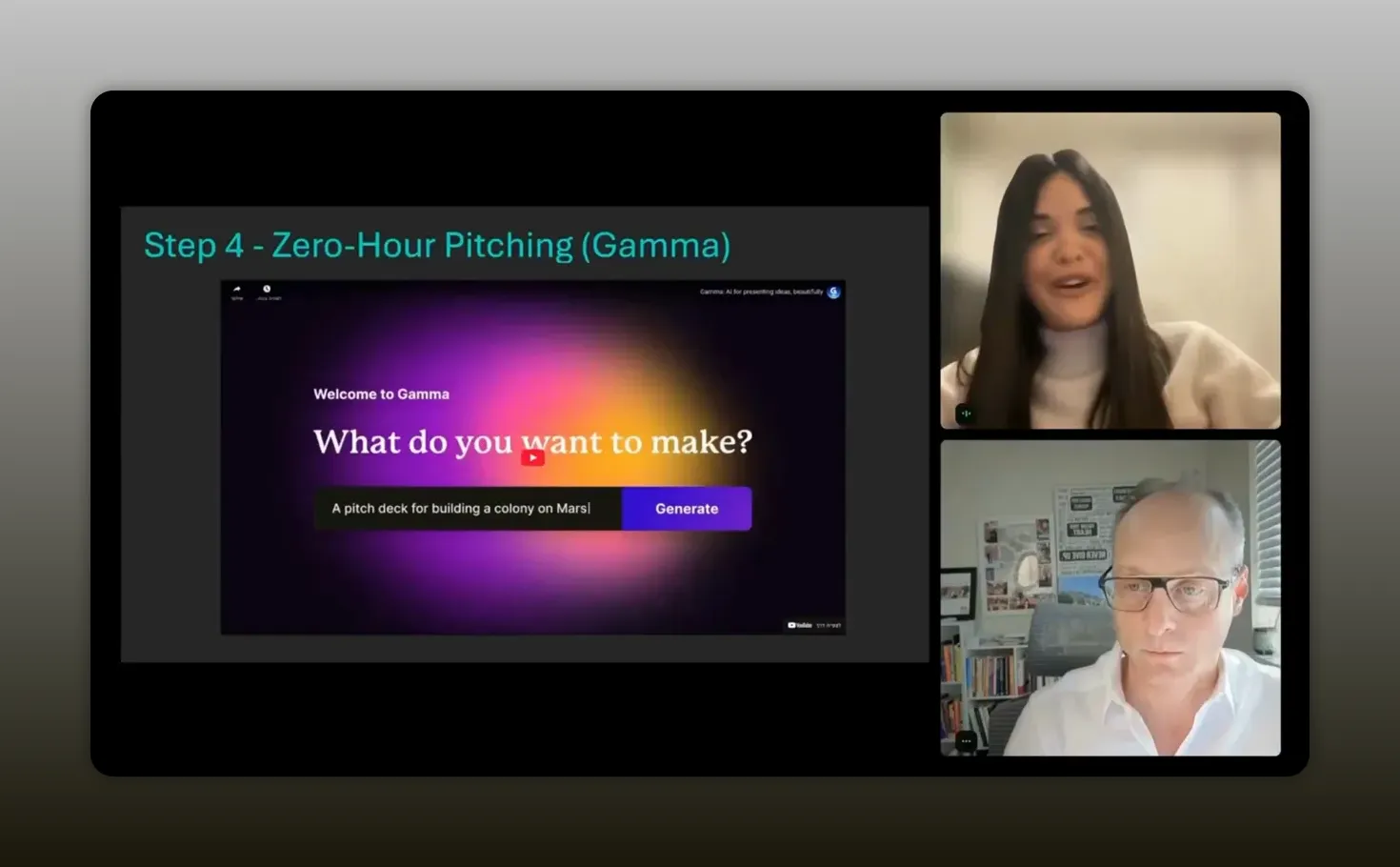
“Do not work on slides for hours and hours. This does not make sense.” – Lior Bukshpan Amir
Step 5: Dashboards and operational reality checks
Once you recruit partners and start execution, you need operational visibility. Lior uses Amazon QuickSight to pull together data from different Excel files and app exports, then turn it into color-coded dashboards.
The underlying theme is the same as the rest of the playbook: validation and reality checks prevent wasted effort. A dashboard makes the partnership process measurable, so you can stop guessing.
There is also a forward-looking point. Lior mentions Gartner predictions that much data will open automatically in the background. Whether that arrives quickly for your stack or not, the direction is clear: your reporting will increasingly become automated. You still need the workflow that tells you what to measure and how to act on it.
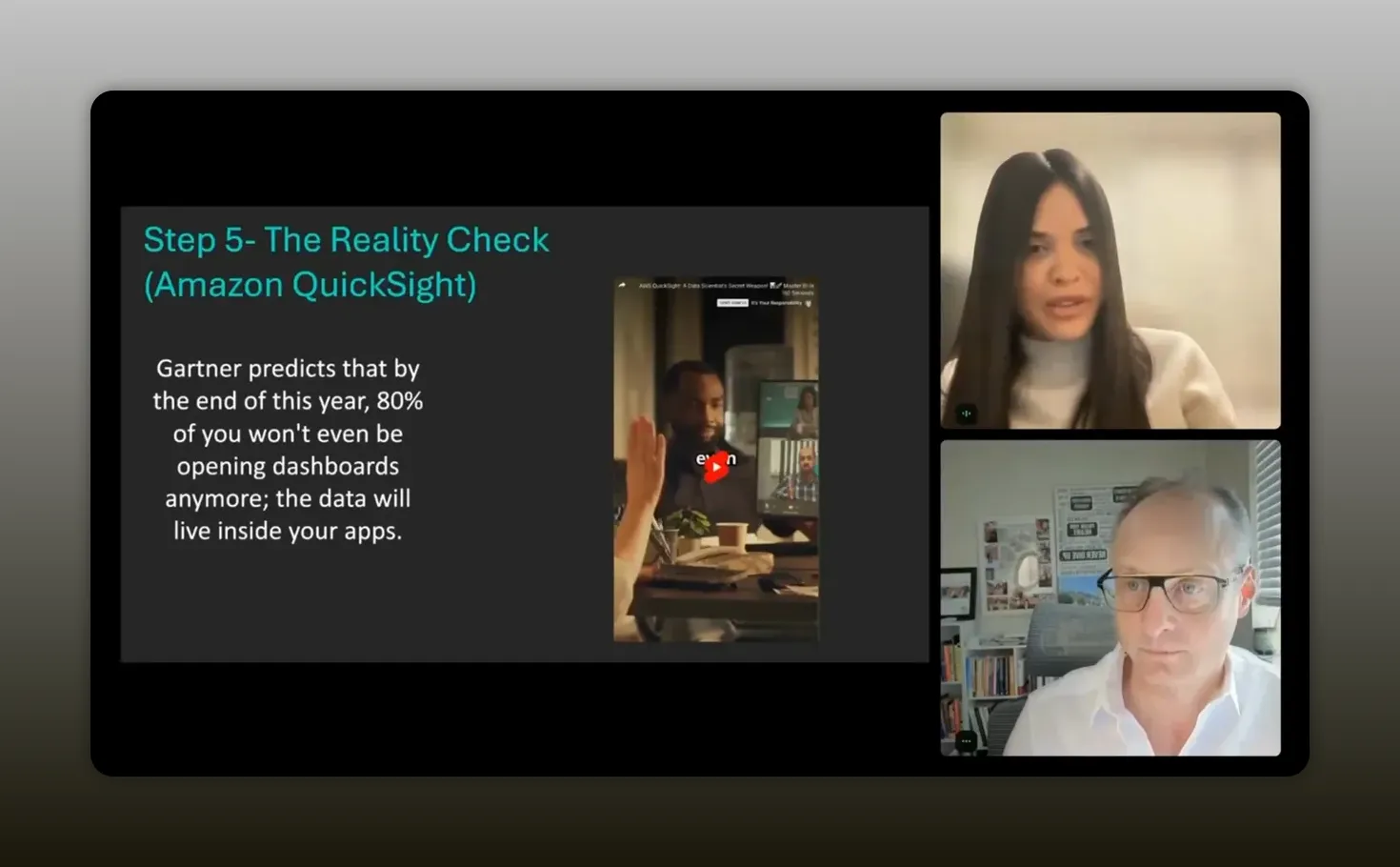
“QuickSight… puts it in a nice dashboard with many colors.” – Lior Bukshpan Amir
Personalized outreach at scale with conversational avatars
The next execution layer in Lior’s playbook is personalization at speed. She discusses conversational avatars created from prior content and data, positioned as a way to send video outreach that feels personal instead of generic.
The key idea is not just “video for video’s sake.” It is about reducing the friction of creating multiple video messages. She also highlights that personalized video can boost engagement, including higher click-through rates.
Why avatars fit the partnership motion
In partner recruitment, personalization is expensive in time. People take multiple takes to record a short message, and the content production cost rises fast when you scale outreach.
With avatars, you can:
- Use a written script to generate the delivery
- Personalize based on existing data and content
- Reduce the number of manual recordings required
- Maintain brand consistency while increasing volume
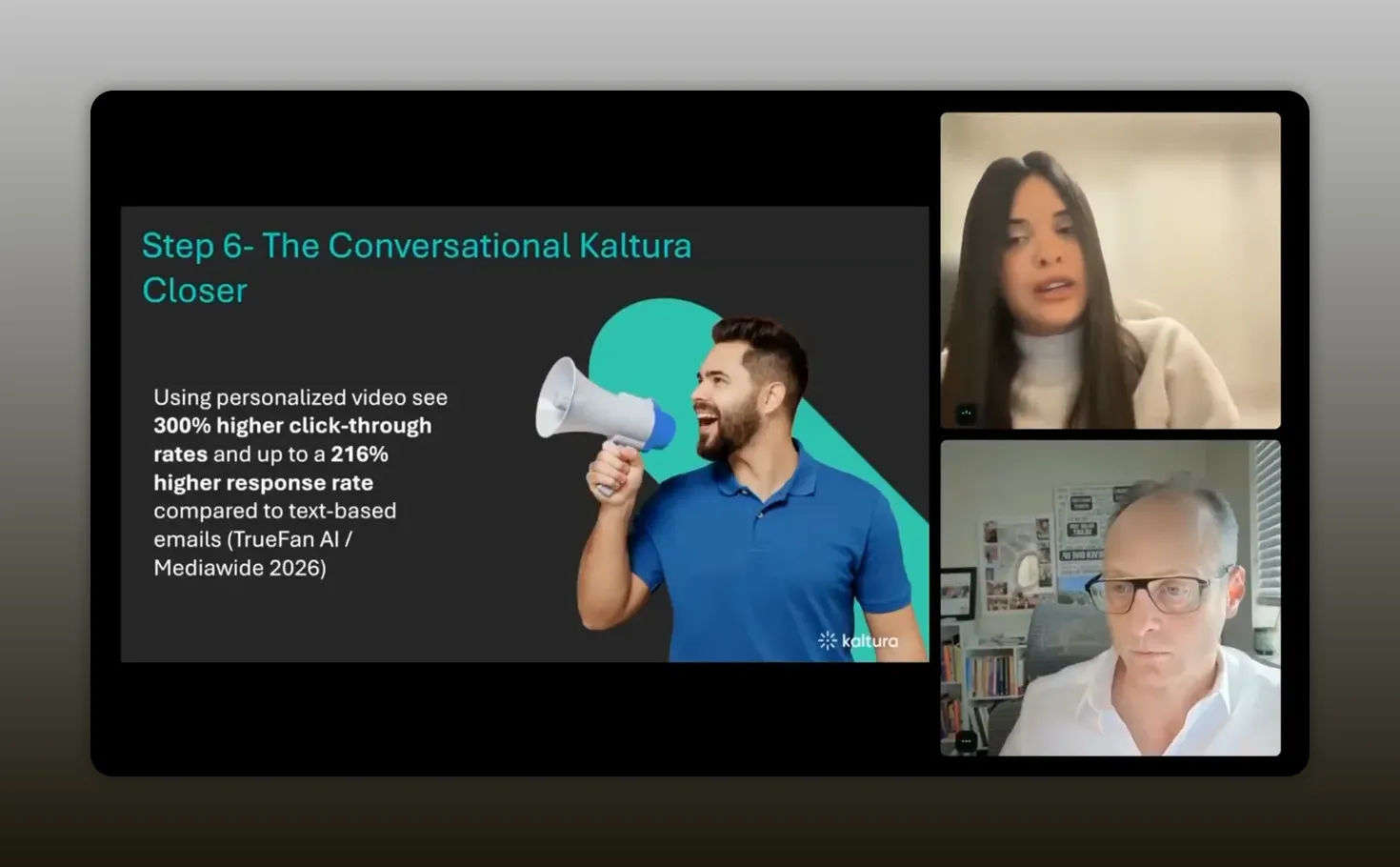
“You can create avatars based on prior existing data and content… so you’re not having to create video after video after video.” – Justin Zimmerman
Recommended tools to accelerate each step
Tools are only useful when they plug into a workflow. Here is a practical mapping of the steps from Lior and Justin’s process to the tools mentioned.
AI research and outreach personalization
- ChatGPT (or similar) for company scanning, use case understanding, and targeted outreach drafts.
- Gemini and other research assistants as alternatives for ideation and summarization.
Validation and overlap discovery
- Crossbeam to validate overlap across leads, prospects, and customers, and find the right contacts.
Pitch assets and sales enablement
- Gamma to generate slide decks from prompts in minutes, so you spend more time on conversations than design.
Dashboards and partnership operational tracking
- Amazon QuickSight for dashboards that pull together exports and create operational visibility.
Video personalization at scale
- Conversational avatars for personalized video outreach, derived from scripts and existing content.
FAQs
Is AI enough to improve partner recruitment, or do I still need a workflow?
No—AI won’t fix a broken process by itself. You first need a clear workflow (discovery → validation → execution), then you use AI to accelerate each step.
How do I choose who to target for partner recruitment?
Start with “intelligent hunt” research: identify the company’s use cases, customers/logos, website positioning, and the specific “why” that makes a partnership meaningful for your end-to-end customer outcome.
Do I need to fully sign the partnership before I run validation?
Not necessarily. The point is to validate early enough to avoid investing heavily in the wrong direction. You can validate potential fit as soon as you have a credible partner hypothesis.
What does “mind the gap between signing and revenue” mean?
Signing is not the finish line. You must build a post-signing execution workflow that turns partner intent into action—joint selling, integration enablement, usage, and measurable pipeline.
How does AI slide generation (“zero-hour pitching”) help in practice?
Use tools like Gamma to generate draft decks quickly from prompts, then personalize based on the partner’s customer context and your shared “better together” story—so you spend less time designing and more time selling.
What should I track to know partnerships are actually converting?
Track revenue-linked outcomes: partner-influenced lead/opportunity creation, joint pipeline sourced from the integration, conversion rates, and adoption/usage signals that predict future success.
Can partnerships still work with competitors?
Yes. Focus on the “middle zone” where the partnership improves the end-to-end customer experience. Even with feature overlap, you can win if you align on complementary value and can articulate the integration-driven customer outcome.
Conclusion
The big unlock in this AI playbook is not that tools can do your work faster. The unlock is workflow design plus validation plus execution.
Start with intelligent hunting to identify the right targets. Validate overlaps using a truth meter approach so you only invest beyond a hunch. Mind the gap between signing and revenue by running an execution workflow that turns better together messaging into pipeline. Then accelerate your delivery with AI-assisted pitch creation, dashboards for operational reality checks, and personalized outreach (including conversational avatars) when you need scale.
In short: AI will not replace you. But a person using AI will out-execute someone who relies on patience, guesswork, and manual busywork.