State of AI in Partnerships 2026
Expert advice from Jay McBain (Chief Analyst, Omdia) and Tyler Calder (CMO, PartnerStack).
Snapshot
AI is no longer a curiosity sitting off to the side while your team keeps working the old way. Instead, it’s the operating layer beneath recruitment, enablement, co-selling, co-marketing, partner discovery, attribution, and even how your brand gets represented inside AI search engines like ChatGPT and Perplexity. At the same time, the gap is widening between people who are experimenting hands-on and people who are still waiting for a perfect roadmap. That gap matters. It affects your productivity, your team’s leverage, the quality of your workflows, and whether your company is positioned to win in the next era of B2B SaaS. The opportunity is huge, but so is the risk of standing still.
If you want to solve AI overwhelm, workflow inefficiency, and partner program stagnation, keep reading to see how Jay McBain, Justin Zimmerman and Tyler Calder can help you do it.
“In the next few years, the real winners will be the marketing and partnership teams that start building their own AI workflows—not just watching the hype.” Justin Zimmerman
Table of Contents
- Snapshot
- Why this year feels different
- The market is splitting
- Jay McBain’s big-picture view of the AI era
- What the decade of ecosystems really means
- Where the money and opportunity are moving
- Why partnerships are now central to growth
- How partner programs have to change
- The real AI opportunity for partner teams
- Trust has moved away from brands
- Why AI search changes co-marketing
- How PartnerStack is applying AI
- Practical takeaways for your team
- Recommended tools
- FAQs
- Conclusion
Why this year feels different
Every year starts with predictions. Most of them are forgettable. This one feels different because the topic itself is different. AI is not just another software trend, another channel tactic, or another growth lever to layer onto existing work. It is changing how work gets done.
Justin framed that reality in a way a lot of partner and marketing leaders can feel immediately. You know the sensation of seeing the hype, seeing the LinkedIn posts, seeing new model releases every week, and wondering whether everyone else has already figured it out. That feeling is real. It is also dangerous, because uncertainty can make you passive.
The better move is to get practical. Not theoretical. Not performative. Practical.
The goal of the AI Playbook Kickoff was to surface the tactical and operational playbooks people are actually using across partnerships, partner marketing, co-selling, enablement, and AI-powered workflows.
If you want more context on that shift in partner work, this related guide on how AI will reshape partnerships is a useful companion.
“The split in the market’s going to be people who get their hands dirty.” -Justin Zimmerman
The market is splitting
Justin’s prediction for the year was simple and sharp: the market is splitting into two groups.
- People who actually use AI tools, build workflows, experiment, and learn by doing.
- People who mostly observe the trend from a distance and wait for a cleaner, safer, more fully packaged version.
That distinction matters because the next phase of AI is not just about buying software with AI features. It is also about understanding how to work with AI agents directly.
There are really two paths developing at once:
- Platform AI: the AI built into the tools you already buy, such as PRMs, workflow tools, and partner platforms.
- Personal AI workflows: the AI agents and custom processes you run yourself on your own machine or through your own stack.
Justin’s point was not that you must become a full-time builder. It was that the people who understand both paths will become dramatically more effective. They will know what to buy, what to automate, what to personalize, and where to keep a human in the loop.
That combination creates what he described as the “hyper-empowered” partnerships or marketing professional. Someone using vendor AI to speed up core workflows, while also deploying lightweight agentic tools to do partner research, content prep, outreach support, and workflow orchestration on their own.
The result could be 5x, 6x, even 10x productivity in certain parts of the job. Not because AI replaces the role, but because it removes low-value drag.
Jay McBain’s big-picture view of the AI era
When Jay stepped in, he zoomed all the way out. AI can feel chaotic when you only look at tools, but Jay shows where this moment sits in the broader arc of the industry.
His argument was that tech moves in eras, not in neat, linear progress. You had the mainframe and midrange era. Then the cloud era. Now the AI era.
Each era reshapes the industry at a structural level. New winners emerge. Old giants weaken. Entire business models get remade. The biggest companies in the world change. The richest people in the world change. The fastest-growing products in history change.
Jay used examples that make the point impossible to ignore:
- IBM dominated one era.
- Microsoft rode the next shift.
- Salesforce helped define the cloud era.
- Nvidia and OpenAI are among the defining forces of the current AI era.
The message for you is clear: if eras create and destroy category leaders, then partner leaders cannot treat AI as a side project.
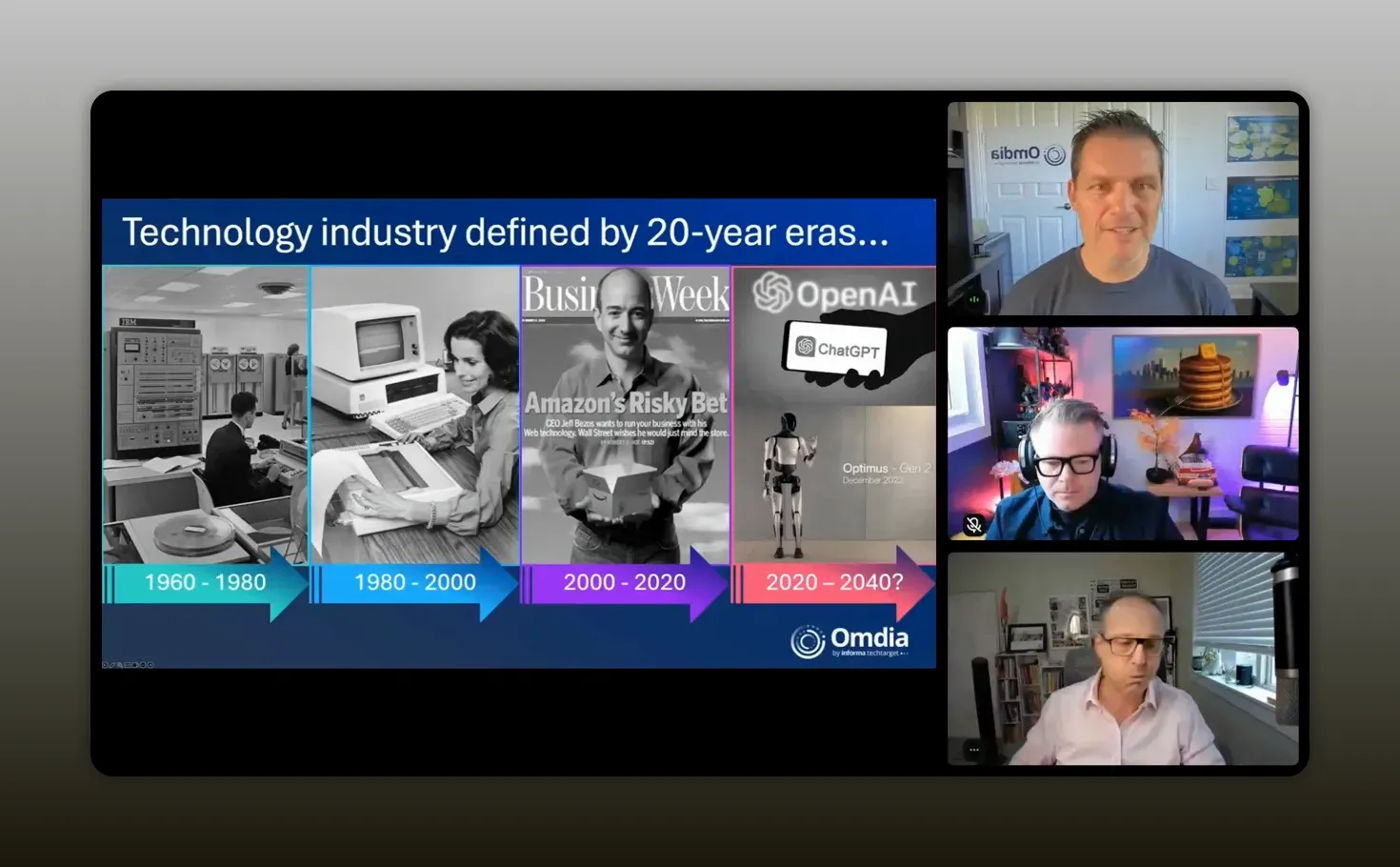
“These eras create change, and monumental change, in partnerships and ecosystems.” -Jay McBain
What the decade of ecosystems really means
Jay has been one of the clearest voices on the idea of the “decade of ecosystems.” If you have heard the phrase before, this session added important depth to what it actually means.
It does not simply mean partnerships are becoming more popular. It means the entire way companies win is changing.
For decades, many teams operated as if success depended mostly on product strength, brand, direct sales, or point solutions. That world is fading. In the AI era, platforms matter more. Integrations matter more. Services matter more. Partner influence matters more. Distribution matters more. Multi-party go-to-market matters more.
In other words, everything is becoming interconnected.
Jay argued that the companies most likely to thrive are the ones that master five parallel paths:
- Integrations
- Services partnerships
- Channel and distribution partnerships
- Strategic alliances
- Go-to-market motions like co-sell, co-market, co-build, and co-innovate
That framework is a big deal. It means partnership teams are no longer just there to manage a reseller list, collect registrations, or produce sourced revenue reports. You are now central to how the company competes.
That shift is exactly why this moment is so important. If you are in partnerships, your role is becoming more strategic at the same time AI is making execution more scalable.
Where the money and opportunity are moving
Jay brought the numbers, as usual, and the numbers were enormous.
He put the current tech industry at just over $6 trillion, with roughly two-thirds of spending still flowing through the channel. Even with direct AI infrastructure deals changing that mix, the larger point holds: partnerships remain one of the main ways money changes hands in the industry.
But the more revealing stat was this: 96% of that industry is surrounded by partners.
That means very few buying decisions happen in isolation. On average, a customer has 6.3 partners involved. In larger accounts, it can be 10 or more.
Those partners can include:
- Advisors
- Agencies
- Integrators
- Technology partners
- Consultancies
- Managed service providers
- Distributors
That ecosystem complexity is not a bug. It is the market.
And AI is accelerating it.
Jay also pointed to one of the most important economic shifts happening under the surface: the rise of services, marketplaces, and partner-led value creation around software. This is especially important if you still think of partner economics in classic margin terms. The bigger opportunity now often sits in the services and outcomes layered around software, not just in reselling the software itself.
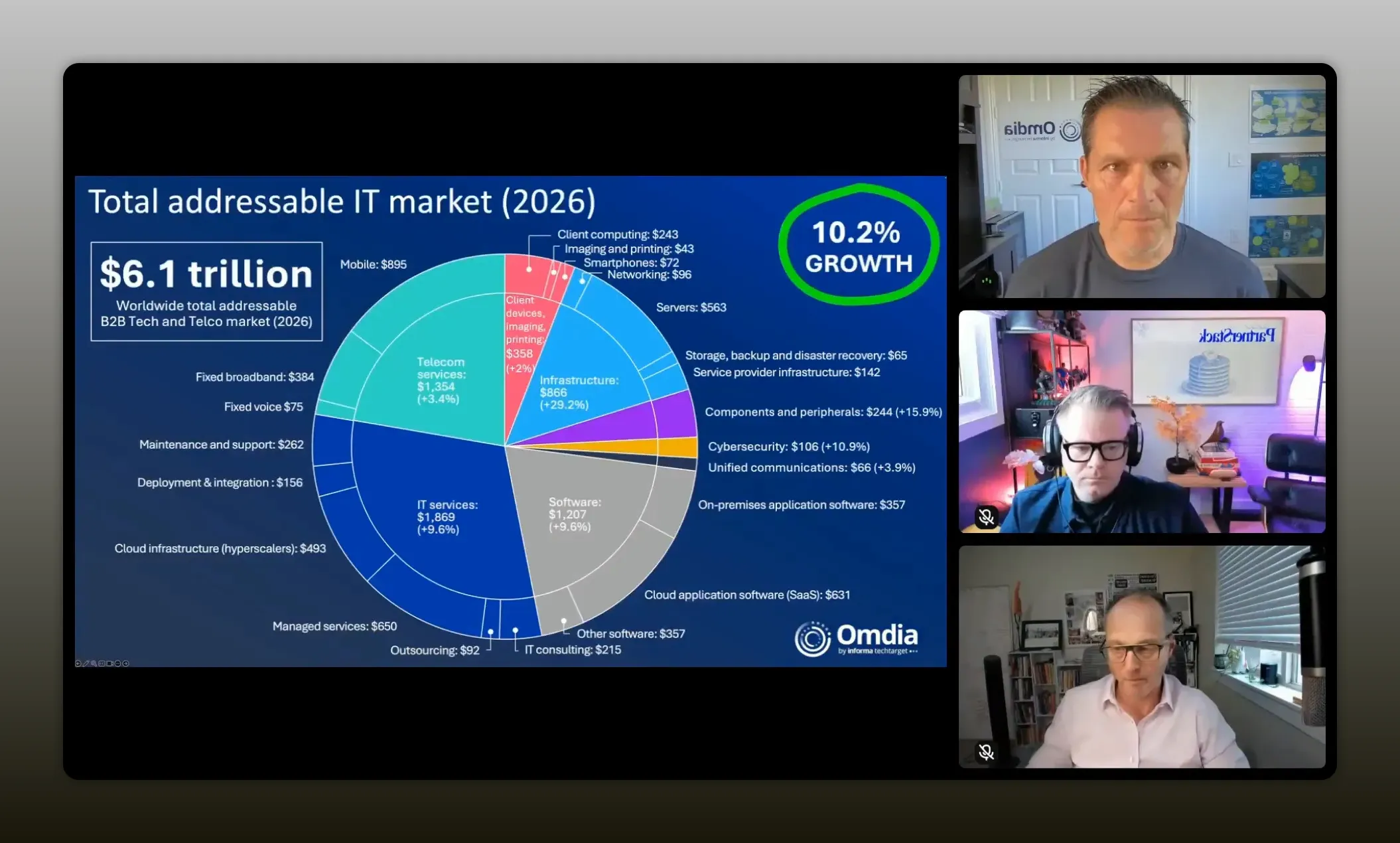
“When you look at the total addressable IT market, partnerships aren’t a side channel anymore—they’re where value gets created, where services get delivered, and where dollars change hands.” -Jay McBain
Why partnerships are now central to growth
One of Jay’s strongest points was that companies do not become category leaders anymore just by having the best product. They win by becoming platforms that other companies, service providers, and partners rally around.
He used CrowdStrike as an example of what that platform ambition looks like. To grow from a huge company to a much larger one, the strategy is not merely product expansion. It is ecosystem expansion.
That means:
- More integrations
- More services partners
- More channel leverage
- More strategic alliances
- More partner-driven go-to-market execution
Jay tied this directly to how modern buyers buy. The majority buyer in B2B is now younger, more research-driven, and far more likely to value interoperability and ecosystem fit. Integrations are not a nice extra. They are a buying criterion.
So are trusted experts in the room.
That is why your partner strategy can no longer be a separate lane. It has to be part of how your company enters markets, proves credibility, gains distribution, supports customers, and retains them.
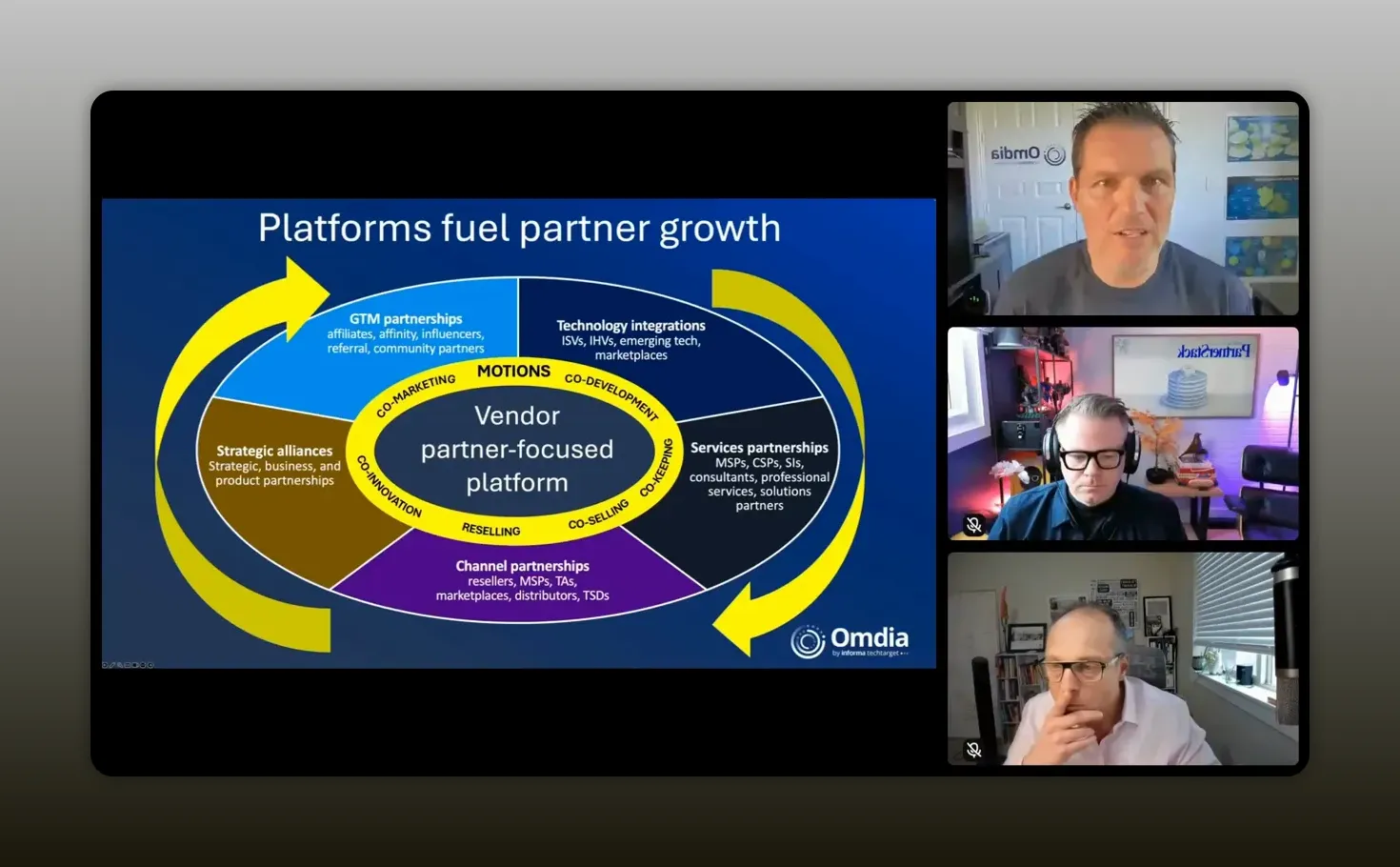
“You need to design your partner go-to-market like a platform: integrations, services partnerships, and channel motions—mapped to every buyer moment—so you can create value where the money changes hands.” –Jay McBain
How partner programs have to change
One of the most practical parts of Jay’s session was his critique of outdated partner program design.
Too many companies still organize partner programs around old categories and old incentives. They classify partners too narrowly. They compensate too heavily at the point of sale. They build rigid gold-silver-bronze systems that assume a partner has one identity and one monetization path.
That is no longer how the market works.
Jay’s case was that modern partners increasingly participate in multiple business models at once. They may influence the buyer early as consultants. Then they may support implementation. Then they may own managed services. Then they may build additional value on top. Increasingly, many are also coding and shipping their own AI-driven offers.
His estimate was that partners are participating in an average of 3.2 different business models.
That changes how you should think about:
- Recognition: Give partners credit for what they actually do, not just what closes in a CRM.
- Incentives: Move beyond only paying at the transaction point.
- Program design: Support partners across the customer lifecycle, not just lead handoff.
- Operations: Track partner influence before, during, and after the deal.
He also highlighted the growing use of point systems instead of simple resale compensation. Why? Because points let you fund behavior across the full lifecycle, including activities that create pipeline, accelerate adoption, or improve retention.
If your program still looks like a linear 1990s channel model, this is your warning.
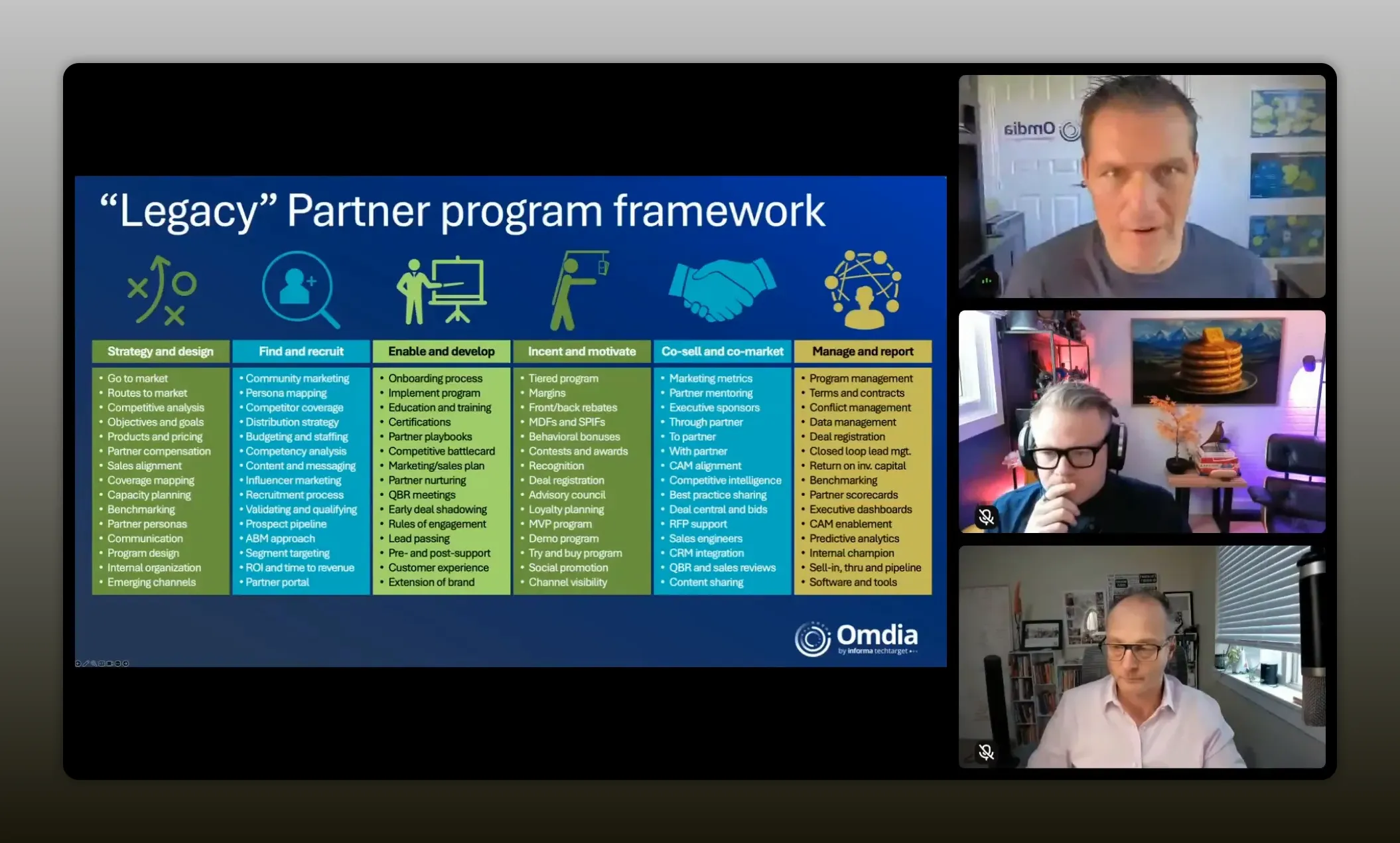
“If your legacy partner program is built around a static tier, a single moment in the funnel, and paying at the point of sale, it doesn’t work anymore—because partners now participate in multiple business models across the entire lifecycle.” -Jay McBain
The real AI opportunity for partner teams
There is a temptation to talk about AI in extremes. Either it is magic, or it is overhyped. Jay cut through that by grounding the opportunity in services and workflow transformation.
His view was that the first phase of the AI era has been mostly consumer-facing. Massive attention, huge usage numbers, endless experiments, plenty of demos. But in business, most proof-of-concepts have not yet reached production at scale.
That does not make the opportunity smaller. It makes it more important.
Jay’s point was that we are probably overestimating the short-term business impact while underestimating the first ten years.
For partner teams, the real opportunity is not just asking an LLM to draft copy. It is helping customers apply AI to their actual workflows, business logic, systems, and historical data.
That is where partner-led services become critical.
He cited research showing that in 88% of AI-related cases, partners are involved. And the related services opportunity is growing at 35% compounded through 2030, making it one of the fastest-growing areas in the entire tech economy.
That matters if you recruit, enable, or collaborate with partners. Because the winning motion is not “sell AI.” It is:
- Understand the customer’s workflow.
- Identify where AI can remove friction or create leverage.
- Connect the right data, systems, and people.
- Deliver implementation, integration, and managed outcomes.
This is where the AI conversation becomes operational.
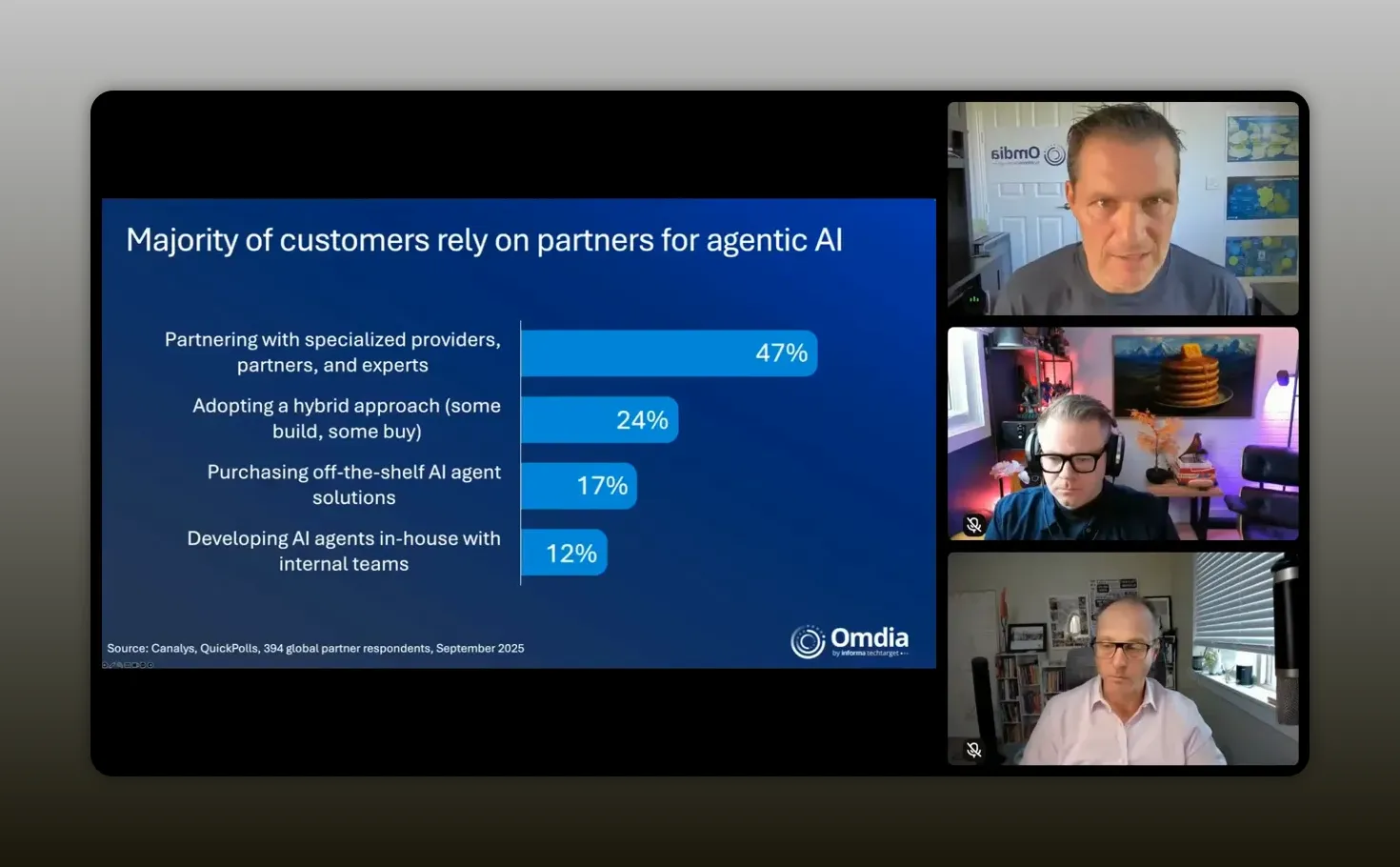
“The connected services that we’re connecting to that lifecycle is growing at 35% compounded till 2030.” -Jay McBain
Trust has moved away from brands
After Jay’s strategic sweep, Tyler brought the conversation down into the operating layer. His starting point was trust.
That is smart, because a lot of partner strategy makes more sense when you begin there.
Tyler explained that trust has not disappeared, but it has moved. Executives may still believe customers trust brands directly, but buyers are increasingly relying on third-party sources, communities, forums, peers, practitioners, creators, and partner-generated content to make decisions.
That shift has changed the buyer journey.
By the time someone talks to your sales team, a large portion of the decision process is already complete. They have been researching in Slack groups, reading Reddit threads, asking peers, reviewing partner content, and piecing together opinions from across the ecosystem.
That reality is a huge reason ecosystem go-to-market matters so much.
Tyler shared a compelling stat from PartnerStack’s customer base: companies embedding three types of partners, or partners supporting three stages of the buyer journey, grow pipeline about 42% faster than companies relying on a single partner type tied to a single moment.
That reinforces Jay’s broader point. The market rewards diversity of partner influence across the full customer lifecycle.
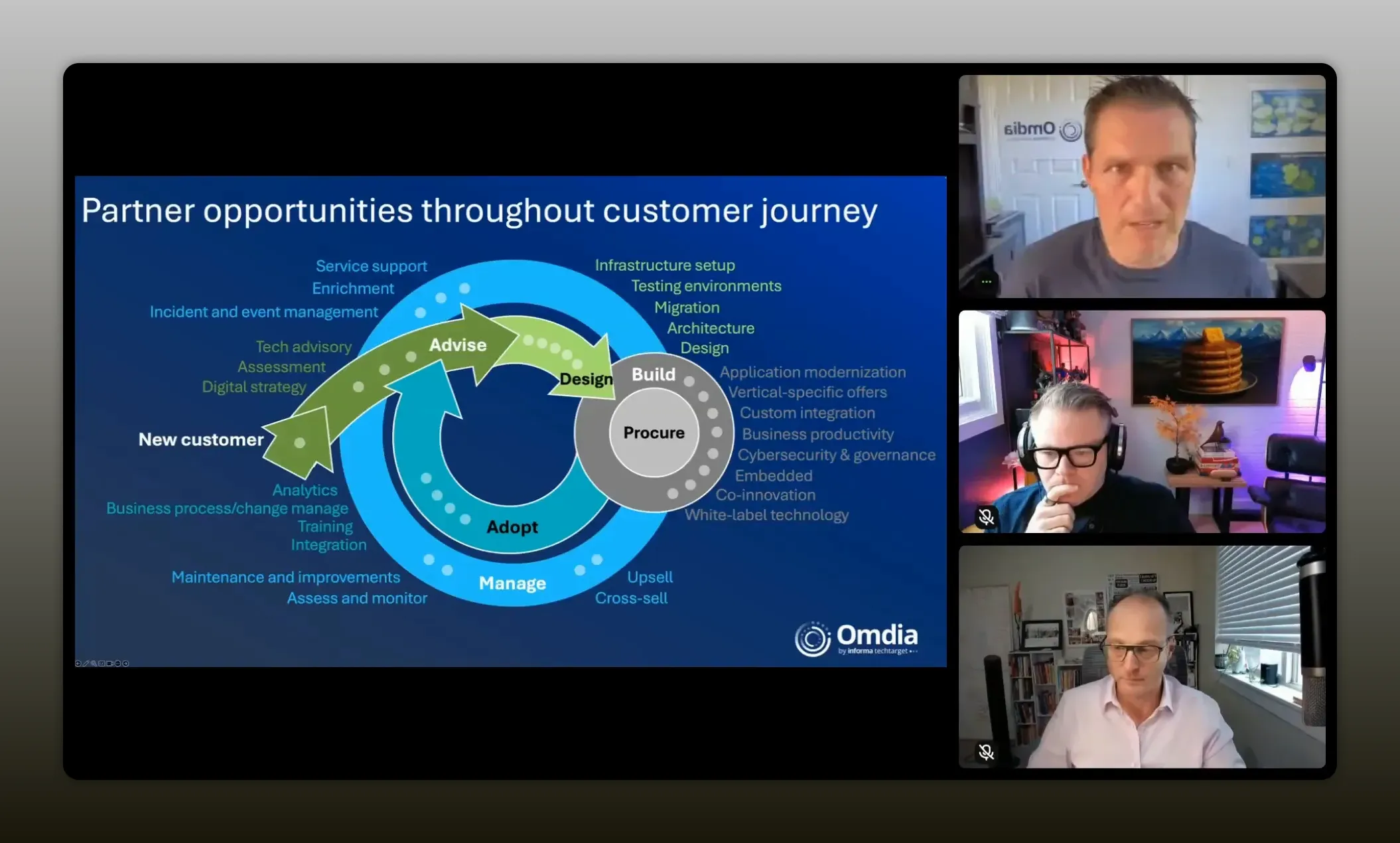
“Design your partner motion to support the customer across the full lifecycle—not just the moment of handoff—because partners are participating in multiple business models before, during, and after the deal.” -Jay McBain
Why AI search changes co-marketing
Search is changing from a world of traditional Google rankings into a world where large language models synthesize answers, compare vendors, and cite sources across the web. That means your brand is no longer represented only by your own website or your own direct content.It is increasingly represented by what the ecosystem says about you.
Tyler pointed out that close to half of the sources cited by LLMs when they mention a brand are third-party content sources, often partner-generated.
That is a major strategic shift.
It means co-marketing is no longer only about campaign performance, MDF usage, or lead capture. It is also about whether your company is visible inside ChatGPT, Perplexity, Gemini, and similar systems, and whether the narrative presented there is accurate.
For partner leaders, that creates a new responsibility and a new opportunity:
- Support partners in publishing high-quality, useful, relevant content.
- Coordinate messaging so brand narratives stay consistent.
- Think about ecosystem content as discoverability infrastructure.
- Work with marketing to treat AI visibility as a shared outcome.
If you are trying to scale this kind of motion, you may also want to explore ideas like more co-marketing without the headcount.
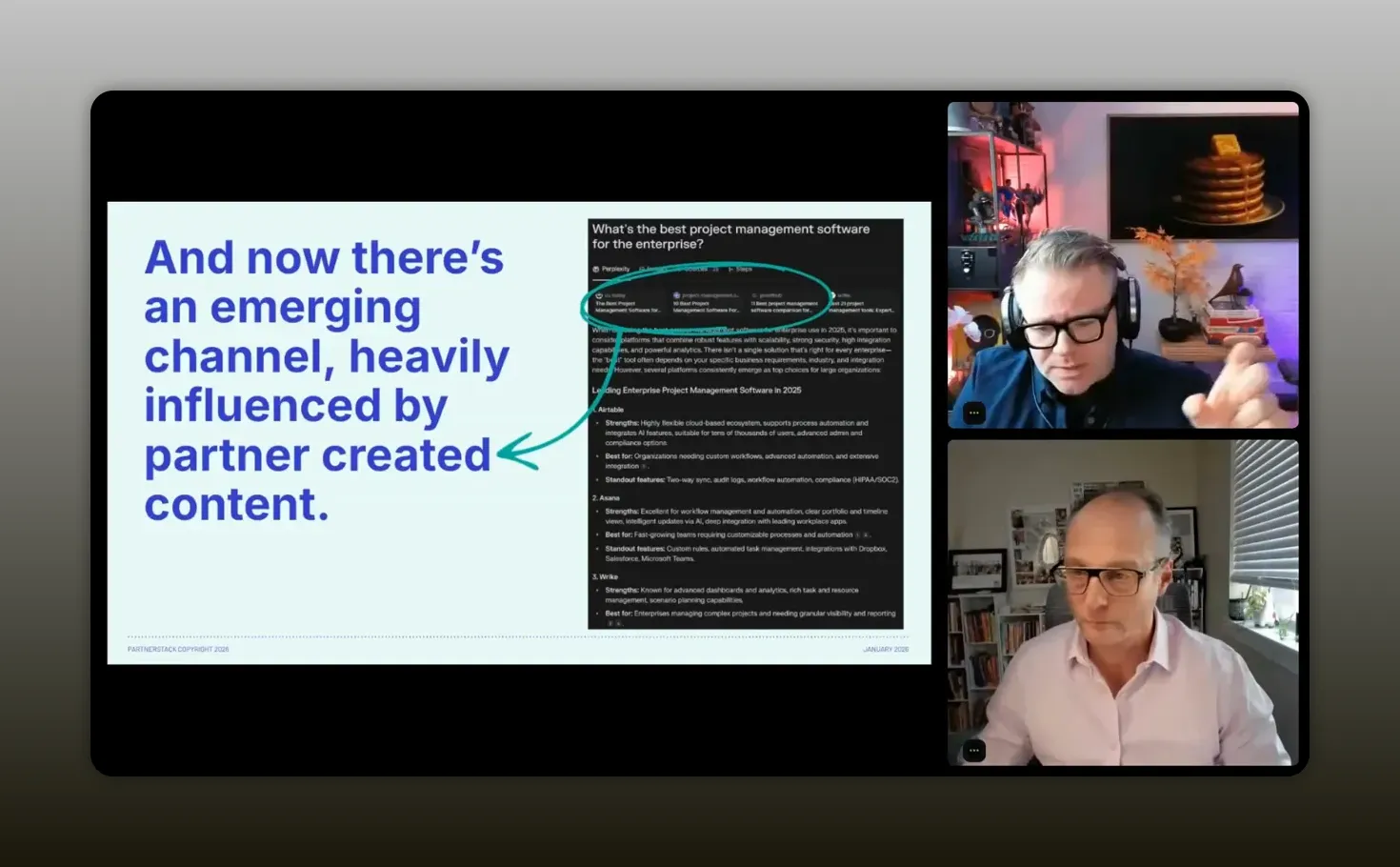
“It’s a huge opportunity for partner leaders to really anchor some of their co-marketing efforts.” -Tyler Calder
How PartnerStack is applying AI
Historically, sophisticated ecosystem motions have often felt like the domain of larger enterprises. PartnerStack is trying to make them easier for more companies to execute.
Here are some of the outcomes Tyler highlighted from customers testing AI-driven workflows:
- About a 40% increase in partner recruitment, especially around finding more ideal-fit partners.
- About a 30% reduction in partner ramp time, measured against first transaction or first revenue activity.
Those are significant gains because partner recruitment and activation are typically two of the most time-consuming parts of the job.
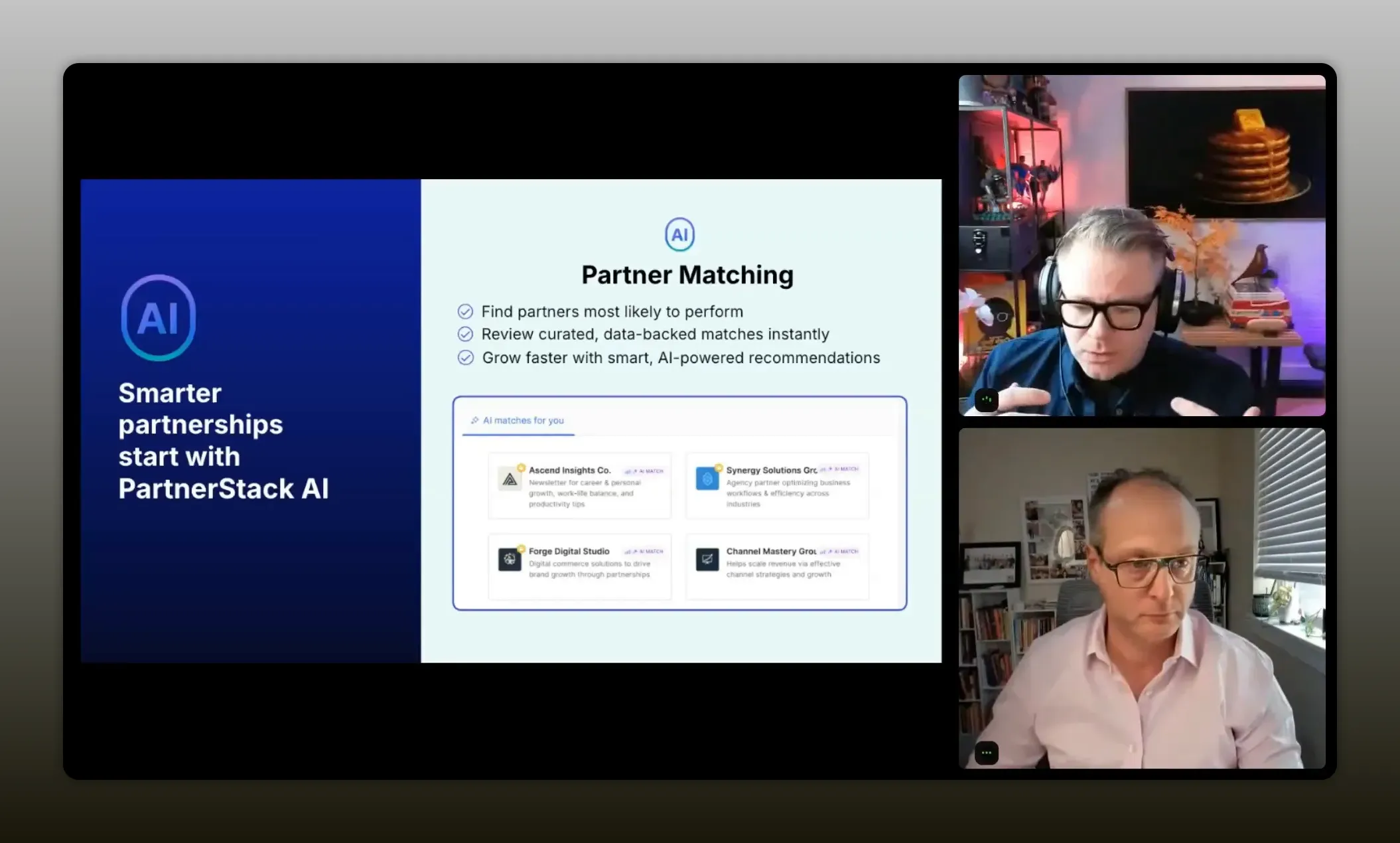
To support that, PartnerStack is building AI into several places:
Partner identification
The platform helps surface the best-fit partner prospects by looking for signals that suggest a strong likelihood of fit and future performance.
Personalized recruitment outreach
Once promising partners are identified, AI helps scale personalized invitations and outreach, with the aim of improving response rates without forcing the team into robotic, generic messaging.
Intelligent lead capture
Tyler also mentioned intelligent lead capture in email and Slack. This is a practical one. Instead of forcing everyone into a separate platform workflow, data can be captured where people already work, then enriched and structured inside PartnerStack.
AI recruitment agent
The next step, which Tyler teased, is a more complete AI recruitment agent that operationalizes the full process: identifying ideal partners, reaching out, bringing them into the program, and continuing through onboarding.
That fits neatly with the bigger theme of the event: use AI to eliminate repetitive friction so human teams can focus on higher-value work.
If partner recruitment is a bottleneck for your team, this related resource on AI partner recruitment is worth reading.
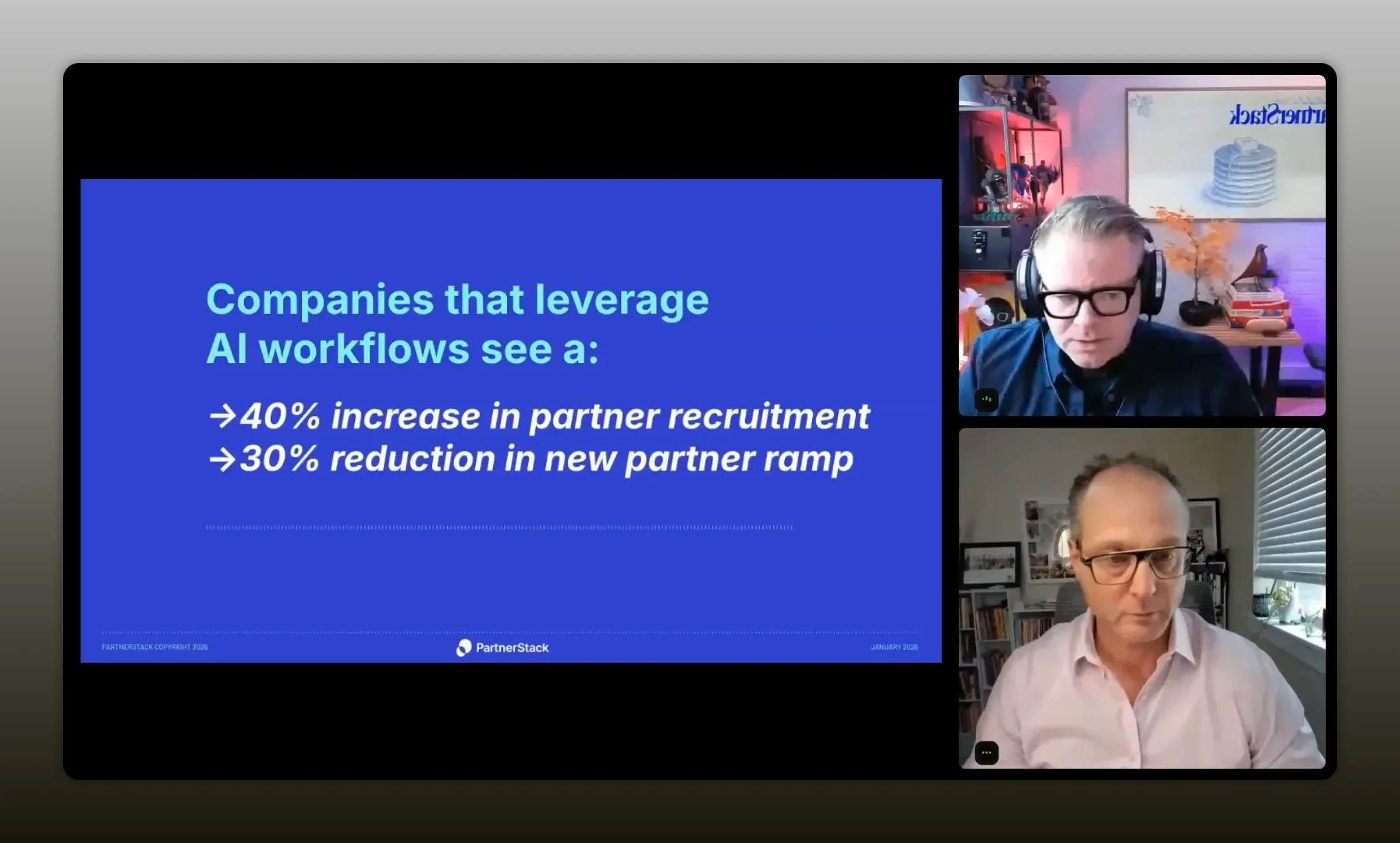
“When companies leverage AI workflows across partner recruitment, ramp, and co-marketing motions, they don’t just automate—they scale outcomes: we’re seeing roughly a 40% increase in partner recruitment and about a 30% reduction in partner ramp time.” -Tyler Calder
Practical takeaways for your team
So what should you actually do with all of this? A few priorities stand out:
1. Stop waiting for perfect clarity
The people gaining the most from AI right now are not the ones with the cleanest slide decks. They are the ones testing workflows, comparing tools, and learning where real leverage exists.
2. Think in workflows, not features
Justin kept coming back to workflows for a reason. Most partner and marketing teams live inside recurring processes: recruiting, enabling, communicating, tracking, co-marketing, content creation, reporting, attribution, follow-up. AI becomes useful when attached to those repeated tasks.
3. Use both platform AI and personal AI
Do not make this either-or. The AI in your software stack can speed up core operations. Your own lightweight agents and tools can extend your capabilities further. The strongest operators will use both.
4. Redesign partner programs around reality
Partners are not one-dimensional. If your program only rewards a narrow slice of value, you are under-incentivizing the very behaviors that create growth.
5. Treat ecosystem content as discoverability infrastructure
AI search is already changing how brands are found and described. Your partner ecosystem can either amplify your presence there or leave it to chance.
6. Keep humans on the highest-value work
Justin made this point clearly. AI can remove friction and administrative overhead, but the biggest deals still depend on trust, judgment, and human selling. The goal is not to automate away your role. The goal is to reclaim time for the work only you can do.
“When we think about tasks, when we think about agentic AI, those two things come together.” -Justin Zimmerman
Recommended tools
Based on the themes and examples shared in this session, here is the practical stack to pay attention to as you build an AI-enabled partner program.
- PRM platforms with embedded AI: tools that help with partner recruitment, ramp, lead capture, and workflow automation.
- LLM-based research tools: for partner discovery, message drafting, workflow support, and analysis.
- Collaboration channels like Slack and email integrations: especially when they can capture and structure partner activity where teams already work.
- AI search monitoring: tools and manual processes to understand how your brand appears in ChatGPT, Perplexity, and Gemini.
- Marketplace and ecosystem data platforms: especially if you are tracking multi-party influence and buyer journey complexity.
- Reference sources: for broader context, keep an eye on firms and publications following ecosystem shifts, including Canalys, and for AI platform dynamics, sources like OpenAI and Anthropic.
If you want a broader starting point for implementation, the on-demand event page for the 2026 AI Playbook Kickoff can help you continue from strategy into tactical sessions.
FAQs
Why is AI such a big deal for partnership teams right now?
Because AI is affecting both sides of the job at once. It changes how your internal work gets done through automation, agents, and workflow support. And it changes how buyers discover, evaluate, and trust vendors through ecosystem influence, partner content, and AI-powered search.
What did Justin mean by a split in the market?
He meant the growing divide between professionals who are actively experimenting with AI tools and building practical workflows, and those who are still mostly observing from the sidelines. The first group is likely to gain disproportionate productivity and leverage.
What is the difference between platform AI and personal AI workflows?
Platform AI refers to AI features built into the software you buy, such as PRMs or partner platforms. Personal AI workflows refer to the tools, agents, and automations you configure yourself to support your own daily work. Both matter, and the best results often come from using both together.
Why are ecosystems more important in the AI era?
Because companies increasingly win through integrations, services, alliances, distribution, and multi-party go-to-market execution. AI makes workflows and data more interconnected, which raises the value of trusted partners who can influence decisions and deliver outcomes across the customer lifecycle.
How does AI search affect partner marketing?
AI search engines often cite third-party content when describing brands. That means partner-generated content can directly affect how your company appears in tools like ChatGPT, Perplexity, and Gemini. Co-marketing now contributes not only to demand generation, but also to brand visibility and narrative control inside AI-driven discovery.
What are the biggest AI use cases for partner teams today?
Some of the clearest early use cases include partner recruitment, personalized outreach, lead capture, partner onboarding, workflow automation, ecosystem reporting, content support, and AI-assisted research for discovering ideal partners or market opportunities.
Will AI replace partner managers?
No. The stronger message here is that AI will remove administrative friction and scale execution, while partner managers remain essential for trust-building, strategic judgment, relationship management, and closing complex opportunities that still depend on human interaction.
Conclusion
You do not need to become an AI futurist to move forward. You need to become more operationally curious. That is the real takeaway here. Justin’s challenge was to stop letting hype create paralysis and start building practical familiarity. Jay’s challenge was to see this moment for what it is: an era change that will reward ecosystem leaders and expose companies still operating on outdated models. Tyler’s challenge was to connect that strategy to the actual mechanics of growth, trust, recruitment, and discoverability. Put all three together, and the path gets clearer. Think bigger. Work more tactically. Redesign around workflows. Use AI where it removes friction. Keep people focused where trust, judgment, and relationships still decide the outcome. That is how you stop feeling behind and start becoming one of the teams shaping what comes next.