AI Partner Recruitment (Letting the Robots do Your Dirty Work)
Expert advice from Erica Grodin (Sr. Growth Marketing Consultant, Rippling).
Snapshot
Traditional partner recruitment used to be a slow, spreadsheet-heavy grind filled with manual Google searches, contact hunting, and endless list building. Now AI can compress days of work into minutes, help you spot competitor-promoting publishers, uncover partner gaps in large language model results, and even draft better outreach based on the exact audience you want to recruit.
If your affiliate or partner team is one person deep, this matters even more. Every hour you save on research can go into outreach, activation, and revenue generation. The opportunity is not just to do the same work faster. It is to recruit smarter, prioritize better, and build a more scalable partner engine with less overhead.
Keep reading to learn how Erica Grodin and Justin Zimmerman can help you achieve faster partner discovery, better outreach, and stronger recruitment tracking.
“You can spend your time communicating with your partners and doing the important things, not building out lists.”Erica Grodin
Table of Contents
- Snapshot
- Why partner recruitment needed a reset
- Life before AI: the spreadsheet era
- Finding affiliate and content partners with AI
- Using LLM visibility data for recruitment
- Using ChatGPT as a partner research assistant
- Writing better recruitment emails with AI
- Tracking recruitment with your PRM
- How to choose the right PRM
- A simple AI-powered recruitment workflow
- Recommended tools
- FAQs
- Conclusion
Why partner recruitment needed a reset
If you run an affiliate, referral, agency, or content partner program, you already know the bottleneck is rarely “Should we recruit more partners?” The real bottleneck is almost always execution.
You need to answer practical questions fast:
- Who should you recruit first?
- Which publishers already promote your competitors?
- Which agencies or consultants fit your ICP?
- Who is already active in your category?
- What message will get a reply?
- How do you track all of it without drowning in another spreadsheet?
That is where Erica’s playbook stands out. It is not AI for the sake of AI. It is AI applied to the most time-consuming part of partner growth: discovery, recruitment, messaging, and tracking.
Justin frames the issue well. Plenty of teams still run partner programs out of spreadsheets, especially smaller teams and teams of one. That is not because they love spreadsheets. It is because recruiting partners has historically required so much custom research that spreadsheets became the default operating system.
The problem is that manual systems do not scale. If your process depends on searching, copying, pasting, validating, and writing one record at a time, you are spending your best hours on work a machine can now do much faster.
If partner-led growth is becoming more important in your business, this is also a good time to tighten the rest of your operating model. A useful companion read is this practical playbook for predictable partner-led growth, especially if you are trying to connect recruitment activity to larger revenue outcomes.
Life before AI: the spreadsheet era
Erica describes the old process in the most honest possible way: hard and tedious.
The workflow looked something like this:
- Google your company, product category, or target keywords.
- See which publishers or sites rank for those terms.
- Open each site manually.
- Figure out whether the site could be a fit.
- Search LinkedIn or a data tool like Apollo for the right contact.
- Find or verify an email address.
- Add context on why that partner matters.
- Repeat line by line, cell by cell.
That happens before outreach even begins.
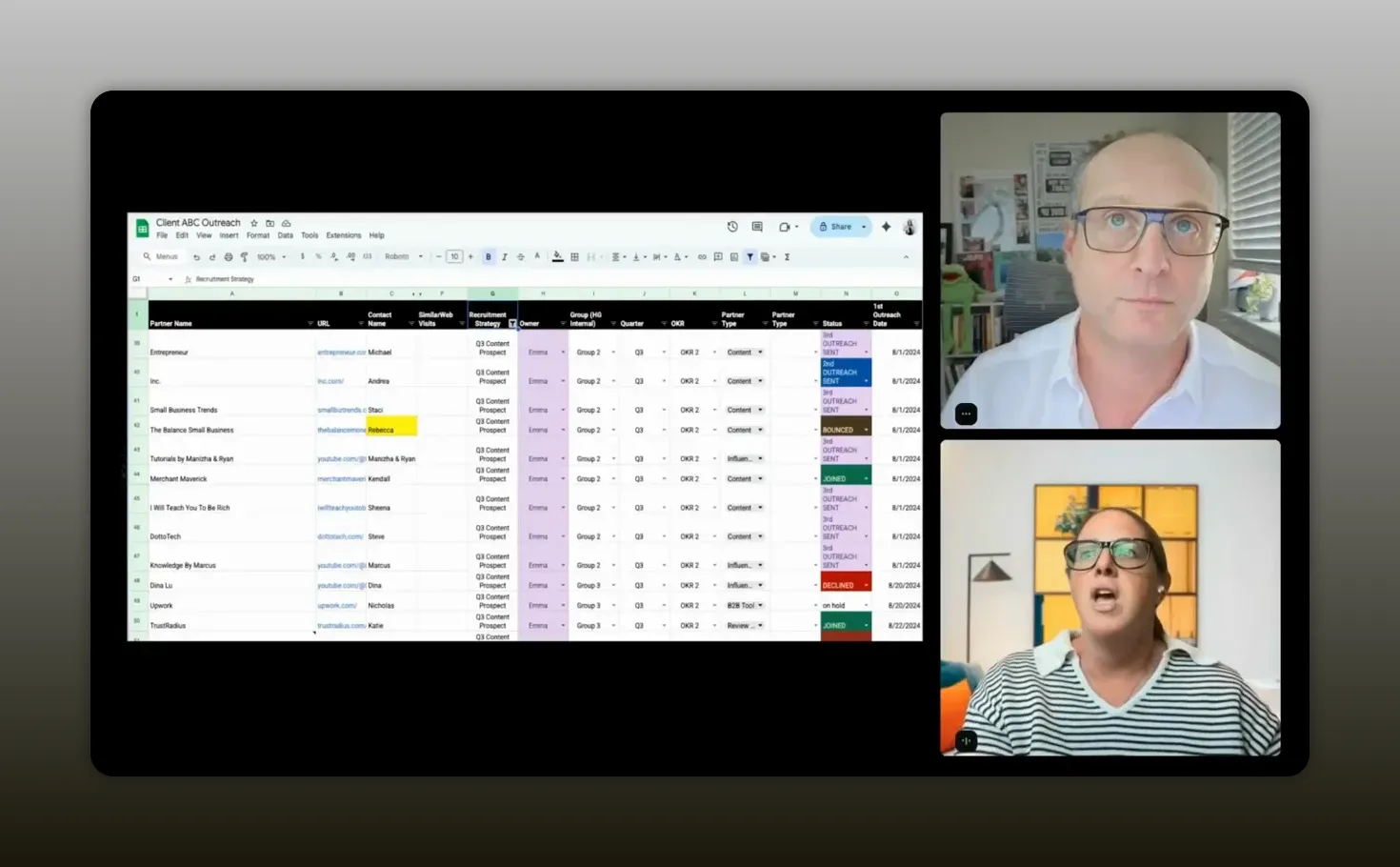
“The amount of time that we spent just building the list was insane.” -Erica Grodin
If you have ever built one of these sheets, you know exactly how it goes. The list starts out simple. Then it becomes a franken-sheet with notes, scores, owner names, guessed categories, source links, email status, and follow-up dates. It is useful, but it is also fragile. One missed update and your pipeline goes stale.
Manual partner research creates three major problems:
1. It burns time before value is created
List building feels productive, but it does not create revenue by itself. Recruitment only starts when outreach starts.
2. It limits how broad you can go
If every record takes several minutes to build, you naturally narrow your search too early. That means fewer tests, fewer outreach angles, and fewer unexpected wins.
3. It weakens follow-through
When the list itself takes too much effort to create, your team has less time for segmentation, personalized messaging, and follow-up.
That is why AI is such a meaningful change here. It does not replace partner strategy. It removes the repetitive work that used to consume the strategy.
Finding affiliate and content partners with AI
One of Erica’s favorite discoveries for content and affiliate recruitment is AffiliateFinder.ai. The appeal is simple: instead of manually hunting for publishers, you input your brand, your keywords, and your competitors, and the tool returns a list of relevant partners.
This matters for a few reasons.
First, you can search based on keywords that matter to your business. Erica recommends working with your SEO team to define those terms first. That helps you avoid vague searches and gives you a partner list that aligns with actual search demand.
Second, you can identify content partners already promoting your competitors. That is one of the strongest recruitment signals you can get. If a publisher already monetizes your category and has shown willingness to feature competitor brands, you are not trying to invent a partner use case from scratch. You are stepping into an existing behavior.
Third, the tool surfaces signals that used to require manual research, such as:
- Where a site ranks in search
- Traffic estimates
- Publisher details
- Contact information after saving prospects
Justin makes a useful comparison here. He describes it as something like a prebuilt Clay workflow designed specifically for affiliate and content partner recruitment. That is a good mental model. Clay is powerful, but it often requires substantial setup. A purpose-built partner discovery tool can reduce that complexity if your use case is tightly focused on publisher and affiliate sourcing.
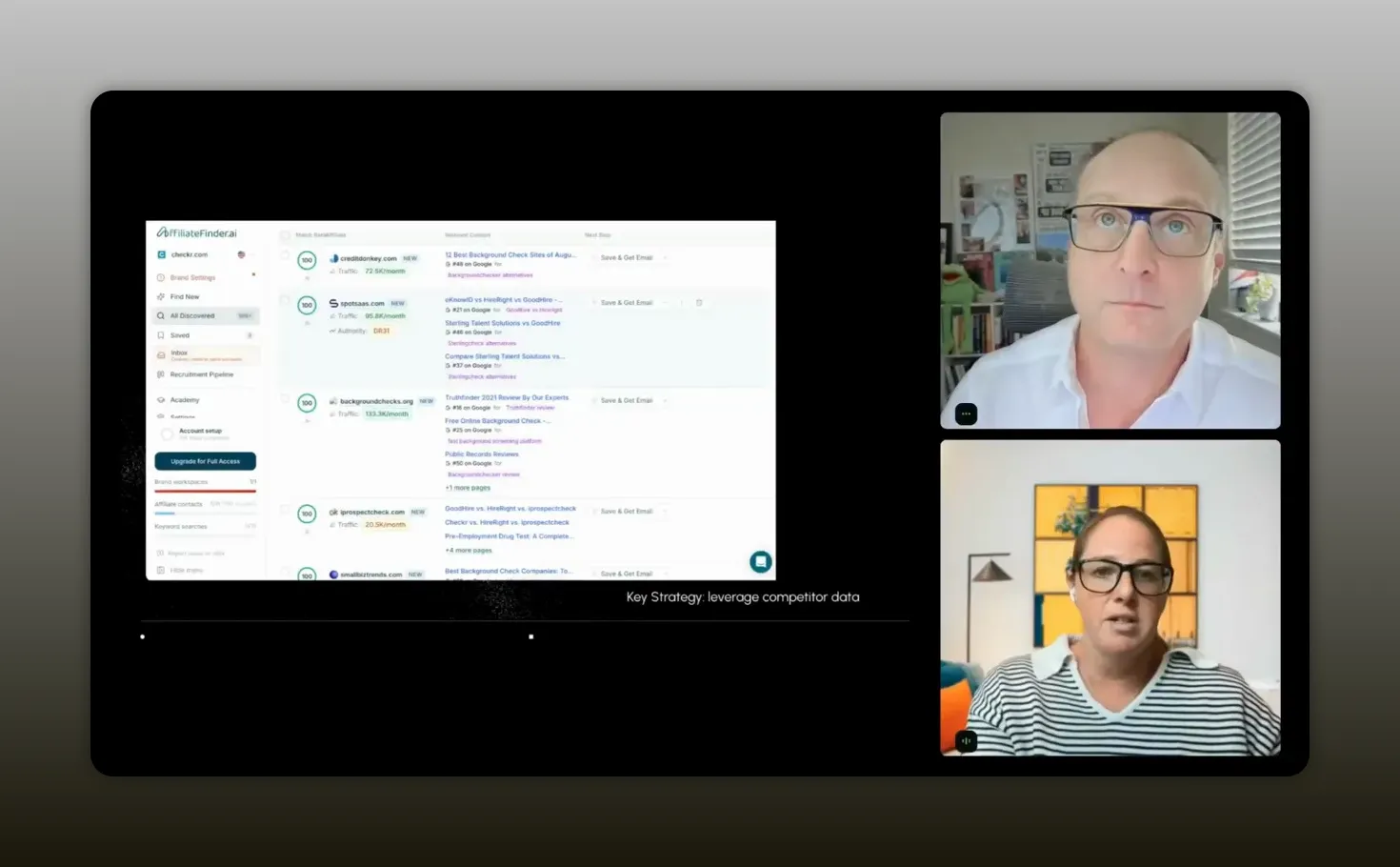
“All I have to do is go in here, put in the information that I’m looking for, and within a matter of minutes, I have it.” -Erica Grodin
Best practice: start with specificity
Erica’s advice is refreshingly practical: be specific about what you want.
That means:
- Use your highest-value keywords
- Include competitor names when relevant
- Align your search terms with SEO priorities
- Define the partner type before you search
If you search broadly, you will get broad results. If you search with commercial and category intent in mind, you are more likely to find partners who can actually move pipeline or revenue.
If your program is heavily focused on recruiting revenue-generating partners quickly, you may also want to compare this workflow with this guide on recruiting 100 revenue-generating partners in 30 days. The overlap is strong: strong signals, clear targeting, and repeatable motion.
Using LLM visibility data for recruitment
One of the most interesting parts of Erica’s playbook is how she uses LLM mention tracking tools such as Athena.
The use case is not just brand visibility. It is recruitment intelligence.
Here is the logic:
- Track where your brand appears in large language model results.
- Track where your competitors appear but you do not.
- Identify the content sources or partner opportunities behind those gaps.
- Recruit those publishers, affiliates, or partners into your program.
This is powerful because LLM visibility is becoming a new layer of discovery. Traditional SEO still matters, but people increasingly ask AI platforms for product comparisons, software recommendations, and workflow guidance. If your competitors are being surfaced there and you are not, that gap can become a growth problem.
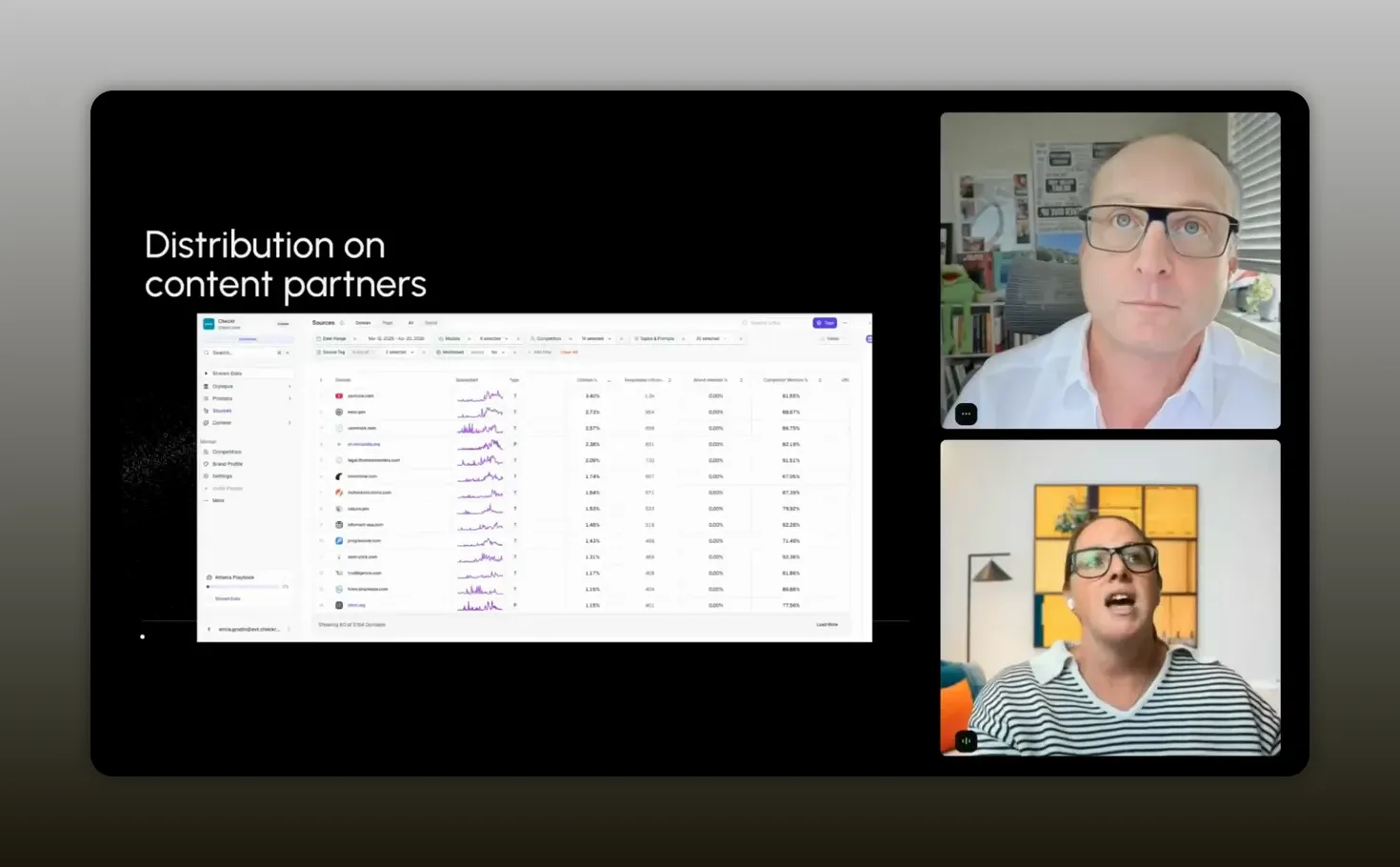
“You need to have something like this that shows you where you’re showing up and where you’re not.” -Erica Grodin
Erica’s point is straightforward: there is no easy manual version of this. You cannot treat LLM discovery the same way you treated Google rank checks years ago. You need tooling that reveals where your brand is absent.
That absence becomes a recruitment list.
In some setups, that list can be pushed into a PRM workflow, including PartnerStack’s integrations, to turn visibility gaps into active outreach opportunities. That is a useful bridge between market intelligence and partner recruitment operations.
If you are trying to understand the bigger strategic backdrop for why AI and ecosystems are colliding right now, this discussion on how tech ecosystems and AI collide in 2025 adds helpful context.
Using ChatGPT as a partner research assistant
Affiliate and content partners are only one part of the ecosystem. Many programs also need agencies, consultants, implementation partners, and niche service providers.
This is where Erica uses ChatGPT as an assistant.
Her approach is not to ask for a magic answer in one prompt. It is to run a working conversation. She starts with the partner type she wants, explains the category or vertical, and asks for a list. Then she refines, questions, and iterates until she has something useful.
That matters because strong AI output often comes from dialogue, not one-shot prompting.
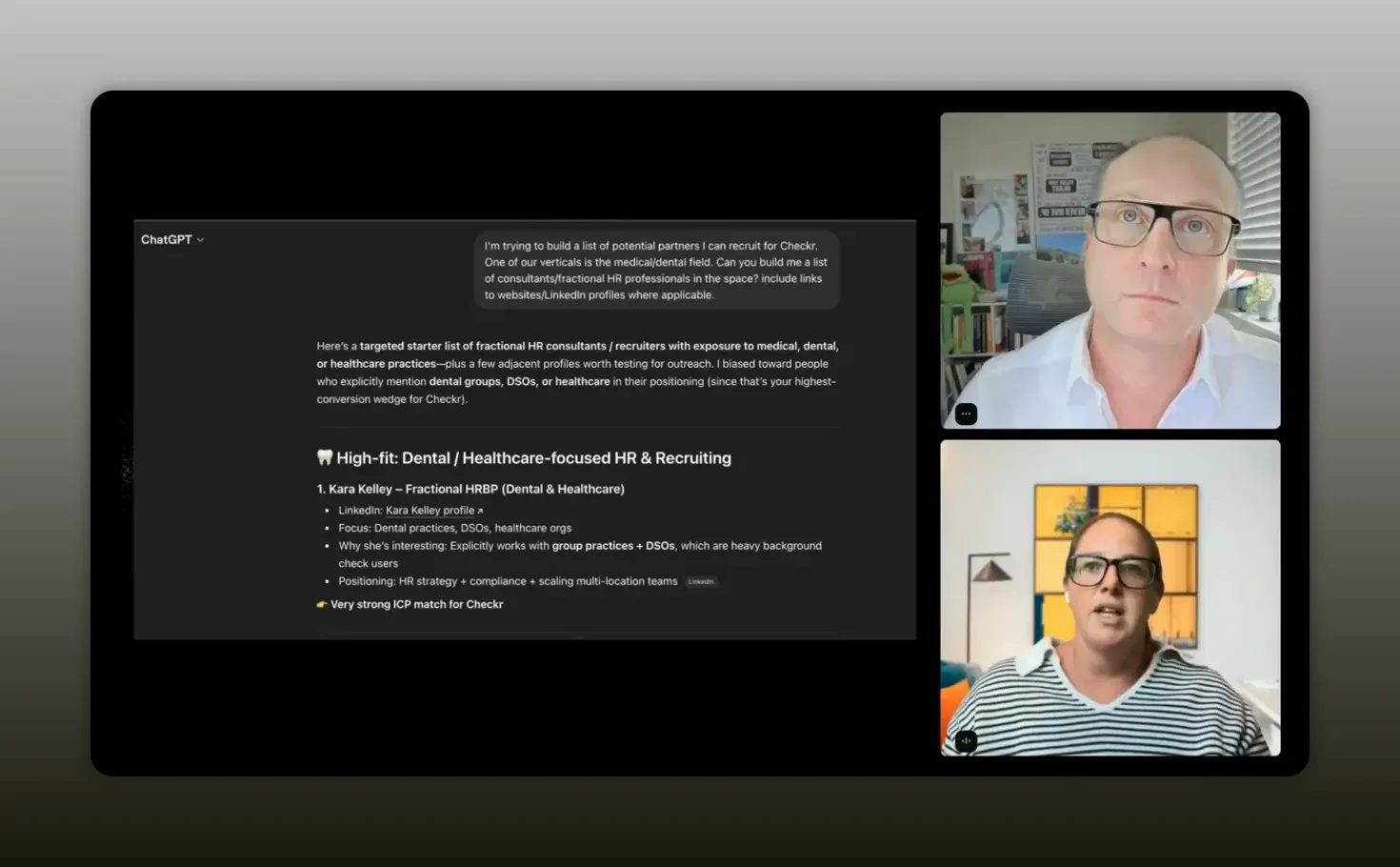
“I’m a one person team at a lot of these companies that I work at.” -Erica Grodin
If that sounds familiar, this workflow is especially relevant. Small partner teams need leverage. They do not need another tool that demands hours of setup before it produces anything useful.
Erica highlights agencies and consultants as especially strong use cases. These partner types often require more context than affiliate recruitment because you are not just asking, “Can they promote us?” You are asking:
- Do they serve the right clients?
- Do they influence software buying decisions?
- Are they positioned to refer or implement your product?
- Can they drive larger deals?
That makes AI particularly useful for organizing the market and suggesting clusters you may not have considered.
Why the back-and-forth matters
One especially useful detail is that ChatGPT did not just return names. It also started helping Erica think about positioning and messaging by segment.
For example, rather than leading with “join our affiliate program,” it suggested leading with the partner’s own business value, such as helping clients stay compliant or reducing onboarding friction.
That is the difference between a list and a strategy. A list tells you who exists. A better AI conversation starts to tell you why they should care.
Writing better recruitment emails with AI
Once Erica has the partner list and the angle, she asks AI to help draft the recruitment email sequence.
Again, this is not about blindly copying AI output into an email tool. Erica is clear that you still need to edit, refine, and make sure the message sounds human. But if you have been writing partner recruitment emails for years, the value is obvious. There are only so many ways to say, “Would you like to join our partner program?”
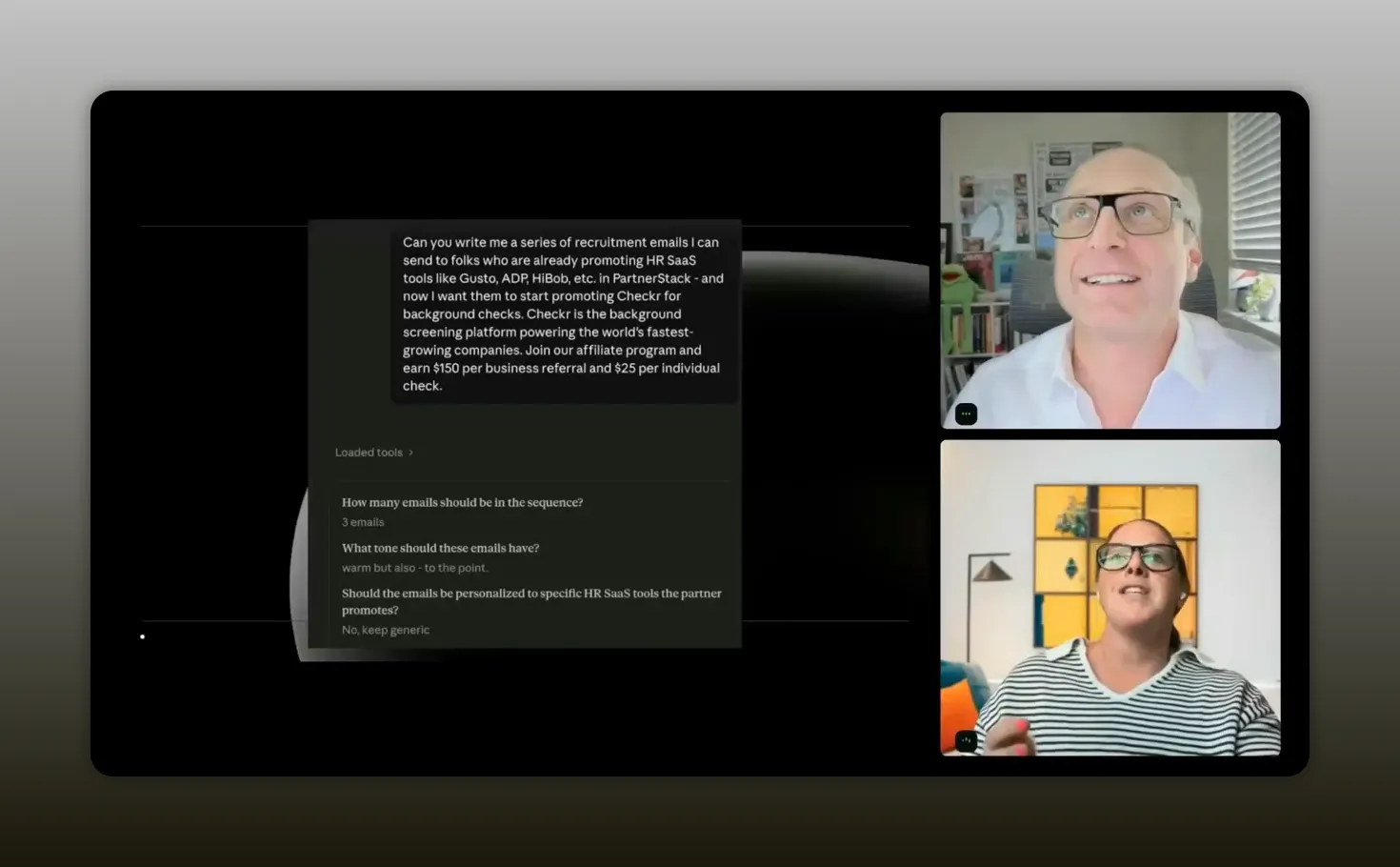
“There’s only so many ways that I can say, hey, would you like to join my partner program?” -Erica Grodin
Using AI here creates leverage in a few ways:
- It gives you a fast first draft
- It helps you build multi-email sequences
- It can suggest tone variations
- It can adapt messages by vertical or partner type
- It can generate alternate versions when performance lags
That last point is important. Erica talks about using AI iteratively. If one version works, you can build on it. If another version underperforms, you can go back, rewrite, and test again.
One underrated tactic: mention the platform they already use
Justin asks a smart question about why Erica includes the PRM name, specifically PartnerStack, in outreach emails.
Her answer gets right to friction reduction.
If your target partners are already familiar with the platform you use to manage onboarding, tracking, and payouts, mentioning it can make your invitation easier to accept. Especially in B2B ecosystems, many partners are already active across multiple programs on the same network.
That means your outreach can imply:
- No new unfamiliar system
- No complicated onboarding surprise
- No extra operational burden
- Lower switching cost
That is a subtle but important piece of recruitment psychology. Sometimes the best message is not “Our program is amazing.” It is “This will be easy for you to add.”
Tracking recruitment with your PRM
Discovery and outreach are only half the process. If you cannot track partner recruitment effectively, you lose momentum fast.
Erica uses PartnerStack not just as a partner platform, but as a practical recruitment management system. In her workflow, it acts a bit like a pipeline manager for partner recruitment.
She uses it to answer questions such as:
- Who has been contacted?
- Who joined the program?
- Who should be revisited later?
- Who opened the emails?
- Who ignored them?
- Which groups need follow-up?
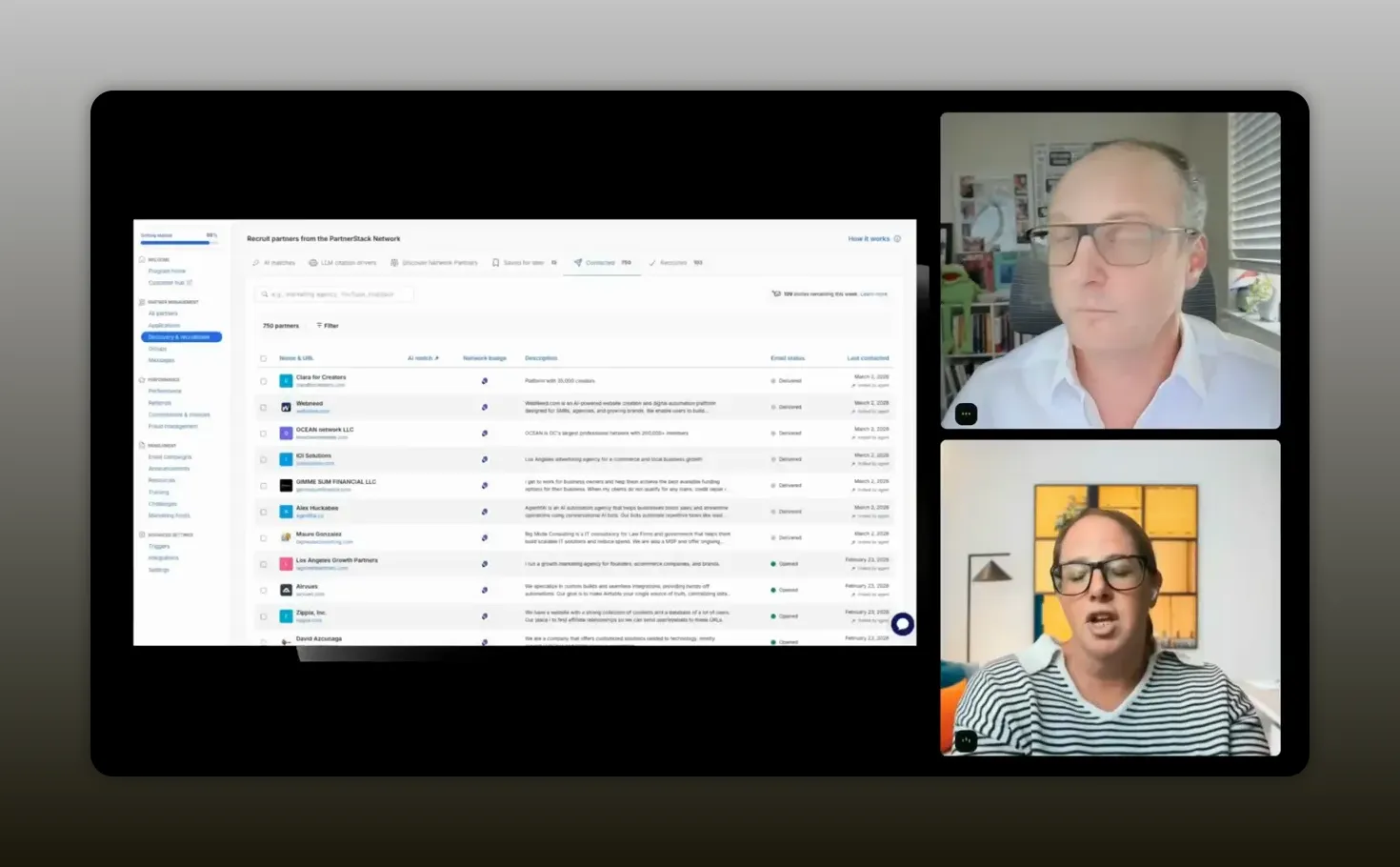
“It’s helpful to know when’s the last time I reached out to them.” -Erica Grodin
This is an important mindset shift. A PRM is not only for partner onboarding and commissions. It can also help you operationalize recruitment itself.
If you have ever managed outreach in one system, notes in another, and partner status in a spreadsheet, you know how quickly visibility breaks down. A cleaner system helps you:
- Reduce duplicate outreach
- Segment active and inactive prospects
- Build follow-up discipline
- See which sources produce better partner conversion
- Connect recruitment effort to eventual activation
That operational layer is easy to underestimate. But recruiting good partners is rarely about sending one perfect email. It is about managing a repeatable process over time.
How to choose the right PRM
Justin also pushes the conversation beyond one platform and asks a broader question: what actually matters when choosing a PRM?
Erica’s answer is useful because it stays grounded in day-to-day execution rather than vendor checklists.
The two biggest criteria
1. The network
Are the partners you want already on the platform?
This is the first and most important filter. If you recruit B2B software agencies, consultants, or affiliate partners, a PRM with a strong B2B network gives you a head start. If your target partners are in B2C and creator-heavy categories, another network may be stronger.
Erica’s point is simple: if your niche partner type is not there, the platform advantage disappears quickly.
2. Usability
Can you actually operate the program easily every day?
For operators, this matters more than flashy positioning. You need reporting, communication, status tracking, and workflow management that feel intuitive. If basic tasks require too much effort, the tool becomes friction instead of leverage.
Justin also raises implementation and support, which is especially relevant when standing up a new program. Erica notes that responsive human support matters, particularly during onboarding and technical setup.
A useful selection lens
If you are evaluating PRMs, start with these questions:
- What partner types are you recruiting?
- Are those partners already active on this platform?
- How much daily operational work will your team do in the PRM?
- Can a small team run it without heavy support?
- What does implementation actually look like?
If you want a deeper decision framework, this 2025 guide to choosing your next PRM is a strong supplemental resource.
A simple AI-powered recruitment workflow
If you want to put Erica’s approach into practice, here is the workflow in plain English.
Step 1: define your target partner types
Separate your recruitment motion by category. Do not lump everyone together.
- Affiliate and content partners
- Agencies
- Consultants
- Referral partners
- Niche vertical specialists
Step 2: define your best search inputs
Work with SEO or growth teams to identify the keywords and competitor names most relevant to your category.
Step 3: use specialized tools for discovery
For publishers and affiliates, use a discovery tool built for that purpose. For visibility gaps in AI search and LLMs, use a mention-tracking platform.
Step 4: use ChatGPT for adjacent partner categories
For agencies, consultants, and strategic partner types, use conversational prompting to build candidate lists and segment-specific messaging angles.
Step 5: generate outreach drafts with AI
Ask AI for email sequences by partner type, vertical, and tone. Then edit everything so it sounds like you.
Step 6: reduce friction in your pitch
If your target partners already know your PRM or network, mention it. Familiar systems lower resistance.
Step 7: track the pipeline in your PRM
Use your PRM or recruitment system to monitor contact status, responses, joins, and follow-up timing.
Step 8: iterate based on response quality
Winning outreach is rarely static. Refine messaging, partner segments, and source lists over time.
Recommended tools
The exact stack will vary by program, but these are the tools and categories highlighted throughout Erica’s process.
AffiliateFinder.ai
Useful for finding affiliate and content partners based on keywords, brand terms, and competitors. Strong fit when you want to uncover publishers already ranking or already promoting others in your category.
Athena
Useful for tracking LLM mentions, understanding where your brand appears in AI-generated answers, and identifying gaps where competitors are mentioned but you are not.
ChatGPT
Useful as a research and writing assistant for building partner lists, exploring vertical-specific messaging, and generating email drafts that you can refine.
PartnerStack
Useful for B2B partner program management, network-driven recruitment, onboarding, tracking, and partner communication. Erica also uses it as a practical way to manage recruitment status.
Apollo
Referenced as part of the older manual workflow for contact discovery. It can still be useful when you need to verify or enrich contact data.
FAQs
Can AI really replace manual partner list building?
AI can replace a large portion of the repetitive research involved in partner list building, especially for affiliate, content, agency, and consultant recruitment. It does not replace judgment. You still need to validate fit, prioritize the right prospects, and tailor outreach. But it can dramatically reduce the time spent gathering raw information.
What kinds of partners are easiest to recruit with AI tools?
Affiliate and content partners are especially well suited because they leave visible signals across search results, rankings, and competitor promotions. Agencies and consultants are also good candidates when you use conversational AI to build segmented lists and messaging angles.
How should you prompt ChatGPT for partner recruitment work?
Start with a clear description of the partner type, industry, target customer, and goal. Then refine through follow-up questions. Ask for candidate lists, segment breakdowns, value propositions, objections, and outreach messaging. The best output usually comes from an iterative conversation rather than a single prompt.
Why does LLM mention tracking matter for partner recruitment?
Because LLMs are becoming another discovery surface for buyers. If competitors are being mentioned in AI-generated recommendations and you are missing, that gap can reveal content sources, publishers, or partner opportunities worth recruiting. It turns visibility analysis into pipeline-building insight.
What should you look for in a PRM?
The two most important criteria Erica calls out are network fit and usability. Your PRM should already have the kinds of partners you want to recruit, and it should be simple enough for your team to operate without constant friction. Good support during onboarding also matters.
Should you mention your PRM in recruitment emails?
Yes, when it helps reduce friction. If your target partners already know and use the platform, naming it can make your invitation easier to accept because it signals familiar onboarding, familiar reporting, and less operational hassle.
Is this approach only useful for large partner teams?
No. In many ways it is more useful for teams of one or two. Erica specifically points out that many affiliate and partnership functions are run by very small teams, so AI becomes a practical assistant that expands capacity without adding headcount.
Conclusion
The real promise of AI in partner recruitment is not that it makes partnerships automatic. It is that it lets you spend more of your time on the work that actually compounds: choosing better partners, crafting stronger messages, following up consistently, and building a recruitment engine you can repeat.
Erica’s playbook is useful because it stays grounded. Start with the pain you already know. Manual list building takes too long. Outreach is hard to personalize at scale. Tracking gets messy. Then apply AI where it removes friction first.
If you do that well, you get more than efficiency. You get sharper targeting, better partner experience, and a program that can grow without every new recruit requiring another line in an overloaded spreadsheet.