Intent-first webinars: Generate pipeline even if registrants don’t attend
Expert advice from Mark Kilens.
Snapshot
Are you trying to turn webinar events into reliable pipeline? Easier said then done. Traditional webinars rely on the moment—people showing up and hearing the closing pitch and then buying. Statistically that is actually rarely. Attendance drops, engagement is low, follow-up is slow, and leads cool off.
The opportunity is bigger: capture intent earlier, route it automatically, and treat webinars as an intent capture engine rather than a single-time broadcast. When you design registration, in-event actions, and follow-up around intent and zero-party contact data, you can identify high-value prospects who never attend, qualify them immediately, and deliver them to sales with speed and context. This converts attention into measurable pipeline and gives you consistent ROI from partner-driven events, influencer posts, newsletters, and other inbound channels.
Keep reading to learn how Justin and Mark can help you achieve more partners sourced outcomes, higher intent capture, and faster sales conversions
Separate your leads into handraisers and learners and build flows that treat them differently. -Justin Zimmerman
Table of Contents
- Snapshot
- Table of contents
- Why rethink webinars now
- Partner-led traffic sources
- Better together: joint partner activations
- Monetize sponsorships and turn regret into ROI
- App ecosystem matchups and no-dev co-marketing
- Newsletters and creator amplification
- Influencers as top-of-funnel engines
- Becoming the platform: host creators, not be the expert
- Intent-first registration: discovery at scale
- In-event flow: polls, micro-CTAs, and hand-raises
- Post-event automation: qualifier campaigns and speed-to-lead
- Recommended tools
- FAQs
- Conclusion
- Social post
Why rethink webinars now
Webinars historically judged success by attendance and a final pitch. That model is fragile. Human behavior changed: most people register, few attend, and even fewer stay to the end. Your single-session reliance produces variable outcomes and wastes creative energy.
Instead, treat webinars as one of several inputs into a demand capture engine. Focus on intent and first-party contact data. Prioritize identifying who is in market versus those who are learning. If you can capture intent early—at registration or through short in-event interactions—you remove the “attendance bottleneck” and create a steady flow of qualified leads that feed sales and growth predictability.
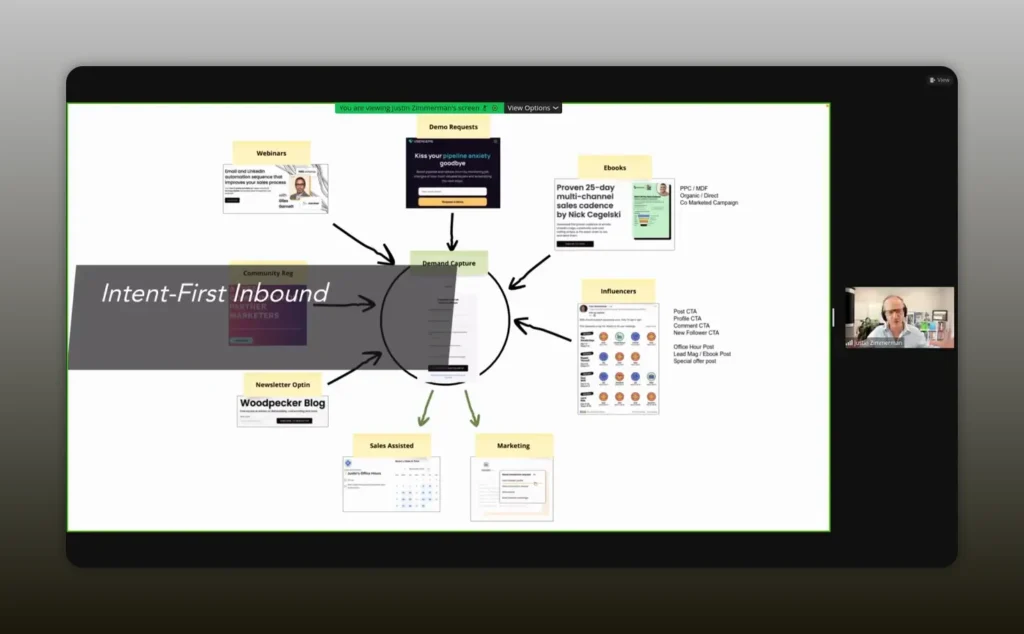
At the center of the system is an engine that captures intent and routes it intelligently. -Justin Zimmerman
Partner-led traffic sources
You can dramatically increase registrations and high-intent traffic by looking nearbound—partners who already sit close to your ideal customer profile. Justin breaks partner sources into repeatable categories you can activate today:
- Partners of partners: use introductions inside an existing partner’s app directory or marketplace.
- Sponsorship peers: connect with other sponsors who may feel they didn’t get ROI and co-promote.
- App ecosystem matches: find adjacent apps in HubSpot, Salesforce, PipeDrive and create better-together stories.
- Newsletter swaps: align with marketing managers who curate industry emails and plug your event.
- Influencers and creators: tap LinkedIn creators for high-volume top-of-funnel clicks.
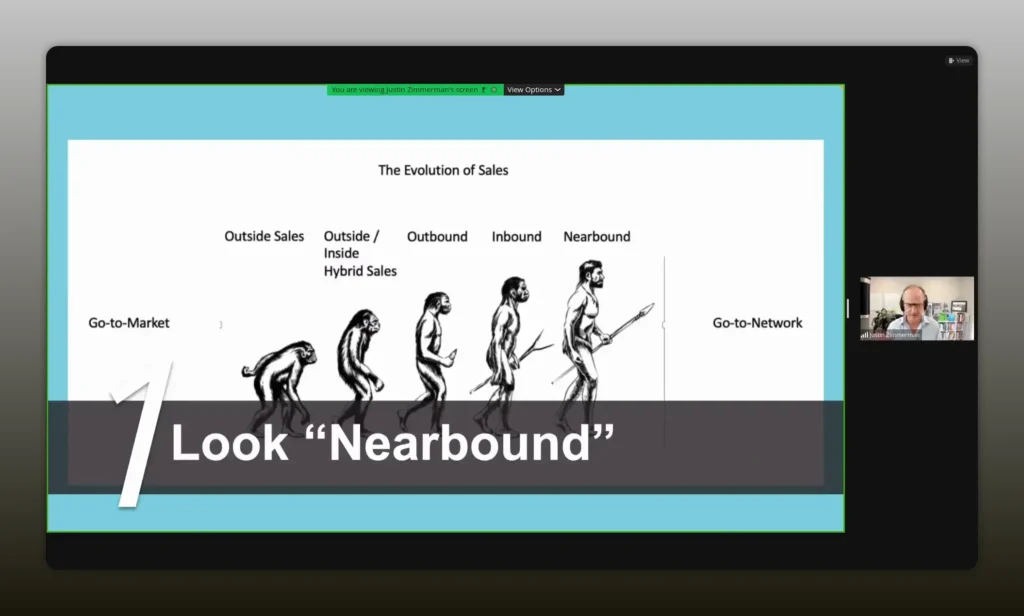
Ask partners who else in their ecosystem would like to co-market—you’ll unlock traffic you didn’t know existed. -Justin Zimmerman
Better together: joint partner activations
Run “Better Together” webinars that explicitly position two or three complementary solutions as a combined solution for customers. The key mechanics:
- Ask your current partner: who else in the stack solves adjacent problems? Get warm intros.
- Co-create a clear joint story that maps to a concrete customer job-to-be-done.
- Let each partner promote to their lists and channels—multiply reach without heavy ad spend.
- Design a simple registration flow that captures intent and stack details.
Justin’s case study: Woodpecker + DuckSoup + LeadFuse created a three-way webinar that produced thousands of clicks and over 100 unique activations. The lesson: partners’ partner lists are an untapped source of high-intent traffic.
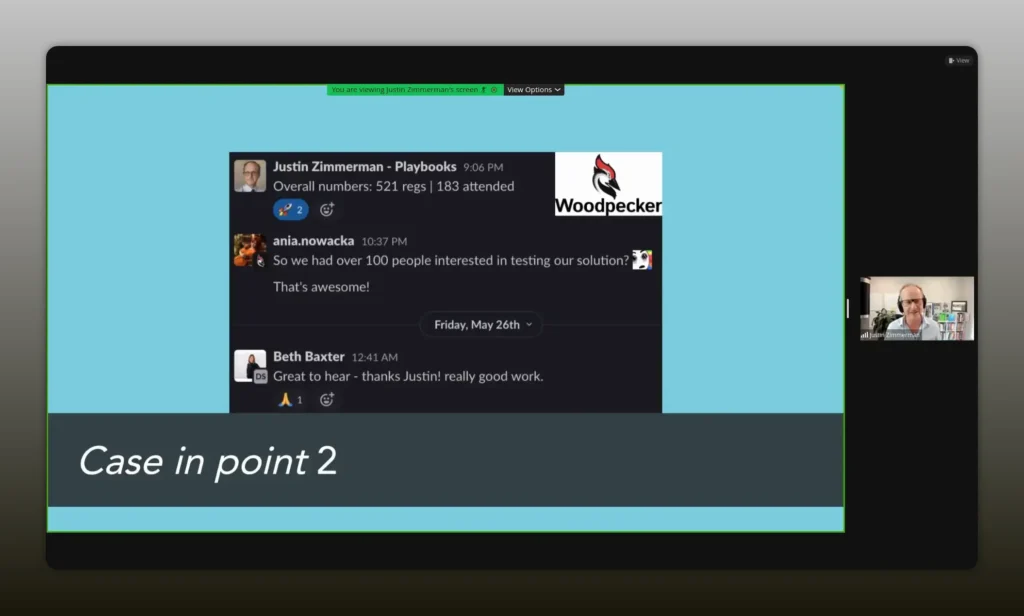
Three partners promoted a single ‘Better Together’ event and drove 1,400 clicks that wouldn’t have existed otherwise. -Justin Zimmerman
Monetize sponsorships and turn regret into ROI
Sponsorships often leave sponsors disappointed. Use that buyer’s remorse to build co-marketing plays post-event:
- Collect the sponsor roster and identify non-competing, high-ICP companies.
- Ask the event organizer for warm introductions—many will oblige.
- Propose a joint ebook or webinar and split promotion; attribute downloads and trials.
- Convert opt-ins into trial activations through intent capture and follow-up.
Instead of letting sponsorship spend evaporate, stitch sponsors together and run follow-on content programs. That creates measurable ROI and strengthens relationships for future co-marketing.
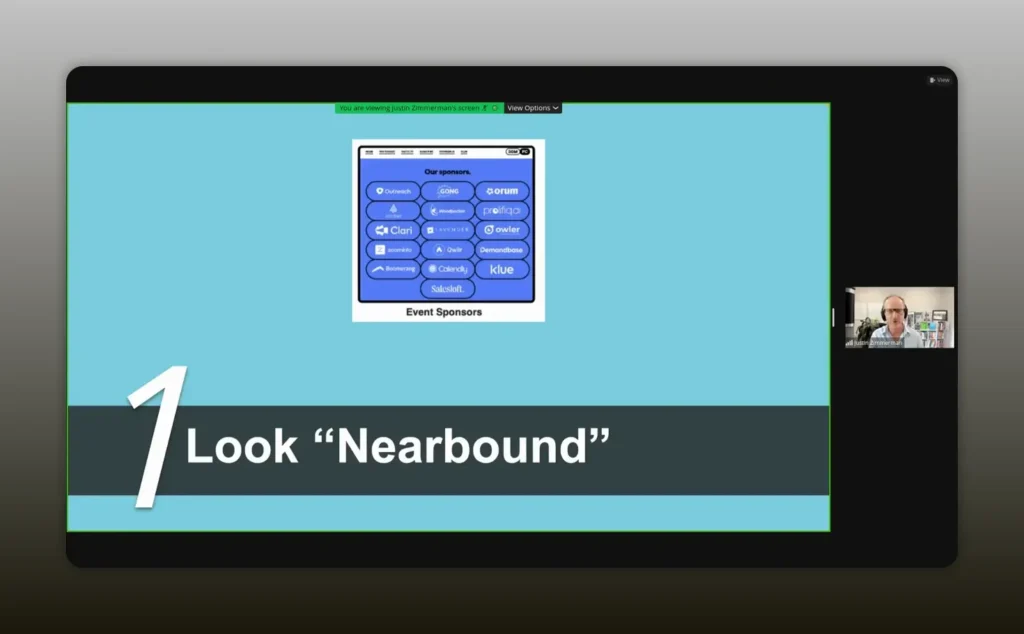
If you tap into the buyer’s remorse of other sponsors, you can create joint motions that yield free downloads and trial activations. -Justin Zimmerman
App ecosystem matchups and no-dev co-marketing
Stop hoping for love from platform giants. Instead, work horizontally inside app ecosystems:
- Identify apps that serve the same ICP (HubSpot, Salesforce, etc.).
- Get warm intros from your ecosystem manager or partner manager.
- Build a “Better Together” narrative—no extra integration work required if both already live in the same ecosystem.
- Scale repeatable co-marketing plays with many similar partners rather than betting on one headline integration.
This approach creates consistent partner opportunities and is far more reliable than waiting for a platform spotlight.
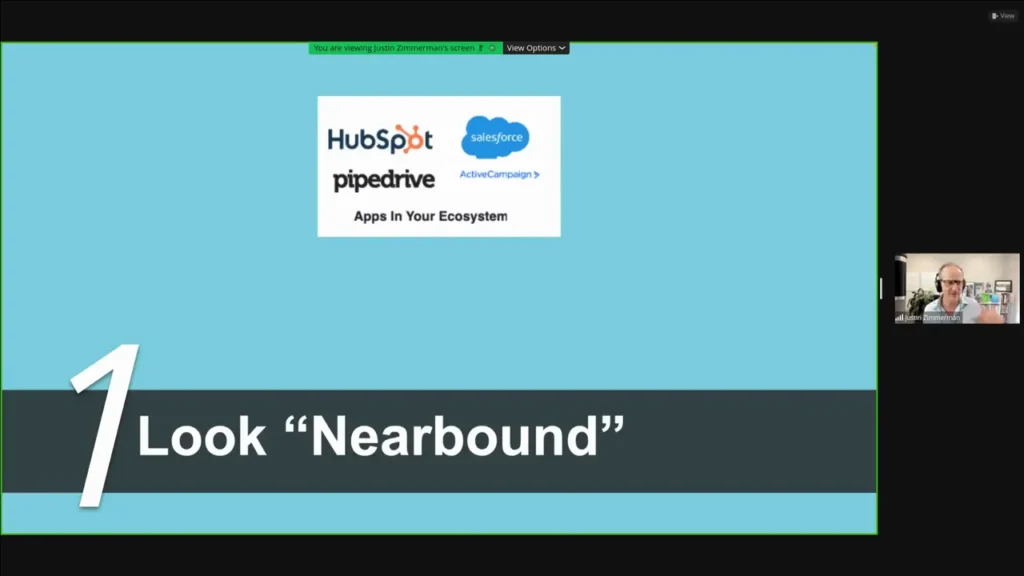
There are 5,000 other apps in that ecosystem who want the same attention—work with them, not against the gatekeepers. -Justin Zimmerman
Newsletters and creator amplification
Weekly newsletters are starving for good material. Build relationships with newsletter editors and offer relevant content aligned to their audience. This is low-cost, recurring traffic you can tap repeatedly.
- Curate five to six newsletter editors who serve your ICP.
- Offer short, high-value items they can run next issue.
- Coordinate timing so sponsorships and posts complement your webinar cadence.
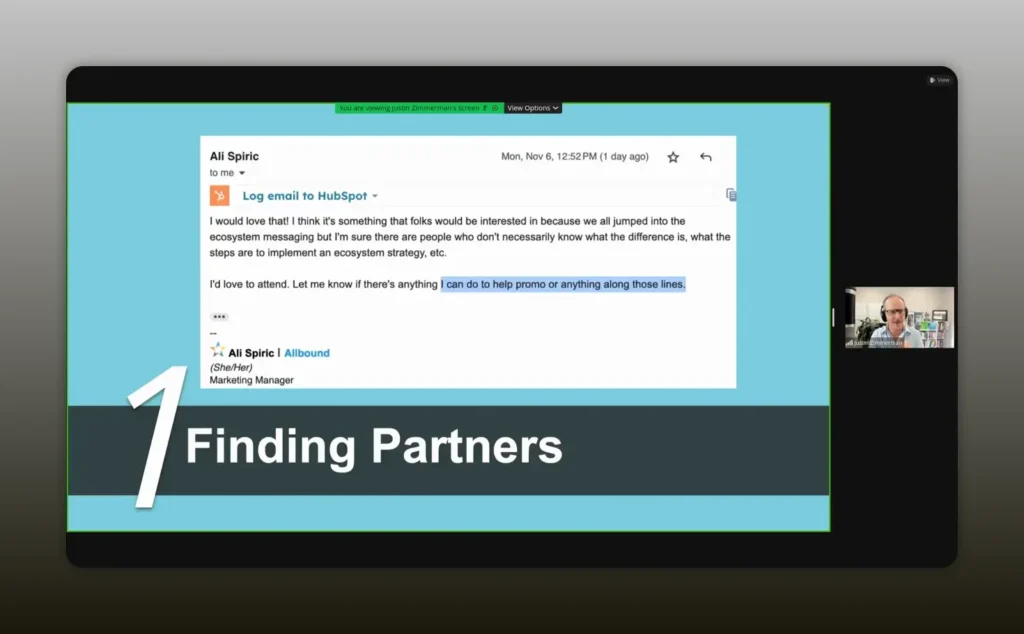
Marketing managers who run newsletters are a free source of traffic if you bring them relevant value. -Justin Zimmerman
Influencers as top-of-funnel engines
Creators produce attention; you convert that into measurable business results. Justin’s playbook with influencers looks like this:
- Identify creators who already resonate with your ICP and produce consistent reach.
- Co-create content flows where their posts link to a gated asset or webinar registration optimized for intent capture.
- Design the registration or ebook flow to collect sales-focused, first-party data so the top-of-funnel attention converts to qualified leads.
- Sequence follow-up from the influencer’s name to maintain trust and improve response rates.
Example: A single creator post drove over a thousand clicks, hundreds of ebook downloads, and dozens of MQLs. The trick is converting that attention into actionable intent immediately.
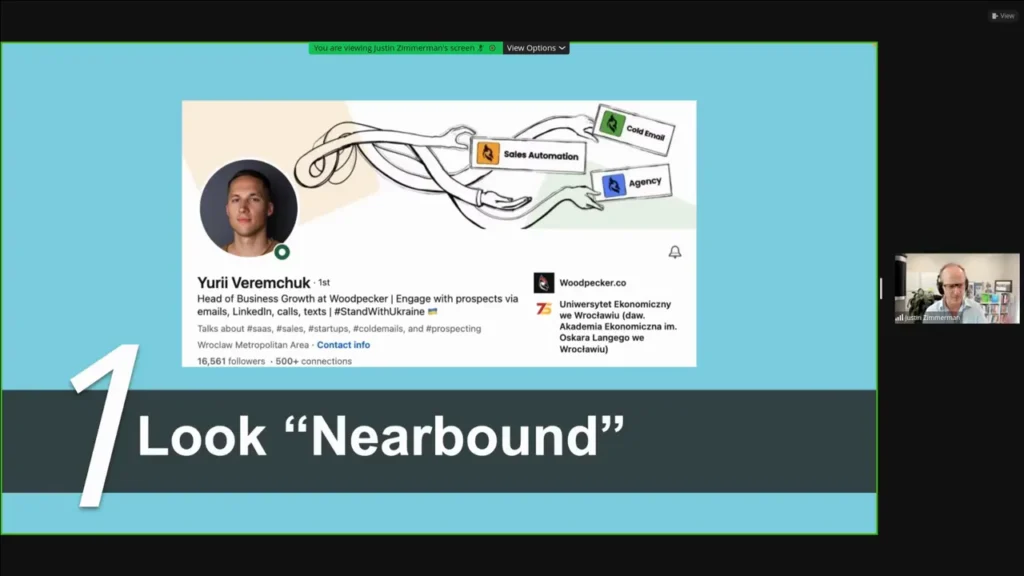
Creators know how to create; your job is to turn creation into conversion with a clear intent-first flow. -Justin Zimmerman
Becoming the platform: host creators, not be the expert
You cannot be the expert on every partner integration. The sustainable option is to be the platform—host creators and subject matter experts and provide a short sponsored demo that positions your product.
- Invite experts with existing decks and audiences.
- Structure a short three- to five-minute demo or product ad that runs inside the webinar.
- Produce dozens of events without dramatically increasing content creation effort.
This approach quadruples event volume without quadrupling work. Your limiting factor becomes list attention and frequency, not partner sourcing or content bandwidth.
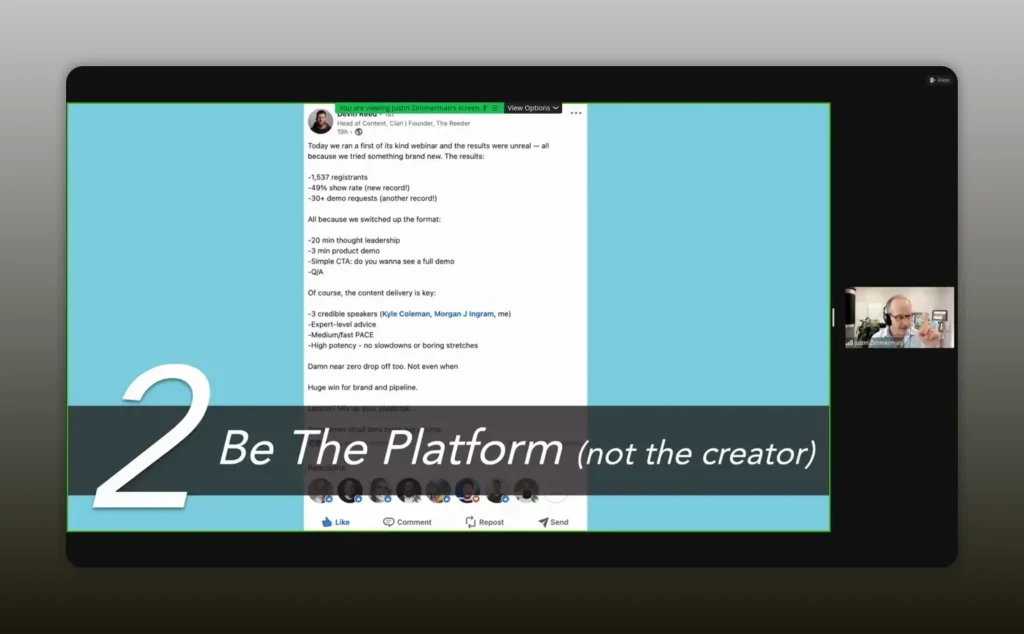
20 minutes of thought leadership, a 3-minute product demo, and a simple CTA—this structure scales. -Justin Zimmerman
Intent-first registration: discovery at scale
Traditional registrant lists leave you blind to who is in market. Change that with a multi-step registration flow that captures sales discovery signals early.
Key elements:
- Step 1: Normal registration to avoid conversion loss.
- Step 2: A low-friction second screen that asks five sales-focused questions.
- Questions that matter: tech stack, team size or seat count, economic indicator (consumption), decision-making role, timeline, competitor currently used, and core use case.
- Based on answers, route registrants to persona-specific landing pages and tailored demo videos.
Justin calls this “discovery at scale.” It pulls the sales discovery process into marketing and turns registrations into actionable segments. The conversion hit is low and the outcome is high: you identify in-market buyers before the event happens.
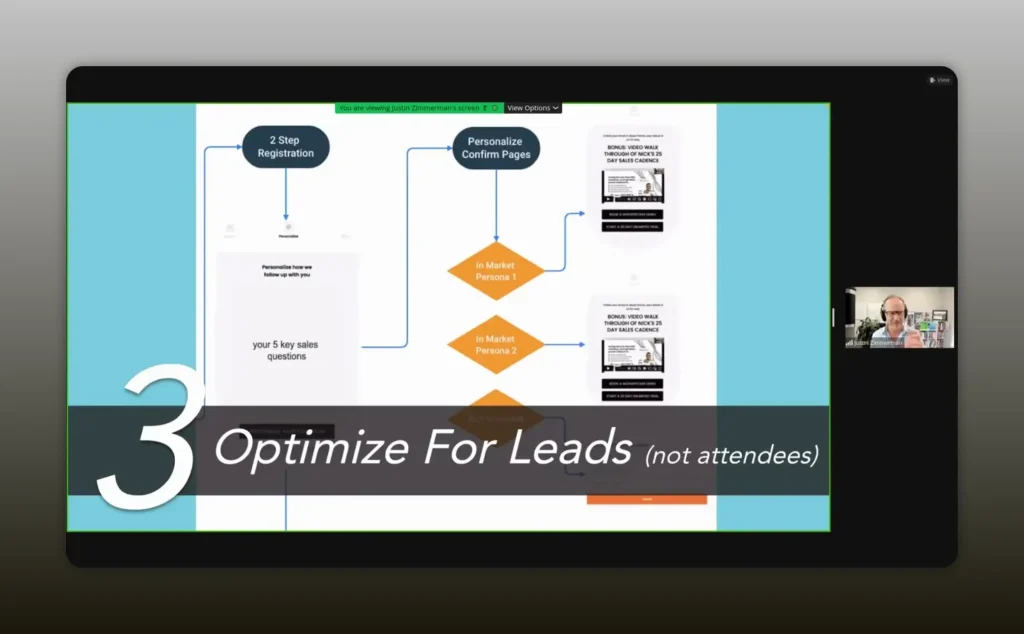
Discovery at scale: pull the sales process forward to registration and route in-market people into immediate, tailored journeys. -Justin Zimmerman
In-event flow: polls, micro-CTAs, and hand-raises
Not everyone answers registration questions. Build in-event polls to capture persona and intent for those who skipped step two. Use simple, timed polls:
- Persona poll early in the webinar (role/title, team size).
- Intent poll near the end (timeline to buy, current tooling).
- Micro-CTAs that ask people to “raise hand” or express interest for a specific next step—demo, trial, or product tour.
Justin reports roughly a 70 percent completion rate on step two when presented cleanly, so your polls will confirm or fill missing information. Combine registration answers with poll responses and you have a strong data set to route leads quickly.
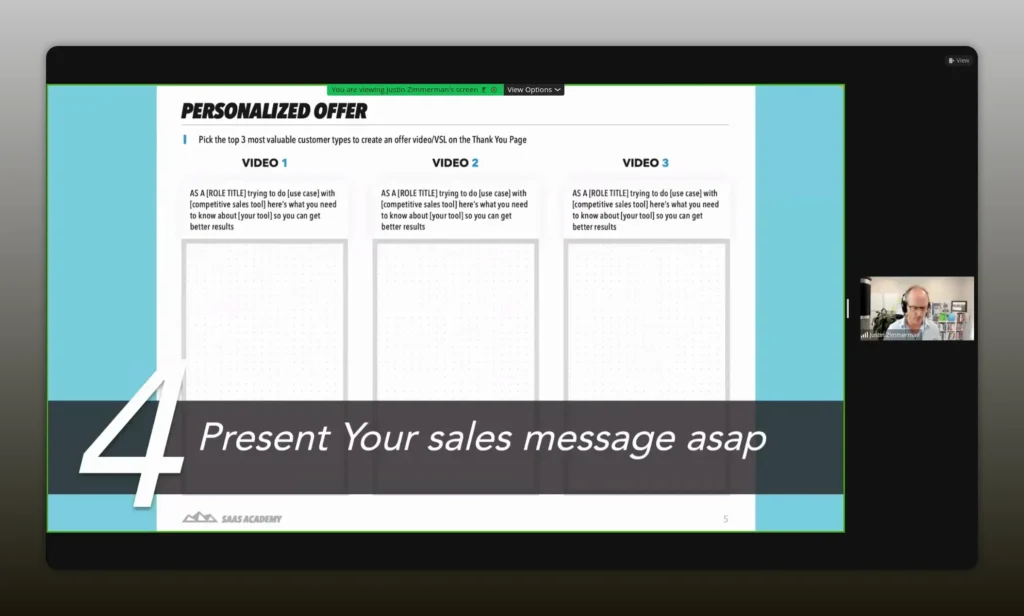
Run a persona poll at the start and an intent poll at the end. Together they give you the data you’d get in a discovery call. -Justin Zimmerman
Post-event automation: qualifier campaigns and speed-to-lead
After capture, don’t rely on a manual handoff. Set predefined automated flows that act like a virtual SDR and qualify leads immediately.
- Qualifier campaign: an email sequence that comes from the event host or influencer (not “no-reply”). Use the host’s name for higher open rates.
- Automated disposition: the system verifies registration answers and dispositions prospects into SQL, MQL, or nurture buckets.
- Sales introduction: for SQLs, auto-introduce the account executive and assign the lead in your CRM. CC the AE so they have context.
- Multi-channel follow-up: email, SMS reminders, LinkedIn nudges, even a quick call if a phone number is captured.
This reduces latency between capture and outreach and increases conversion rates. Justin emphasizes that intent plus first-party contact data makes every follow-up warmer and more actionable.
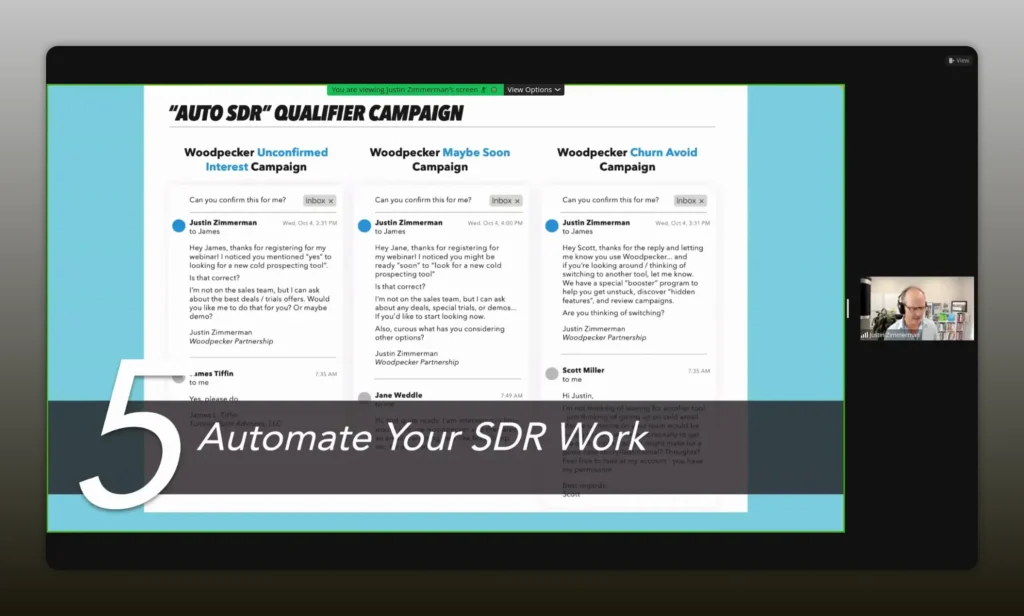
Use an automated qualifier campaign that comes from the host’s name to pre-SDR leads and pass only true SQLs to sales. -Justin Zimmerman
Recommended tools
Choose tools that allow you to capture multi-step registration, run in-event polls, sequence personalized follow-up, and push to CRM boards. The stack you pick depends on your platforms, but the categories are:
- Webinar platform with poll and integration capabilities
- Registration and landing page builder that supports multi-step forms
- Marketing automation platform for sequenced emails and personalization
- CRM with API access for auto-disposition (PipeDrive, HubSpot, Salesforce)
- Enrichment and data tools to append company and role detail
- SMS provider for reminders and quick outreach
- Analytics that track conversions from partner channels and creators
Justin is building a lightweight app to speed up multi-step registration creation. The goal: convert what used to take weeks to set up into a 10-minute configuration.
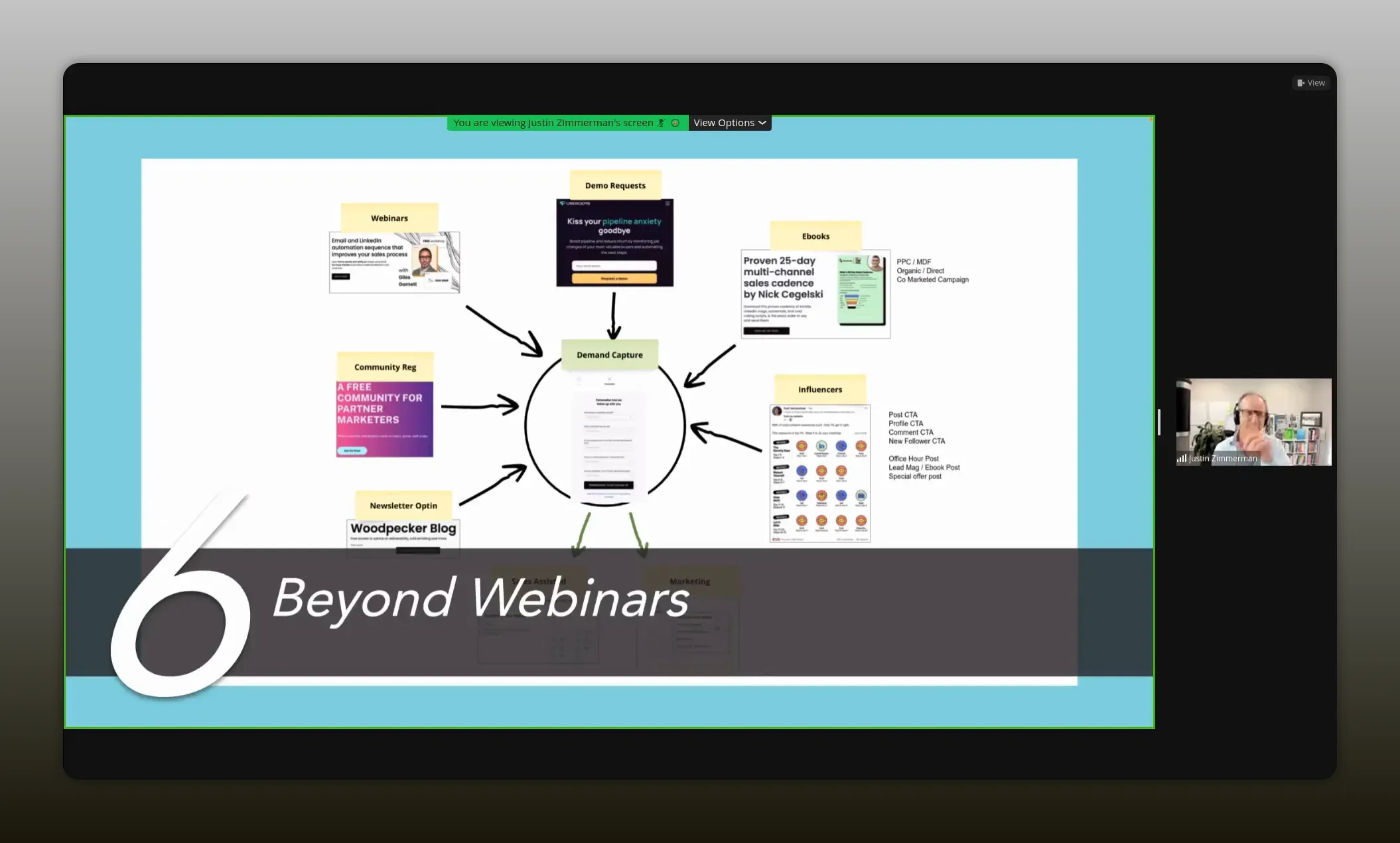
Beyond webinars: design systems that capture intent from every channel—not just live attendance. -Justin Zimmerman
FAQs
How do I capture intent without losing registrations?
Keep the primary registration step simple and optionalize the discovery questions as step two. Present the second step with low cognitive load: short, multiple-choice questions that take seconds to answer. This preserves conversion while adding intentional discovery.
What are the five sales questions I should ask at registration?
Prioritize: current tech stack (platform), decision-maker role, team size or seat count, timeline to purchase, and economic indicator (consumption model or expected spend). Add a competitor question or use case as a bonus.
Can influencers really drive business-ready leads?
Yes—when you convert their attention into an intent-first landing or gated asset. Influencers create reach; the registration flow converts that reach into qualified leads. Follow-up should come from the influencer or host to maintain trust and lift conversion.
What if my sales team doesn’t have bandwidth for follow-up?
Use a qualifier campaign that pre-screens and dispositions leads automatically. Only hand over SQLs that meet economic and decision-maker thresholds. This reduces noise and preserves AE bandwidth for high-value conversations.
How should I attribute partner-driven pipeline?
Track referral parameters and UTM tags from each partner channel. Combine that with time-stamped qual data from registration and in-event polls to attribute pipeline. For more accuracy, use partner-specific landing pages and CRM tags.
Conclusion
Webinars are not dead; they’re misused. The right playbook shifts focus from attendance to intent. Capture discovery signals at registration, confirm and supplement them during the event, and automate qualification so sales can act immediately. Use partner and creator channels to scale reach, and build repeatable partner plays rather than chasing platform lottery tickets. When you treat webinars as an intent capture engine and stitch registration, in-event interaction, and follow-up into a single flow, you get predictable pipeline, faster conversions, and less creator and marketer burnout.
Social post
Announcing a new playbook for marketing leaders / partner managers / event marketers… Introducing Intent-first webinars: Generate pipeline even if registrants don’t attend!
Inside it you will find a practical way to convert partner traffic, creator attention, and webinar registrations into measurable pipeline without relying on perfect attendance. You will learn how to identify in-market buyers early, automate discovery at scale, and route qualified prospects to sales with speed and context.
- Overreliance on attendance and the risk it creates
- How to unlock partner-of-partner channels for extra reach
- Turning sponsorship spend into measurable co-marketing ROI
- How to structure multi-step registration that captures sales signals
- Using in-event polls and micro-CTAs to capture missing intent
- Automated qualifier campaigns that pre-SDR leads and speed-to-lead
- How to make creators produce business outcomes, not just impressions
Grab this playbook if you are a marketing leader or partner manager and want to learn what Justin and Mark do, so you can achieve more partners, higher intent capture, and faster sales conversions. The playbook is free, no form-fill required, no opt-in required.
“Webinars become a demand capture engine when you prioritize intent and first-party data.” -Justin Zimmerman