How to Get Your Partnerships Budget Approved: A Practical Playbook
Expert advice from Tai Rattigan (Partnership Leaders).
Snapshot
The budget is the single most powerful document in your company—and if partnerships is absent from “the table”, they become invisible to the organization. Why? Budgets are what organizations actually commit to. When strategies shift and OKRs bend, the budget sticks.
If your partnerships team waits until the budget window opens or tries to cobble resources together after the fact, you lose priority, tools, and headcount. That translates into missed revenue targets, under-resourced programs, and sidelined strategy.
Keep reading to learn how Tai and Justin can help you secure strategic budget approvals, increase partner-driven revenue, and fast-track tool and headcount.
The budget is the plan that the company sticks to. – Tai Rattigan.
Table of Contents
- Snapshot
- Table of contents
- Why the budget matters
- What gets budgets approved: the trust framework
- Research: how to prepare before budget season
- Build a clear ROI narrative
- Trade-offs and the art of the quota bargain
- Real stories: the wrong way and the right way
- Step-by-step budget planning checklist
- Recommended tools
- Measuring impact and reporting
- Common objections and how to answer them
- Templates and resources
- Tools and tech stack
- FAQs
- Conclusion
- Social post
Why the budget matters
The budget is not just accounting paperwork. It is the operating plan your company will follow. You can change strategy, rewrite OKRs, and experiment with initiatives, but the budget is what people actually live and ship against.
That reality creates three hard implications for partnership teams:
- Visibility. If partnerships aren’t in the budget, they won’t be a priority.
- Resources. Tools, headcount, and operational support follow the budget.
- Influence. Without budget representation, planning conversations are reduced to “nice-to-have” status.
What gets budgets approved: the trust framework
Finance and the executive team will scrutinize requests. Their job is due diligence and fiduciary responsibility. To get approval you must build trust—and that trust comes from preparation.
Preparation means two things:
- You know the budgeting cycle and timing.
- You can show credible, directionally accurate math and a clear ROI hypothesis.
When finance looks at your submission, the reaction you want is not to be torn apart. You want a response like, “We trust this was thought through—let’s discuss minor adjustments.” That comes from one thing: evidence.
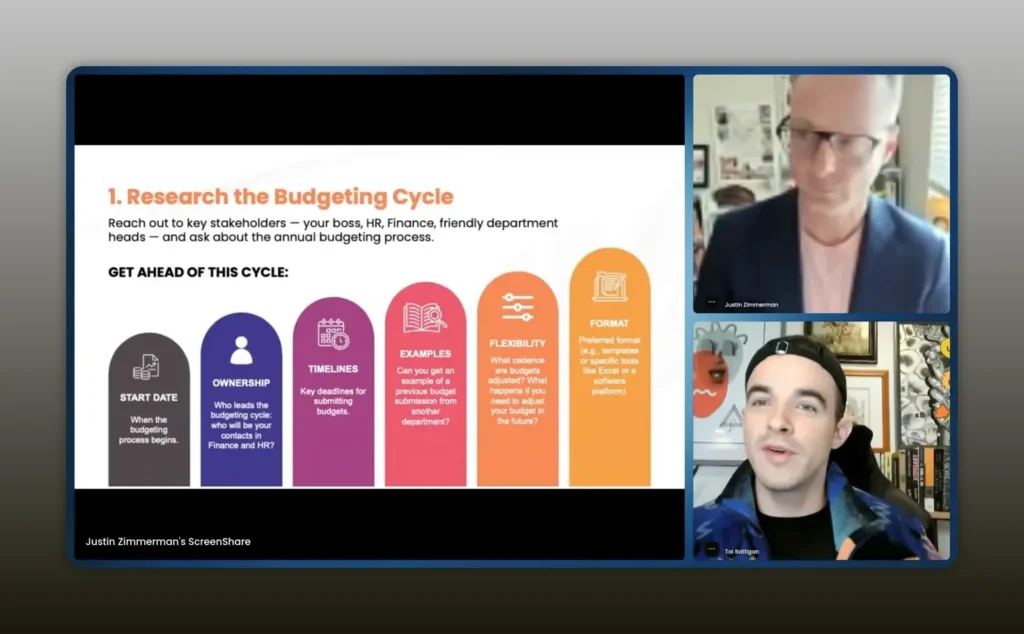
The most important thing is that the budget is the plan that the company sticks to. – Tai Rattigan.
Research: how to prepare before budget season
You need to show up early. Know the start date of your company’s budget cycle and aim to be the first team submitting a well-researched plan. Submission timing signals organization, foresight, and ownership.
Key research activities:
- Talk to your boss: learn what worked and what did not in last year’s process.
- Map the ownership timeline: who approves what and when.
- Interview adjacent stakeholders: marketing, sales, RevOps, and finance.
- Collect examples of ROI pitches used by other teams for comparable tools.
“You need the finance team and the executive leadership team to trust that you’ve done the work already.” – Tai Rattigan.
Build a clear ROI narrative
Your budget request must be tied directly to company objectives. Start with the top two strategic goals where partnerships can have the biggest impact. Then do this:
- State the company objective (for example, increase new revenue by X%).
- Quantify the partnerships’ expected contribution (for example, partners will generate 30% of new revenue).
- Define leading indicators (number of partner-sourced opportunities, partner attach rates, number of joint campaigns).
- Connect resources to outcome: this new partner manager will be responsible for generating $1.5M to $3M of pipeline.
If finance pushes back, have trade-offs pre-built. Say, “If I don’t get this tool or headcount, I will carry a lower quota.” That shows you’re accountable for the target you claim you’ll meet with added resources.
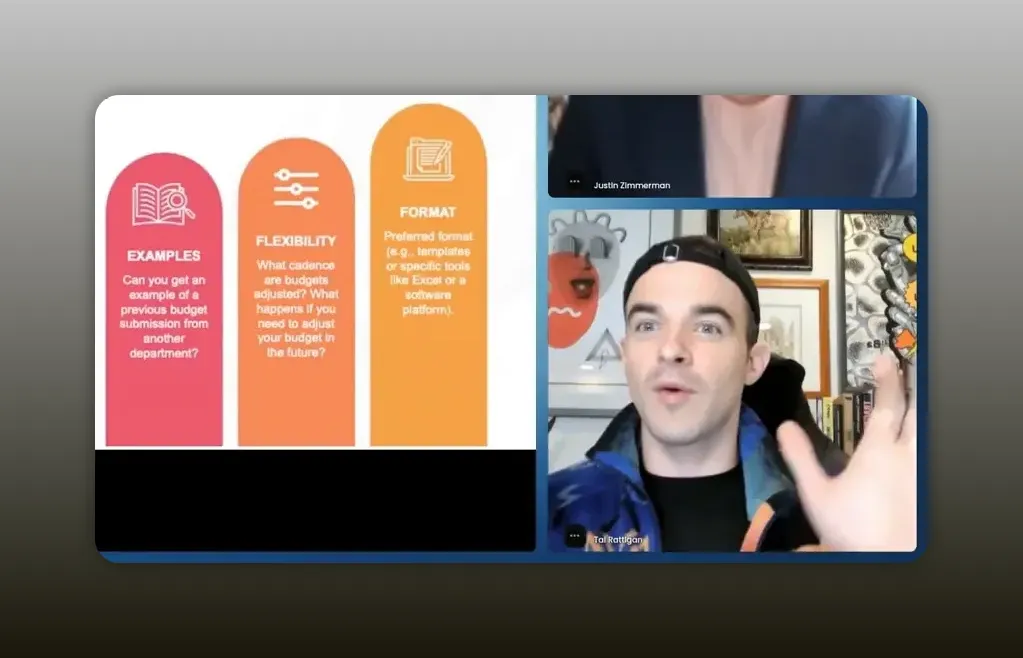
If you have a clear articulation … say, look, I need an additional partner manager and that partner manager is going to carry a $1.5 million pipe gen quota. – Tai Rattigan.
Trade-offs and the art of the quota bargain
One of the most powerful negotiation levers is the quota trade-off. Frame hires and tools as productivity multipliers that change what you can deliver. Then be explicit:
- Share the expected change in outcomes with the investment.
- Offer to accept a reduced target if the investment isn’t granted (this shows accountability).
- Make sure your math is defensible; you must be able to deliver on your commitment.
A common structure that works in practice:
- Calculate baseline partner-sourced revenue today.
- Estimate percentage lift from hire or tool (conservative number).
- Translate lift into pipeline and then to revenue using win rates and cycle time.
- Show the payback period for the investment (months to ROI).
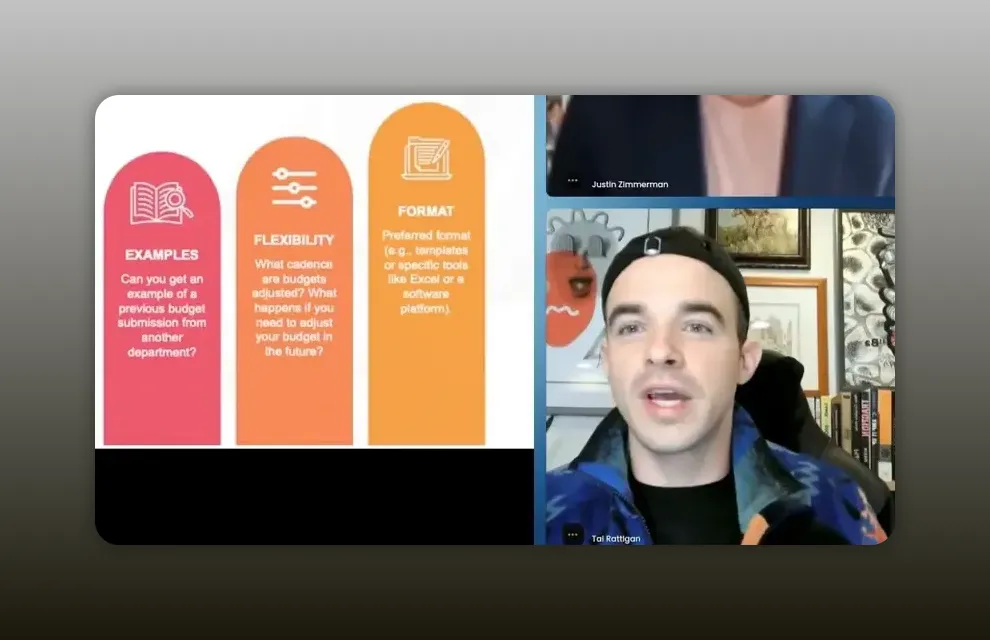
With Crossbeam … we can go from generating X number of opportunities to Y number of opportunities. – Tai Rattigan.
Real stories: the wrong way and the right way
Wrong way
You secure a budget line and politely ask a friendly RevOps colleague to implement a tool in their spare time. They agree because you are colleagues and you have a good relationship. Implementation drags on for months because it is not prioritized. Outcomes are delayed, momentum is lost, and a tool that should have unlocked immediate gains takes half a year to show value.
The mistake: treating implementation as a favor and not as a prioritized, funded project that lives on someone’s critical path.
Right way
Build the tool and implementation plan into your budget ask. Ask for the tool cost plus specified RevOps time, and get sign-off that implementation is a priority. Make it explicit: “If this is not implemented quickly, we will lose $X of productivity gains in Q1.” By making the loss visible, you move the work onto the RevOps roadmap and secure the execution priority.
Get on the plan. It’s like, hey, we’re going to lose millions of dollars if we don’t implement this thing this week. – Tai Rattigan.
Step-by-step budget planning checklist
Use this checklist as your operating playbook when building the budget pitch.
- Confirm the budgeting window and submission deadlines.
- Talk with your manager to align on company objectives and your role in them.
- Interview stakeholders: sales, marketing, RevOps, finance. Collect examples of successful ROI asks.
- List required investments: headcount, tools, learning and development, travel, T&E.
- For each investment, build a one-page ROI slide with assumptions and payback.
- Estimate leading indicators and metrics to track post-approval.
- Prepare trade-offs: what you will accept if the full ask is denied.
- Submit early when possible; being first signals ownership and preparedness.
- Arrange follow-up reviews with finance to answer detailed questions.
- Secure operational priority for implementation (e.g., RevOps time allocated).
Recommended tools
These are the categories and representative tools you should evaluate when building your tech ask. Pick tools that map directly to ROI metrics you can quantify.
- Partner discovery and overlap: Crossbeam (or similar)
- Partner program management: PartnerStack, Impact
- CRM and pipeline: Salesforce, HubSpot
- Revenue acceleration: Outreach, Gong
- Data and analytics: Looker, Amplitude, Tableau
- Workflow automation: Zapier
Select the tool whose value proposition you can tie directly to increased partner-sourced opportunities, reduced time-to-value, or higher attach rates.
Measuring impact and reporting
Approval is the start. To keep the investment and build momentum:
- Define 90-day and 12-month milestones.
- Report on leading indicators monthly: partner activity, referred opps, pipeline created.
- Compare actual outcomes to the ROI hypothesis and update assumptions transparently.
- If results lag, propose corrective actions and prioritize topics with your finance partner.
Common objections and how to answer them
You will hear pushback. Here are common objections and short scripts you can adapt.
- Objection: “We don’t have budget.”
Answer: “If we don’t get this, my expected partner contribution will be X lower. I’m willing to accept a lower target if needed, but here’s the lost revenue.” - Objection: “We can’t prioritize implementation right now.”
Answer: “Without timely implementation we forfeit a payback period of Y months and risk missing Q1 revenue goals. Can we allocate RevOps time to avoid that loss?” - Objection: “We need more data.”
Answer: “Here are conservative assumptions and a one-page model showing directional impact. What additional data would you need to move forward?”
Templates and resources
Create a compact packet for finance: one-pager ROI slide, a hiring justification (role, quota, ramp), and an implementation plan with milestones. A simple template includes:
- Executive summary (one paragraph)
- Strategic alignment (which company objectives this serves)
- Investment ask (dollars and people)
- Expected impact (pipeline, revenue, attach rate)
- Assumptions and sensitivity analysis
- Implementation timeline and owners
- Trade-offs if partially funded
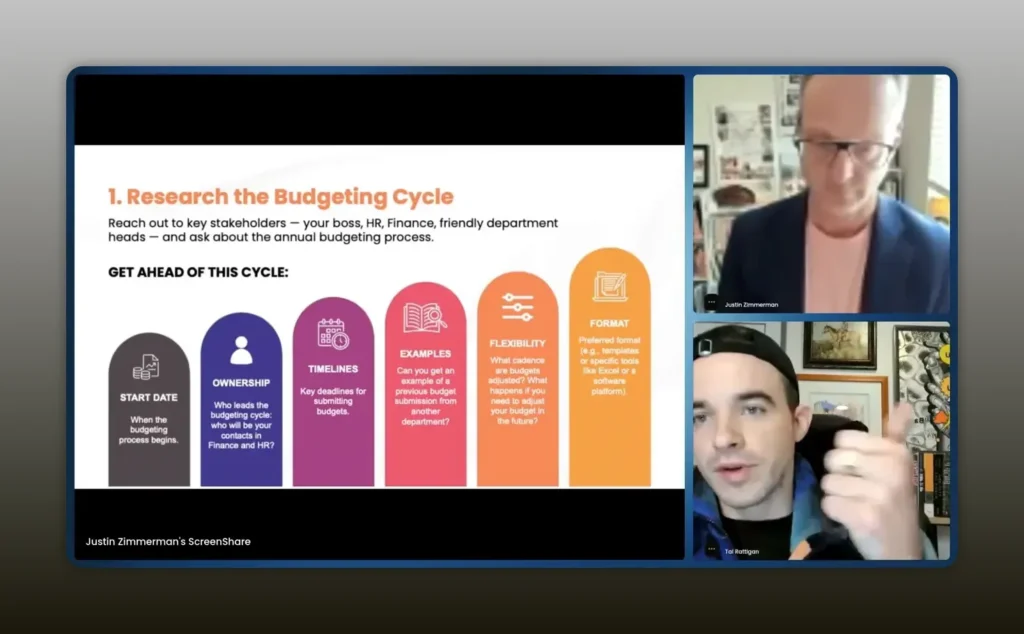
We’ve built out a step-by-step framework for developing a budget and headcount plan … the whole thing. – Tai Rattigan.
Tools and tech stack
Choosing the right tools is less about brand and more about measurable impact. Prioritize tools you can tie to clear leading indicators. Below are commonly requested tools and a note on how to justify them.
- Crossbeam: Justify by overlap discovery to increase partner-sourced opportunities.
- PartnerStack: Justify by program scale and governance for thousands of partners.
- Salesforce: Justify by improved pipeline reporting and partner attribution.
- Outreach / Gong: Justify by faster closing rates and improved rep productivity.
- Zapier: Justify by automation time saved and fewer manual handoffs.
FAQs
When should I start building my partnerships budget?
Start before your company’s official budget window. Find the start date, build your plan, and aim to submit or preview it early. Early submission signals ownership and gives you time to iterate with finance.
How do I quantify the impact of a partner manager hire?
Estimate the pipeline a partner manager will influence using current partner attach rates, average deal size, and the number of active partner relationships they will manage. Convert pipeline to expected revenue using historical win rates. Use conservative assumptions and display sensitivity ranges.
Do I need approval from RevOps to request a tool?
Yes. You need RevOps involvement for implementation and CRM integration. Build RevOps time into your ask and secure sign-off that implementation will be prioritized to capture the projected ROI quickly.
What if finance rejects my full ask?
Use pre-prepared trade-offs. Say which parts you can deprioritize and what quota reduction or timeline change you will accept. That shows accountability and often secures partial funding or a phased approval.
How detailed does my ROI model need to be?
It needs to be directionally accurate and defensible. Finance won’t expect perfection but will expect reasonable assumptions and a clear linkage from investment to outcomes. Provide a one-page model with assumptions and a sensitivity table.
What leading indicators should I report post-approval?
Track partner-sourced opportunities, partner attach rate, time-to-first-deal with partners, and the pipeline velocity for partner-sourced deals. Also report implementation milestones for tools and headcount ramp progress.
Conclusion
Budgets decide whether your partnerships function will be a strategic contributor or an afterthought. The difference comes down to preparation: know the cycle, build trust through research, tie every ask to company objectives, and be ready to trade quota for scarce resources. Prioritize early submission and secure implementation commitments so investments translate into immediate value. When you speak the language of finance and the C-suite—objectives, contribution, and payback—you stop begging for budget and start commanding it.
Social post
Announcing a new playbook for partnership leaders, RevOps leaders, and partner marketers…
Introducing How to Get Your Partnerships Budget Approved: A Practical Playbook!
Inside it you will find a compact, practical approach to securing the funding and operational priority you need to scale partner programs. You get a framework that explains what executives expect, how to quantify impact, and how to get implementation prioritized so tools actually deliver value.
- Budgets are the operating plan—and partnerships are often missing from it
- How to build a defensible ROI pitch that finance will trust
- How to scope headcount with clear quota and ramp math
- How to secure RevOps time and implementation priority
- How to prepare trade-offs so you stay accountable
Grab this playbook if you are a partnership leader, RevOps leader, or partner marketer and want to learn what Tai and Justin do, so you can achieve secure strategic budget approvals, increase partner-driven revenue, and fast-track tool and headcount implementation. The playbook is free, no form-fill required, no opt-in required.
“If anyone has budget questions or anything else, feel free to reach out. I’m happy to help.” – Tai Rattigan.