How to Design Wild, Intentional Events That Build Partnerships and Revenue
Expert advice from Jason Yarborough (founder, Arcadia).
Snapshot
You are competing for attention, loyalty, and time. The predictable hotel ballroom, the scripted talk, the perfunctory sponsor booth — those formats are tired and they dilute the relationships you want to build. What’s at stake is far more than an attendance metric: it’s your ability to create advocates, align revenue and partner teams, and build a community that talks about your brand because of an experience, not a product spec.
Delivering that kind of impact means swapping checklists for intention, substituting passive panels with immersive cohorts, and designing moments people will actually remember. When you make every element — from arrival to goodbye — purposeful, you create the conditions for deep connection and long-term collaboration.
Keep reading to learn how Jason and Justin can help you achieve memorable experiences, lasting partnerships, and revenue-aligned programs.
I don’t remember days. I remember moments. – Jason Yarborough
Table of Contents
- Snapshot
- Table of contents
- Why intention beats logistics
- The four pillars that make an experience unforgettable
- Choosing the right attendees: selection criteria that scale
- Designing cohorts and smaller interactions
- How to get buy-in: persuading finance and leadership
- Sponsor activation that actually helps attendees
- Risk checklist and practical timeline
- Recommended tools
- FAQs
- Conclusion
- Social post
Why intention beats logistics
Most events die in logistics. You spend weeks solving AV issues, menu restrictions, and seating charts — and yet your attendees walk away with a fuzzy recollection. The difference between a forgettable conference and a transformative experience is not production value; it is intention.
Jason designed Arcadia around a single idea: create harmony between revenue leaders and partner leaders. That origin story shaped every decision, from location to the cohort assignments to the talks. Intentional design starts with the finish line: what do you want people to feel, who do you want them to connect with, and what conversations should be happening at the end?
When you begin with intention, logistics become tools, not goals. Choices like outdoor venues, small guest counts, or hands-on activities are no longer gimmicks; they are levers to produce a desired outcome.
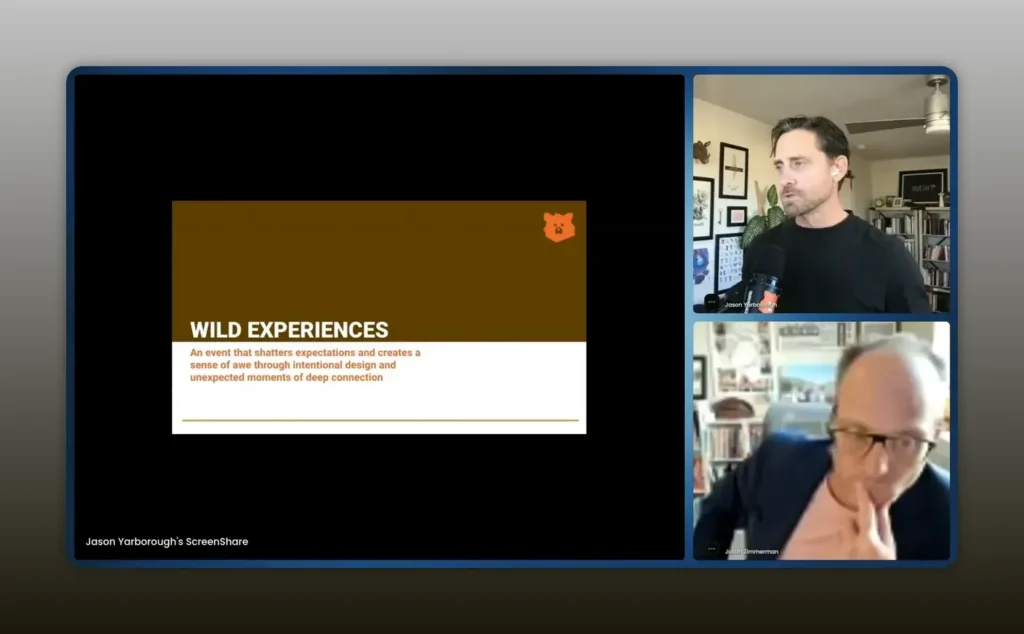
Open strong. Speak directly to what people are about to experience — it sets a different stage. – Jason Yarborough
The four pillars that make an experience unforgettable
Jason and Justin break memorable events down into four repeatable pillars. Use these as a checklist when planning anything from a partner summit to a regional field event.
1. Purposeful design
Purposeful design means every single element aligns to one clear intention. From the opening remarks to the goodbye gift, ask: does this move us toward the outcome we want? If not, cut it.
- Write down three intentions for the attendee experience (emotional, social, practical).
- Design the day from finish to start: what is the final moment you want people to talk about?
- Use the event theme to make choices easier. Arcadia’s theme of harmony and nature simplified decisions about location, decor, and activities.
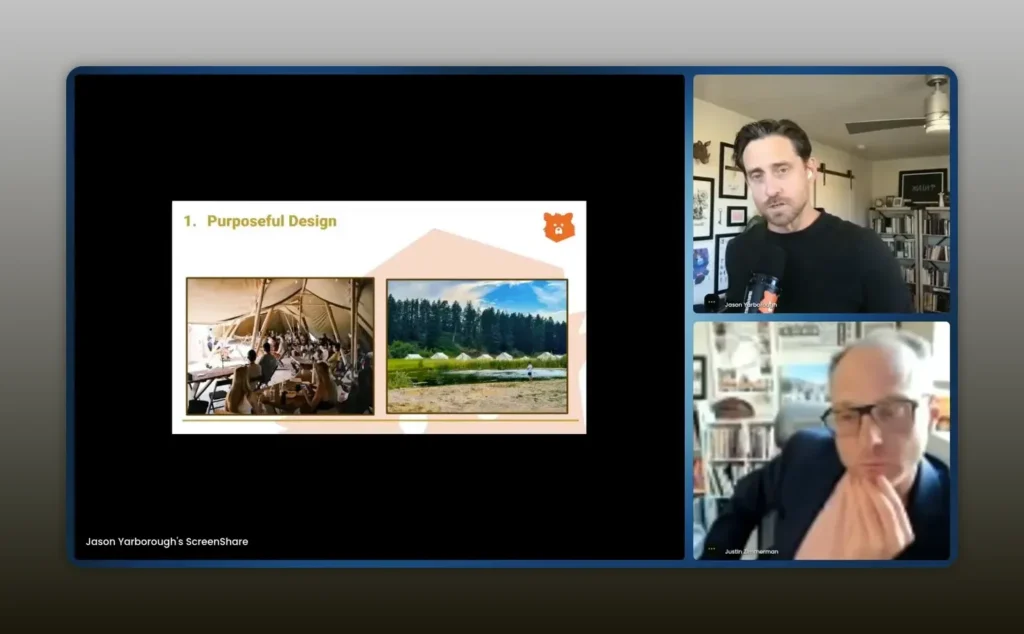
Design from the finish line: every element should move people toward a single, clear intention. – Jason Yarborough
2. Personalized experiences
Personalization is emotional currency. People show up to feel seen. That can be as simple as a handwritten note in their tent or as deliberate as tailoring session topics to issues attendees submitted in advance.
- Ask registrants one or two strategic questions (e.g., biggest challenge right now).
- Create arrival moments that make people feel recognized: name badges with personality, a small welcome pack, or a bespoke itinerary.
- Offer optional tracks so attendees can choose how they want to learn and connect.
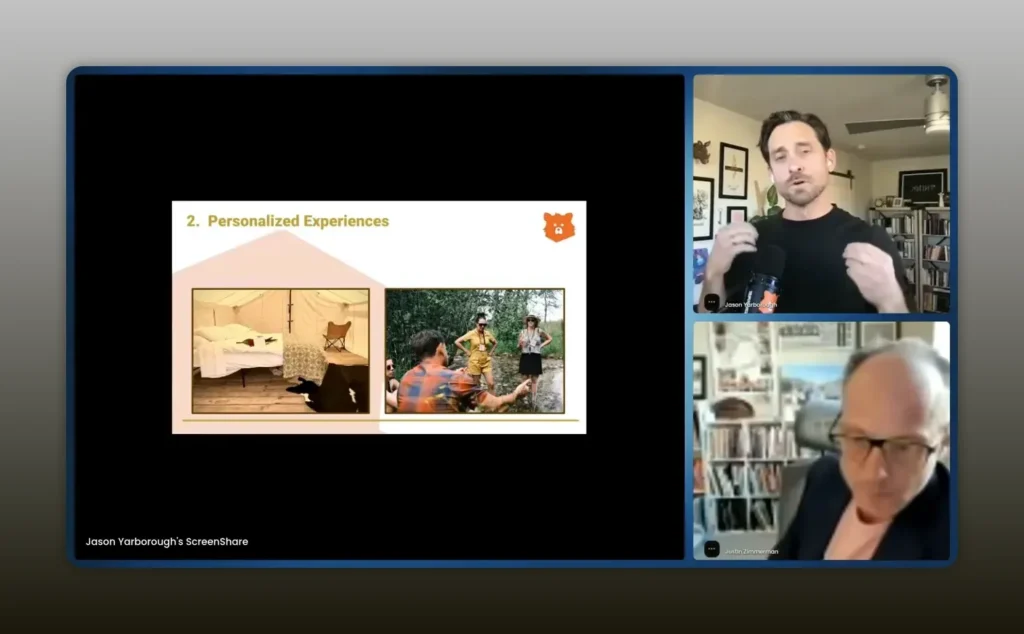
A handwritten note inside a tent makes someone feel seen immediately. That sets the tone for the whole experience. -Jason Yarborough
3. Immersive environments
Place is a design decision. The environment shapes behavior. Hotels tell people to behave in certain ways; outdoor spaces, local farms, and nontraditional venues invite different kinds of interactions. Arcadia went all in with glamping teepees, communal fires, and a wax canvas tent for sessions to shift the group into a different headspace.
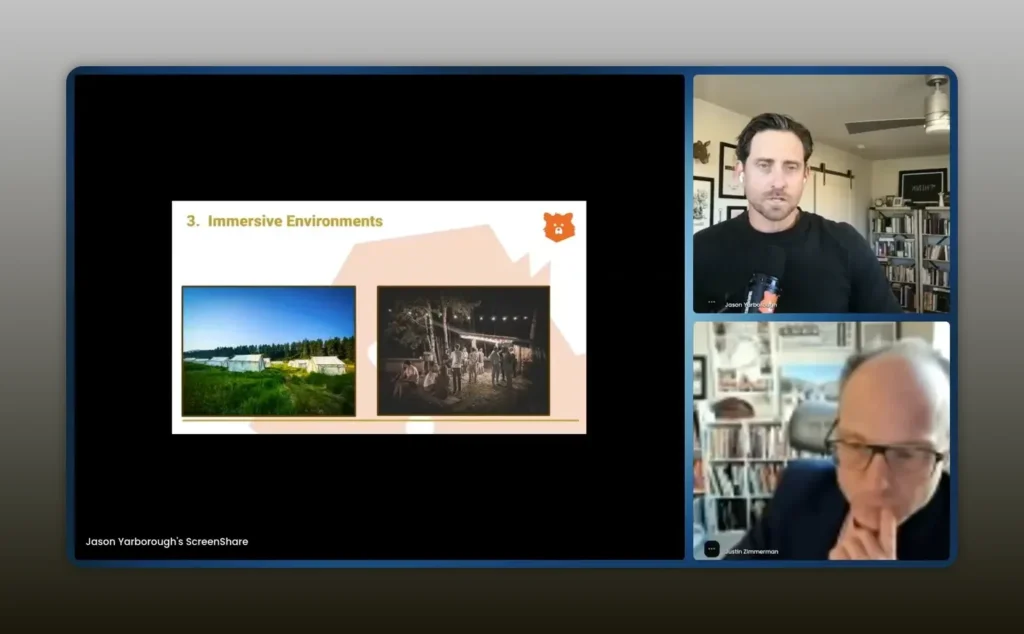
We went all in on the outdoors. The trees were our decor. It changed everything. – Jason Yarborough
4. Lasting connections
An experience is only successful if relationships extend beyond the calendar invite. Structure the event so attendees meet in different constellations: large opening moments, small cohorts, and shared activities. Then give them a reason and a channel to stay connected.
- Break the day into bookended shared experiences and small-group activities.
- Create a post-event channel (Slack, Discord) and seed it with moderator posts, resources, and follow-up prompts.
- Plan a small number of in-person follow-ups to keep momentum alive.
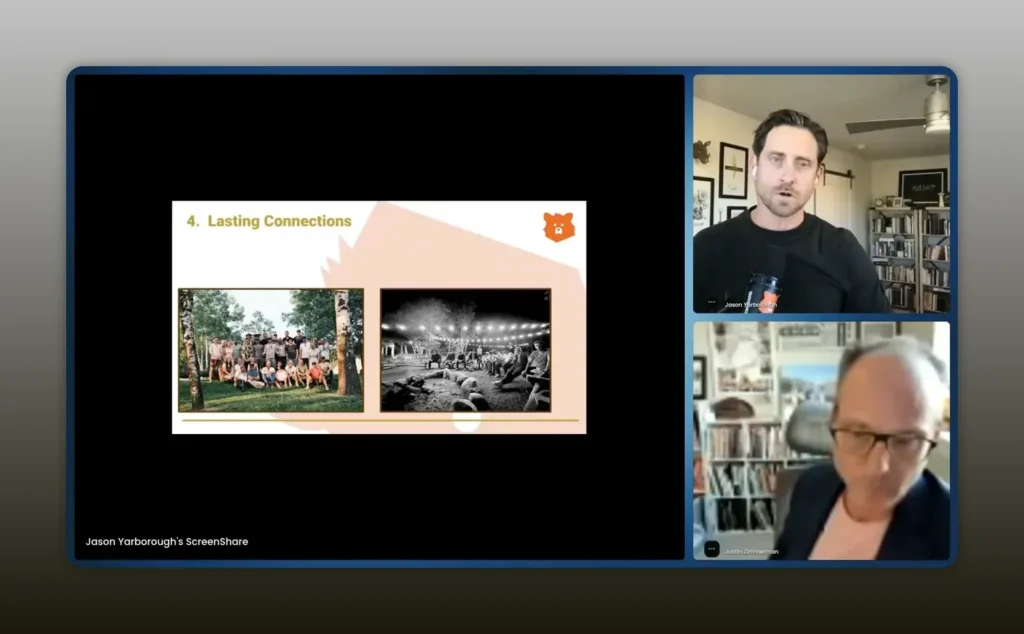
Bookend the day with the whole group, then intentionally break people into smaller groups throughout the day to force new conversations. – Jason Yarborough
Choosing the right attendees: selection criteria that scale
Everything hinges on who you invite. Jason designed Arcadia to be intentionally small and to tilt the audience composition toward revenue leaders — CROs, VPs of Sales, GTM leaders — while keeping partner leaders in the mix. That balance created conversations that wouldn’t have happened in a partner-only room.
Use this selection framework:
- Goal alignment: Who do you need in the room to achieve your event’s intention?
- Conversational mix: Avoid homogenous groups. Mix roles to provoke cross-functional dialogue.
- Influence and willingness: Prioritize people who can act on insights and are likely to participate, not just listen.
- Community fit: Invite people who will add to the community — connectors, contributors, and curious practitioners.
- Capacity constraints: Pick a size that enables the moments you want; Jason capped Arcadia at 50 and plans to scale to 75 max to preserve intimacy.
Use invite tiers: core guests (must-attend), target guests (should-attend), and wildcards (interesting additions when space allows). That helps you balance goals, sponsorship needs, and serendipity.
Designing cohorts and smaller interactions
Cohorts are the secret weapon. A morning plenary can inspire, but small, role-mixed cohorts create durable relationships and practical problem-solving.
- Assign cohorts intentionally: mix partner, revenue, and marketing roles so each cohort brings complementary perspectives.
- Keep cohorts small — 6 to 8 people — to ensure everyone participates.
- Use cohorts for both content and activity: a morning problem framing, an afternoon active experience (fly fishing, yoga), and an evening reflection.
- Rotate seating at meals or use picnic tables and outdoor gathering spots to create natural mixing.
When activities are optional and thoughtfully varied, people choose experiences that align with their needs and form bonds with others who share their interests.
You’re constantly with smaller groups throughout the day. That creates the conditions for real conversations. – Jason Yarborough
How to get buy-in: persuading finance and leadership
Unstructured, “wild” events can be hard to sell to conservative stakeholders. Finance and CMOs want KPIs. Translate the emotional value into business outcomes.
Use these arguments to secure budget:
- Strategic outcomes: Tie the event to measurable goals such as partner-sourced pipeline, shortened deal cycles, or higher renewal rates.
- Cost per meaningful connection: Show how smaller, high-touch events can produce more qualified relationships per dollar than large conferences.
- Brand differentiation: Show examples — social proof like LinkedIn threads and attendee testimonials — demonstrating reach and positive sentiment.
- Sponsor ROI: Outline tailored sponsor activations that give visibility and deeper engagement versus a standard exhibit booth.
- Post-event plan: Present a 90-day activation plan that converts warm interactions into pipeline, speaking opportunities, or partner pilots.
Jason framed Arcadia as a brand-differentiation and community-building investment. That narrative convinced stakeholders because it tied emotional impact to long-term business value.
Sponsor activation that actually helps attendees
Sponsors often demand visibility, but visibility alone is low value. Instead, craft sponsor experiences that are memorable and aligned with your event’s intention.
- Co-design a sponsor activation tied to the theme. Arcadia created a dyno museum outing as a sponsor experience — specific, memorable, and aligned with the sponsor’s brand.
- Limit sponsored moments. One or two highly curated sponsor experiences beat multiple shallow activations.
- Give sponsors a role beyond logos: host a hands-on session, facilitate a cohort, or offer a tailored workshop that adds real utility.
- Respect attendees’ time. Sponsors should add to the event narrative, not break it.
Make sponsor activations feel like part of the journey. Personalized experiences for sponsors deliver far more ROI than another booth. – Jason Yarborough
Risk checklist and practical timeline
Ambitious experiences come with execution risk. Use a checklist and timeline to make risk visible and manageable.
10-week timeline (example)
- Week 10: Define event intention, audience, and desired outcomes. Create a one-page event thesis.
- Week 9: Lock venue and outline site logistics. Visit (or run a virtual walkthrough) and map where each moment will occur.
- Week 8: Begin invite list and send save-the-dates. Collect two strategic pre-event questions for personalization.
- Week 7: Secure speakers and cohort leads. Align speakers to the conversational format you want; prioritize prompts over monologues.
- Week 6: Finalize activities and vendors (food, transport, guides). Test pathways for accessibility and safety.
- Week 5: Design arrival experience and personalization elements (welcome notes, badges, itineraries).
- Week 4: Confirm sponsor activations and rehearsal plans.
- Week 3: Communicate final logistics, cohort assignments, and pre-reads to attendees.
- Week 2: Onboard staff and moderators. Rehearse key transitions and tech checks.
- Week 1: Prepare emergency plans, finalize menus, and print materials.
- Event day: Execute with intention. Have one person owning the story arc: opening, transitions, and send-off.
- Week +1 to +12: Post-event follow-up and a 90-day activation plan.
Risk checklist
- Weather contingency and safety plan for outdoor venues.
- Clear attendee expectations (what to bring, what to wear, mobility requirements).
- A single narrative owner who enforces intention across vendors.
- Post-event conversion plan with owner and measurable KPIs.
- Diversity of activities to appeal to introverts and extroverts alike.
Recommended tools
Jason and Justin emphasized design, coordination, and follow-up. These tools make that practical.
- Registration and personalization: Typeform or Google Forms for pre-event questions that feed into personalization.
- Event management: Splash or Bizzabo for curated invite experiences and registration workflows.
- Community and follow-up: Slack or Circle to host the community channel post-event.
- On-site coordination: Airtable as a single source of truth for cohorts, dietary needs, travel plans, and contacts.
- Content capture: Lightweight video and photography teams plus a simple Notion board to collect quotes and photos for post-event amplification.
FAQs
How many people is ideal for an immersive partner experience?
There is no universal number, but Jason recommends intentionally small groups — Arcadia capped at 50 and plans not to exceed 75. Small sizes make meals, cohorts, and optional activities manageable and enable meaningful connections.
What budget items are essential for an experience-driven event?
Prioritize venue, food, cohort experiences (guides or instructors), and personalization (welcome packs, badges). Skip excessive branding and instead fund elements that create moments, like a shared meal or a sponsor-hosted experience.
How do you ensure partner and revenue leaders actually talk?
Design conversational prompts into sessions, use role-mixed cohorts, and brief speakers to provoke discussion rather than present. Jason asked his opener to ask questions and get the room talking rather than delivering a monologue.
Can this approach scale for larger audiences?
Yes, but scaling requires replicating intimacy at smaller nodes: multiple parallel cohorts, regional chapters, or a hub-and-spoke model. Preserve community rituals and post-event connection channels to maintain cohesion.
What metrics should you track?
Track qualitative metrics (net sentiment, testimonials, Slack activity), relational metrics (number of new cross-role connections), and commercial metrics (partner-sourced pipeline attributed to follow-up activities). Combine anecdote with hard numbers.
Conclusion
Designing “wild” events is not an excuse for chaos; it is a call to be purposeful. When you fuse intention with personalization, choose a place that inspires, and structure moments that force meaningful interaction, you create an experience that turns attendees into advocates. Jason’s Arcadia shows that a small, well-curated gathering can produce outsized community value, better partner alignment, and conversations that continue long after the tents are packed. If you want people to remember your brand, give them something they can’t get from a slide deck: a moment that matters.
Social post
Announcing a new playbook for partner marketers, events leads, and revenue leaders…
Introducing How to Design Wild, Intentional Events That Build Partnerships and Revenue!
Inside it you will find a practical blueprint for rethinking events so they create real business outcomes and durable human connections. You will learn how to move beyond standard conferences and craft experiences that align revenue and partner goals, generate conversation, and deliver measurable ROI. This guide explains why intention matters, how to choose attendees, and how to structure cohorts, sponsor activations, and post-event community so the momentum sticks.
- How to translate emotional moments into measurable pipeline
- Selection criteria for the right attendee mix
- Designing cohorts that force cross-functional conversations
- Practical timelines and checklists to reduce execution risk
- How to activate sponsors without breaking the experience
- Tools and workflows to scale intimate experiences
- Post-event activation tactics that drive follow-on value
Grab this playbook if you are a partner marketer, events lead, or revenue leader and want to learn what Jason and Justin do, so you can achieve memorable experiences, lasting partnerships, and revenue-aligned programs. It’s free, no form-fill required, no opt-in required.
We want to make experiences people can’t get anywhere else — that’s how communities form. – Jason Yarborough