$30B Opportunity: The HubSpot Ecosystem Is A Huge Acquisition Channel
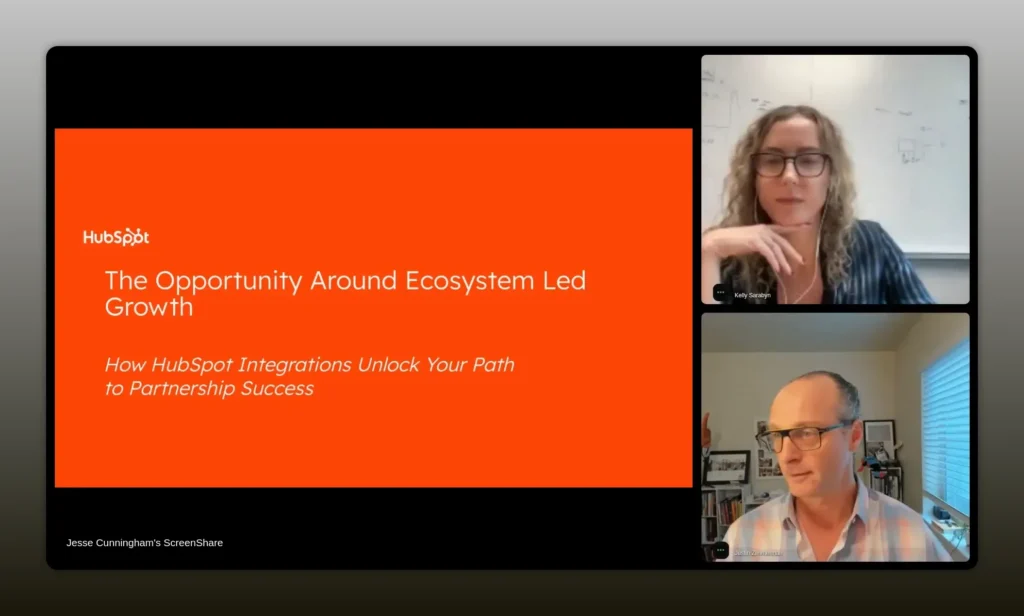
Expert advice from Jesse Cunningham and Kelly Sarabyn.
Introduction
HubSpot is more than a CRM; it is a high-value customer acquisition channel. With hundreds of thousands of paying customers and product extensibility maturing quickly, building an integration is no longer just a technical exercise. It is a strategic decision that impacts discovery, sales motion, retention, and your company’s long-term product roadmap. This article is designed to help you understand how to overcome the challenges of launching, growing, and monetizing a HubSpot integration.
HubSpot itself is just a very large channel. They have tons of paying customers who are highly invested in growing their businesses on HubSpot, and they’ve proven they love apps. – Kelly Sarabyn
Table of Contents
- Why the HubSpot ecosystem matters now
- What HubSpot customers expect from integrations
- Designing for depth: how your integration becomes sticky
- Marketplace discoverability and the new developer portal
- How to work with HubSpot sellers and Solutions Partners
- Marketing plays that actually convert HubSpot customers
- Content, listing pages, and trust signals
- Measuring impact: leading and lagging metrics
- Timing and first-mover advantage
- 12-month roadmap and realistic outcomes
- Operational checklist to launch and scale
- Common mistakes to avoid
- Resources and next steps
- FAQs
- Conclusion
Why the HubSpot ecosystem matters now
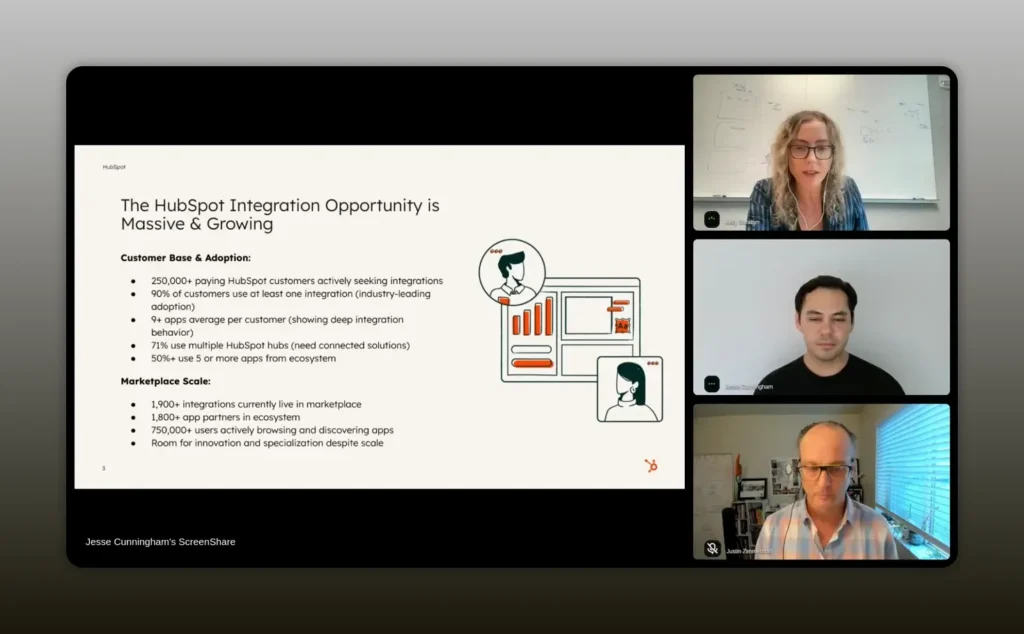
HubSpot is growing fast. With more than a quarter million paying customers and roughly nine installed integrations on average per customer, the platform has become a busy marketplace for connected tools. That growth translates into opportunity: every incremental HubSpot customer you reach is already predisposed to integrations and to a better-together story.
HubSpot is a great way to be discovered. The opportunity is only expanding—it’s a great investment as a channel. – Kelly Sarabyn
Two things make HubSpot appealing as a channel:
- Scale and demand: Customers are actively searching for solutions that plug into HubSpot to extend functionality.
- Structured discovery: The marketplace and developer tools are designed to surface apps to customers and HubSpot internal teams when they need them.
When you treat HubSpot as a strategic channel rather than a checkbox integration, you unlock persistent discovery and sales motion opportunities.
What HubSpot customers expect from integrations
Customers install integrations for two reasons: solve a real workflow problem and accelerate time to value. If your integration fails to meet expectations, it will harm your reputation; if it delivers and scales with customers, it becomes a growth lever.
Bad integrations hurt you more than they help you. Great integrations are a huge growth driver. – Jesse Cunningham
Key expectations to design for:
- Reliability and clarity: Connectors should be robust and behave predictably. If the listing page or install flow contains broken links or outdated claims, sellers and customers will lose trust.
- Fit and differentiation: Customers want to know exactly what the integration solves and for whom. Don’t be vague; be specific about the use cases and outcomes.
- Depth of integration: Point-to-point connectors that only sync a field or two rarely create long-term stickiness. Deeper UI extensibility and embedded experiences drive adoption and retention.
Designing for depth: how your integration becomes sticky
The depth of your integration matters more than parity features. A shallow connector may generate initial installs but will not secure strong retention or co-sell opportunities. Depth can mean several things: two-way sync, UI extensions inside HubSpot, automated workflows triggered by events, or deep reporting that surfaces combined insights across systems.
If you choose to take advantage of new extensibility and make investments to go deeper, you can provide a more embedded experience and really stand out. – Kelly Sarabyn
Ways to go deeper right away:
- Map real user journeys where your app intersects HubSpot data. Focus on a single high-value flow first and make it seamless.
- Use HubSpot UI extensions when relevant to embed actions rather than sending users off-platform.
- Implement robust error handling and visibility. Surface sync status and next steps directly to users.
- Iterate quickly after launch. The first version rarely wins; the tenth version often does.
Marketplace discoverability and the new developer portal
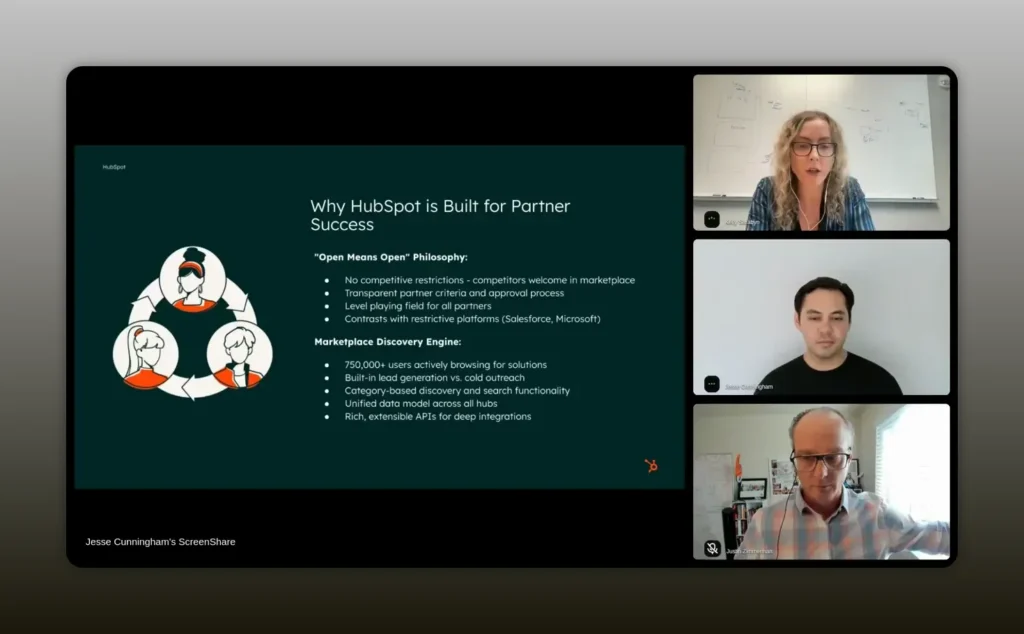
Discoverability is both art and science. HubSpot’s marketplace is getting smarter about personalization: it surfaces apps based on customer company size, vertical, and usage patterns. That means generic optimization signals still matter, but targeted signals matter even more.
We released a feature where an app partner can see which company domains visited their marketplace listing page, export to CRM, and run campaigns. These are high-intent buyers. – Jesse Cunningham
How to use developer portal lead signals:
- Switch to HubSpot’s new developer platform to capture high-intent actions like request demo or try.
- Export domain-level visitor data into your CRM and enrich it before outreach.
- Differentiate follow-up based on whether the domain is an existing customer, an install candidate, or a prospect.
When you know a HubSpot customer visited your listing, you can treat that interaction like inbound intent rather than cold outreach. That will materially improve conversion rates.
How to work with HubSpot sellers and Solutions Partners
Sellers and Solutions Partners are influential recommending channels. They are not simply targets for marketing—that’s a mistake. Think of them as a critical audience whose goals you must help accomplish.
Think of the sales team as another target audience. Build trust and show how your product helps them hit their KPIs. – Kelly Sarabyn
Effective tactics to engage internal HubSpot teams and Solutions Partners:
- Build a one-sheet for sellers that clearly lays out what HubSpot does versus what your app does, the ideal customer profile, and customer evidence of outcomes.
- Provide enablement assets such as short demo videos, objection-handling guides, and one-pagers that sellers can forward to prospects.
- Create champion programs—identify a few reps or partners and help them win deals. Use those wins as repeatable case studies.
- Be a helper, not a spammer. Avoid mass blasting sellers with every feature update. Lead with value and context.
Marketing plays that actually convert HubSpot customers
High-quality content and targeted campaigns matter more than broad programs. The marketplace visitor is a high-intent lead, so your messaging must reflect the specific problem they’re trying to solve within HubSpot.
If they visited your listing page, they expressed intent. Personalize outreach explaining the joint value prop with HubSpot. – Jesse Cunningham
High-impact plays to run:
- Better-together landing pages that explicitly show HubSpot workflows and the added value of your app.
- HubSpot-focused nurture tracks that guide a visitor from install to activation using product-specific triggers.
- Joint webinars and demos targeted at vertical audiences and co-branded with HubSpot messaging where possible.
- SEO and external content that answers natural search queries like “HubSpot + [your feature]” so prospects find you before they even hit the marketplace.
Content, listing pages, and trust signals
Your listing page is the single most important asset in the ecosystem. It is not a brochure; it is a conversion surface. Keep it accurate, specific, and updated.
Listing pages are your core asset. Be clear about the value you drive and what the integration does. – Kelly Sarabyn
What a high-performing listing page includes:
- Clear headline and value proposition that says who the product is for and what problem it solves in less than one sentence.
- Use cases and outcome-driven bullets instead of vague feature lists.
- Install or trial CTA that aligns with the customer’s intent—if they are seeking demos, offer a demo; if they want to install, make the install seamless.
- Recent case studies and reviews with specific metrics or stories sellers can reference.
- Technical requirements and support paths to reduce friction for adoption.
Measuring impact: leading and lagging metrics
Set measurable goals before you launch. When you run a play, you should know the leading indicators that predict the desired lagging outcomes.
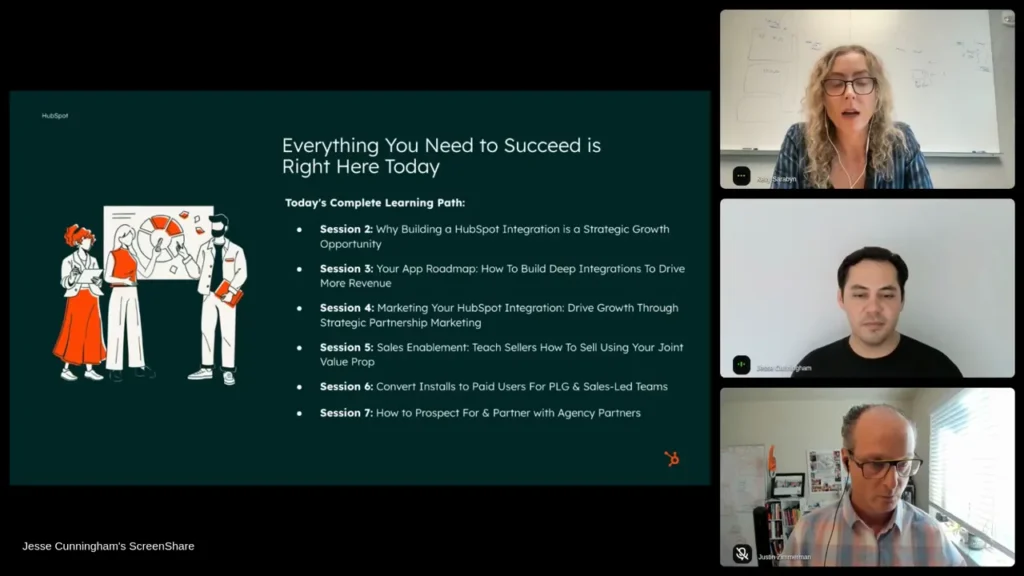
Think through the plays: what are the leading metrics and lagging metrics? Track installs, activation rate, usage, and revenue impact. – Kelly Sarabyn
Suggested metric hierarchy:
- Top funnel: marketplace listing views, demo requests, domain-level intent exports.
- Activation: installs, first key action within 7 days, connected workflows.
- Adoption: weekly active users, features used, integrations maintained.
- Retention and revenue: churn rate, net dollar retention, co-sell influenced deals closed.
Example targets to set in your first year:
- Grow marketplace listing views month over month by 20 percent.
- Convert 5-10 percent of listing visitors to demo or install in the first six months.
- Achieve a 60 percent activation rate within 30 days of install for the first cohort.
- Demonstrate measurable revenue impact from HubSpot-originated leads within 12 months.
Timing and first-mover advantage
Waiting to build can cost you more than development resources. Early entrants establish credibility, seller relationships, and feature depth that are hard to replicate.
One risk of waiting is someone else comes in first with a similar product. There’s a first-mover advantage. – Kelly Sarabyn
Why time matters:
- Relationship window: sellers and solutions partners have limited attention. Early integrations that solve their problems become recommended tools.
- Iteration lead: ongoing iterations improve the customer experience; the longer you iterate, the deeper your integration becomes.
- SEO and content momentum: being early in a niche lets you capture organic search and backlinks that later entrants must fight for.
12-month roadmap and realistic outcomes
If you commit to the full set of activities—product investment, content, seller enablement, and measurement—you should expect measurable business impact within 12 months.
Apply the plays across the board and help your business grow. Measure by customer acquisition and deeper usage among shared customers. – Jesse Cunningham
Quarterly milestones you can target:
- Q1: Launch a minimum viable integration, publish a high-quality listing page, and capture initial marketplace traffic.
- Q2: Optimize onboarding and activation flows, begin targeted outreach to HubSpot customers who viewed your listing, and start seller enablement with a small number of champions.
- Q3: Expand integrations to deeper extensibility points, publish case studies, and run joint webinars with partners or HubSpot reps.
- Q4: Show revenue impact from HubSpot-originated leads, improve retention metrics, and formalize a go-to-market plan for scale.
Reasonable expectations after 12 months:
- Increased inbound leads from the marketplace and external SEO.
- Higher trial-to-paid conversion for HubSpot-connected prospects.
- Improved retention and usage by existing customers thanks to integrated workflows.
Operational checklist to launch and scale
Use this checklist as your tactical handbook during the first 12 months. It ensures you cover product, marketing, sales enablement, and measurement.
- Define the ideal customer profile for your HubSpot integration.
- Scope a focused first-use case and design a frictionless install and activation flow.
- Build robust logging, monitoring, and automated recovery for your connector.
- Create a marketplace listing with clear value props, screenshots, and up-to-date documentation.
- Set up developer portal to capture listing visitors and configure CRM exports for intent data.
- Prepare seller one-sheet, demo video, and objection-handling guide.
- Plan a content calendar targeting HubSpot-specific queries and “better together” messaging.
- Engage with a few HubSpot reps or Solutions Partners and document early wins.
- Define KPIs and dashboards for installs, activation, adoption, and revenue influence.
- Iterate the integration based on support tickets, feature requests, and usage data.
Common mistakes to avoid
You can save time and goodwill by avoiding these frequent missteps:
- Publishing an outdated listing page that misleads customers.
- Launching a superficial connector with no plan for iteration and maintenance.
- Spamming sellers or partners with generic outreach instead of building relationships.
- Ignoring the developer portal intent data and failing to follow up with targeted campaigns.
- Thinking a one-off campaign or webinar is a substitute for ongoing investment.
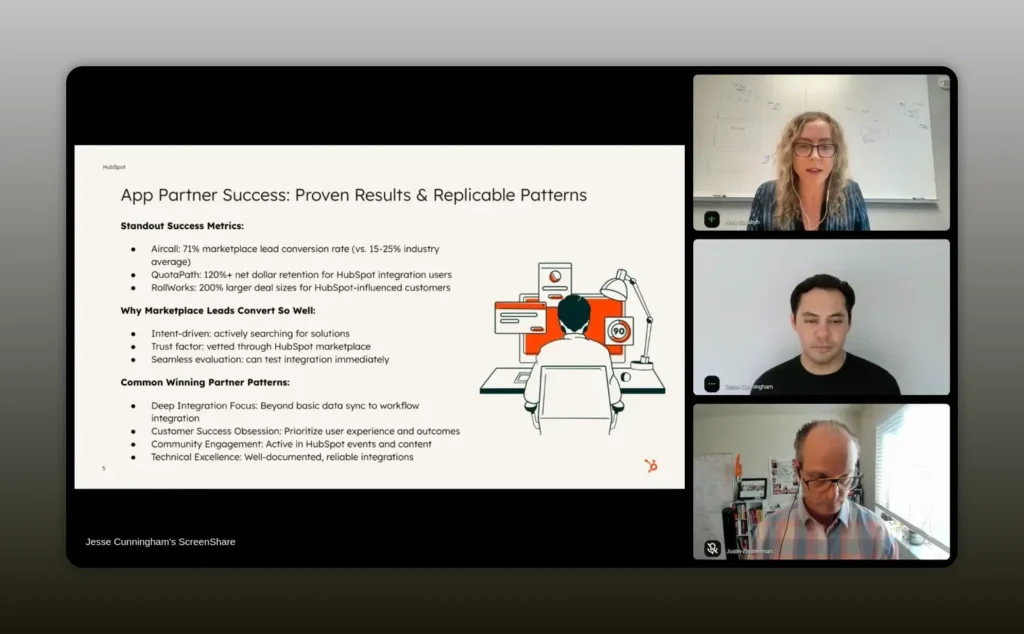
Many companies make an investment up front, then it fizzles out. You need a strategic plan for sustained investment. – Kelly Sarabyn
Resources and next steps
To move from planning to impact, prioritize three activities this month:
- Complete the scoped MVP for one high-value HubSpot use case and publish a clean listing page.
- Switch to the new developer platform to capture intent signals and set up CRM exports.
- Identify one HubSpot rep or Solutions Partner champion and run a pilot to validate the joint value proposition.
FAQs
How big is the HubSpot ecosystem and is it worth my investment?
HubSpot has hundreds of thousands of paying customers and hundreds of thousands more active users. Analysts estimate the ecosystem opportunity will grow into the tens of billions over the next several years. If your target customers overlap with HubSpot users, the platform offers meaningful discovery and revenue opportunities, especially when you invest beyond a shallow connector and into deeper workflows and seller enablement.
What level of integration depth do customers prefer?
Customers prefer integrations that reduce friction and solve real workflow problems—two-way sync, embedded UI where applicable, automated triggers, and clear status reporting. Depth matters because it increases adoption and retention. Evaluate where your app can add contextual value inside HubSpot and prioritize that.
Can I promote my app in the HubSpot marketplace?
At the current time, HubSpot does not offer paid advertising directly within the marketplace. The marketplace team is exploring options and has heard partner interest. In the meantime, focus on organic discoverability through listing optimization, content marketing, and targeted outreach to HubSpot customers who visit your listing through developer portal intent exports.
How should I engage HubSpot sellers and Solutions Partners?
Treat them as a target audience. Provide enablement assets, one-sheets, and short demo videos that clearly communicate the joint value prop. Build relationships slowly—start with a pilot that helps a rep win a deal, document the outcome, and then scale through the network of champions.
What metrics should I track to know if my HubSpot strategy is working?
Track a hierarchy of metrics: marketplace listing views and demo requests (top funnel), installs and activation rates (activation), weekly active users and feature usage (adoption), and churn, NDR, and MRR attributable to HubSpot-originated leads (business impact). Use leading indicators to iterate quickly and lagging indicators to measure long-term ROI.
Conclusion
The opportunity within the HubSpot ecosystem is substantial, but success requires more than a one-off integration. It requires product discipline, thoughtful go-to-market, measurement, and relationships. Focus on one high-impact user journey, build depth into that integration, optimize your listing and follow-up using the developer portal intent signals, and cultivate champions in the field and partner organizations. If you make these investments and iterate methodically, your HubSpot integration can become a durable channel for discovery, sales acceleration, and retention—driving meaningful growth for your product.