1,000 Overlaps to 100 Deals: The Claude Co-Sell Playbook For EMEA Partner Leaders
Expert advice from Russell Bradley Cook (Product Partnerships, HubSpot).
Snapshot
Partnership teams are surrounded by opportunity signals, CRM records, ecosystem overlaps, partner requests, events, intent platforms, and product usage data. Without a way to connect and prioritize those signals, a list of 1,000 overlapping accounts becomes another noisy spreadsheet that sales ignores.
The big opportunity is to turn partner data into credible, sales-ready plays. When you combine clean CRM information, ecosystem overlap data, enrichment, intent, and AI-assisted research, you can identify the smaller set of deals that matter to both companies. You protect sales time, create better partner experiences, and build a repeatable co-selling motion that drives revenue rather than activity.
Keep reading to see how Justin and Russell can help you prioritize high-value deals, earn sales trust, and build scalable co-selling motions.
“The real issue is usually not AI. It is the quality and usefulness of the data underneath it.” -Russell
Table of Contents
- Why a thousand overlaps are not a thousand opportunities
- Start with your CRM, even when it is messy
- Treat overlap data as a Venn diagram, not a grid
- Prioritize deals by combined business context
- Use AI to validate and prepare the play
- Enrich the accounts and the people behind them
- Layer in intent data before you ask sales to act
- Create go-to-market plays by partner type
- Earn trust before asking for partner data
- Recommended tools
- Conclusion
Why a thousand overlaps are not a thousand opportunities
Partner teams often celebrate overlap volume too quickly. A large account overlap can look like proof of a massive co-selling opportunity, but it is not. It is simply an indication that two companies know, sell to, or work with some of the same accounts.
That distinction is important. An account may appear in an ecosystem data platform because it is an existing customer, an open opportunity, a former opportunity, a partner customer, or some combination of all of those. If you pass a huge unfiltered overlap list to sales, you are effectively asking reps to sort out your data problem for you. They will try a few names, find weak signals, and decide partner-sourced opportunities are not worth their time.
Russell’s operating principle is simple: do not waste salespeople’s time. Your job is not to create more leads. Your job is to identify the accounts where a joint motion has a credible reason to exist now.
That is how you move from 1,000 overlaps to 100 deals worth coordinated effort. It is also how you earn a seat at the revenue table. For a related framework on using ecosystem signals and AI to qualify pipeline, explore how AI turns Crossbeam data into qualified pipeline.
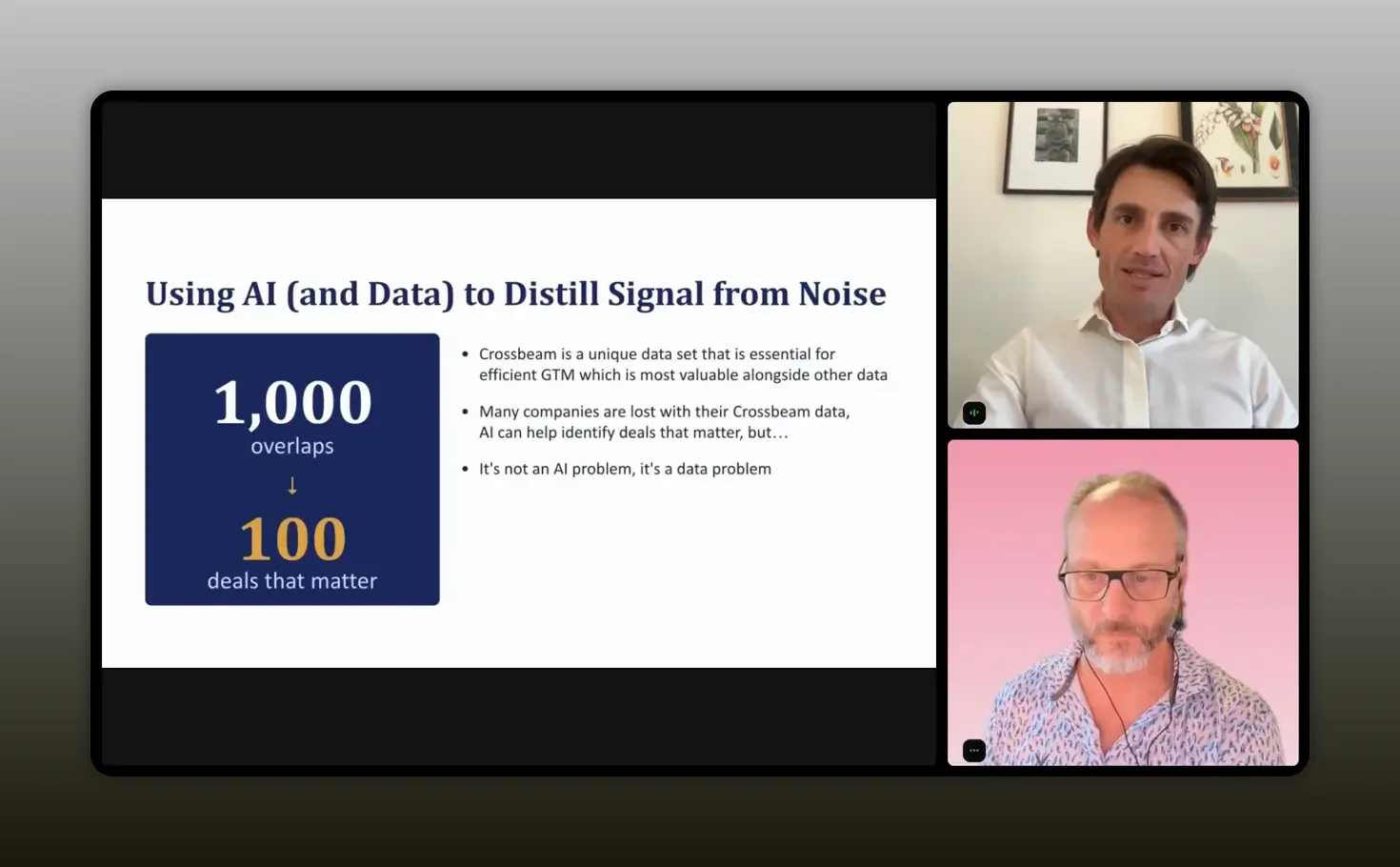
“Your focus should not be the size of the overlap. It should be the deals that move the needle for both companies.” -Russell
Start with your CRM, even when it is messy
Whether you use HubSpot or Salesforce, your CRM is the starting point for a serious co-selling motion. It is where deal stage, account ownership, revenue, activity, geography, vertical, segment, products, and account history should come together.
The trouble is that almost no CRM is clean. There is duplicate data, stale deal records, missing fields, inconsistent account naming, out-of-date contact locations, and sellers carrying opportunities that have gone cold. That is normal. Do not be embarrassed by it. Russell has never encountered a perfectly clean CRM.
What matters is how you respond. Partnership teams regularly ask RevOps and sales leaders to improve data quality, only to be treated as another team with another request. A better approach is to show up with a practical solution.
- Identify the fields that materially improve partner targeting.
- Secure a modest data-enrichment budget from executive leadership.
- Bring the budget and the business case to RevOps and sales.
- Position enrichment as a revenue-wide improvement, not a partnership-only project.
That changes the conversation. Instead of saying, “Please fix the CRM because partnerships need it,” you can say, “We can validate account records, improve segmentation, support field campaigns, target the ICP more effectively, and save reps time.” That is a much easier meeting to win.
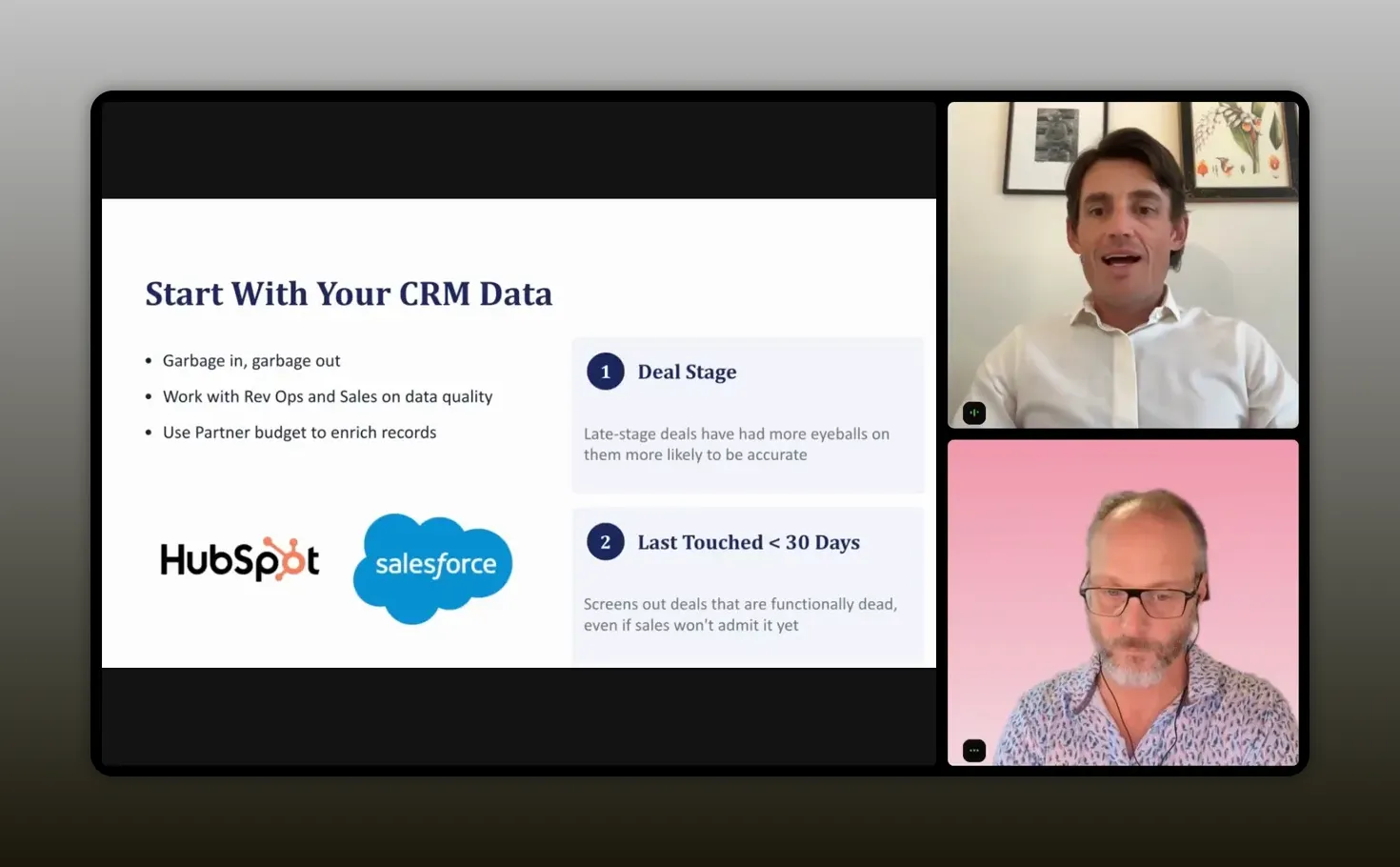
“If you bring a problem and the budget to solve it, RevOps is much more likely to engage.” -Russell
Use recency and stage as practical quality filters
You do not need to solve every historical data issue before running a useful play. Start by narrowing the data to records with the best chance of being accurate and actionable.
- Late-stage deals: More people have reviewed them, so the account, deal, and contact details are more likely to be reliable.
- Recently touched deals: Use activity within the last 30 days as a signal that the opportunity is active enough to deserve attention.
- High-value customer relationships: Existing revenue can signal a company’s capacity to invest, even when the open deal itself is small.
These filters also expose dead deals that remain in the CRM because nobody wants to remove pipeline. You do not need to challenge sales publicly. Just focus your joint effort on deals with genuine movement.
Treat overlap data as a Venn diagram, not a grid
One of the most useful reframes in this playbook is to stop treating an overlap grid as two clean, separate populations. It is not that simple.
You may see one list labeled customers and another labeled open opportunities. Yet the same account can show up in both places. An existing customer can have an open expansion deal. If you do not account for that, your net-new pipeline analysis gets inflated and your sales play becomes confused.
Think about the data as a Venn diagram:
- One circle contains existing customers.
- One circle contains open opportunities.
- The middle contains customer accounts with active opportunities.
The middle is not bad data. It simply needs a different owner and a different motion. It may be a customer success or expansion play rather than a net-new sales play. If the customer success team is not measured on the outcome, make sure you can connect the work to new revenue, renewal protection, expansion, or another agreed business result.
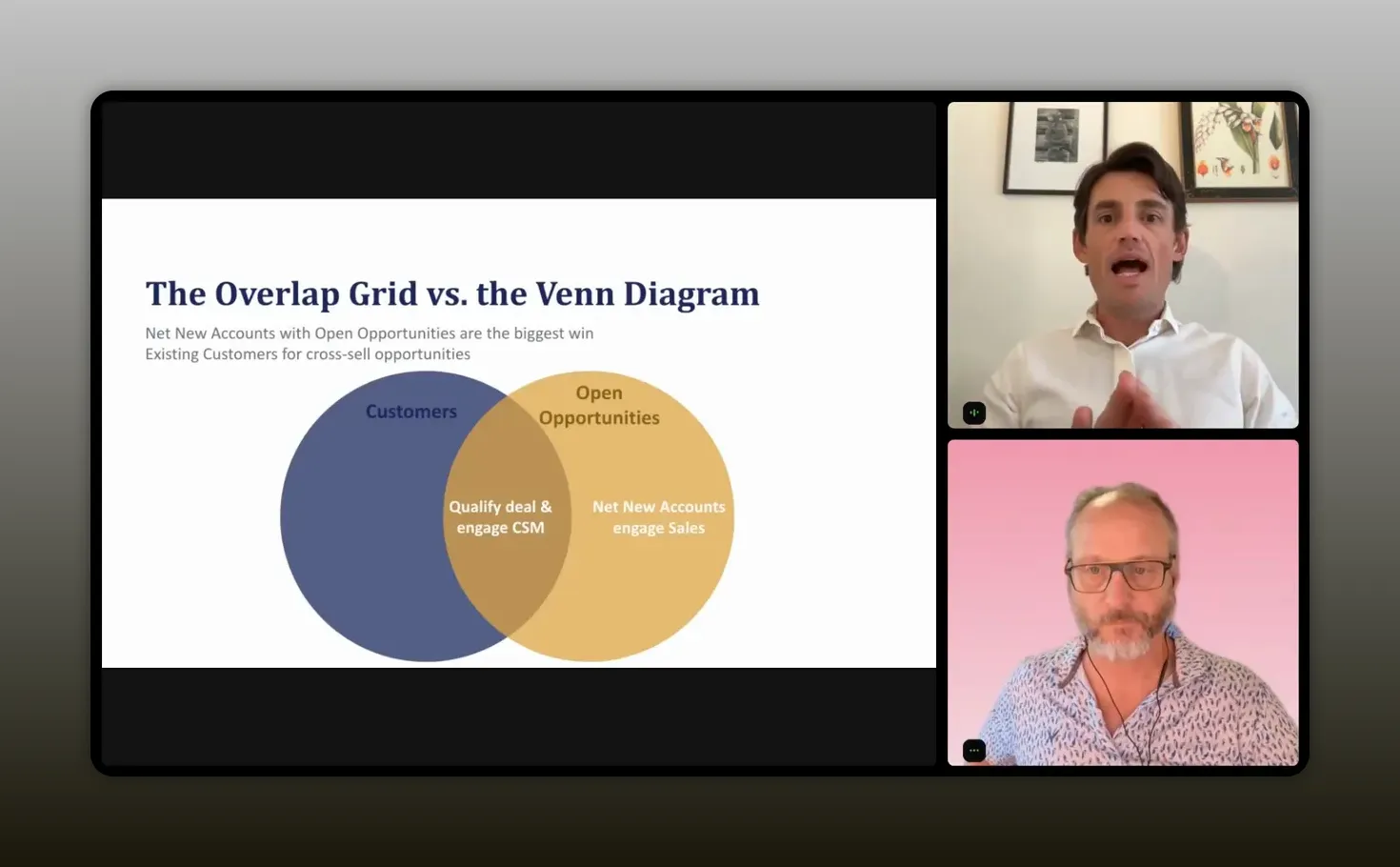
“Do not throw out customer overlap, but recognize that it is often a customer success play rather than a net-new sales play.” -Russell
Once you separate these categories, you can ask better questions. Which accounts are net new? Which are existing customers at risk? Which have an expansion opportunity? Which partner has a meaningful role in the solution? Those questions are much more valuable than asking how many accounts overlap.
Prioritize deals by combined business context
A good co-selling report does not need to be complicated. It needs enough context to answer one question: why should a seller and partner spend time on this account right now?
Russell recommends combining customer, account, opportunity, and partner context. AI can then help interpret the messy parts, especially unstructured fields such as deal names.
Customer and account information
- Current recurring revenue or current customer value
- Products already purchased or deployed
- Accurate geography, vertical, and segment
- Company size and account ownership
- Partner relationship and overlap type
Deal information
- Deal stage and last activity date
- Deal size
- Deal name and free-text notes
- Relevant product keywords
- Whether the deal is net new, renewal, or expansion
Deal names are particularly useful because they often contain the clues that structured CRM fields miss. A deal labeled with a specific product, service line, or business initiative can reveal when a partner is relevant. If your partner is especially strong in a product category, AI can scan deal names and notes to identify where that fit exists.
Do not discard a smaller open deal automatically. Russell shared an example of a very small open opportunity that was surfaced because the customer was already worth about $30,000 in recurring revenue. The partner helped resolve a problem, supported a major product update, and protected a renewal that was fully at risk. The value was not in the small deal amount. The value was in the broader customer relationship.
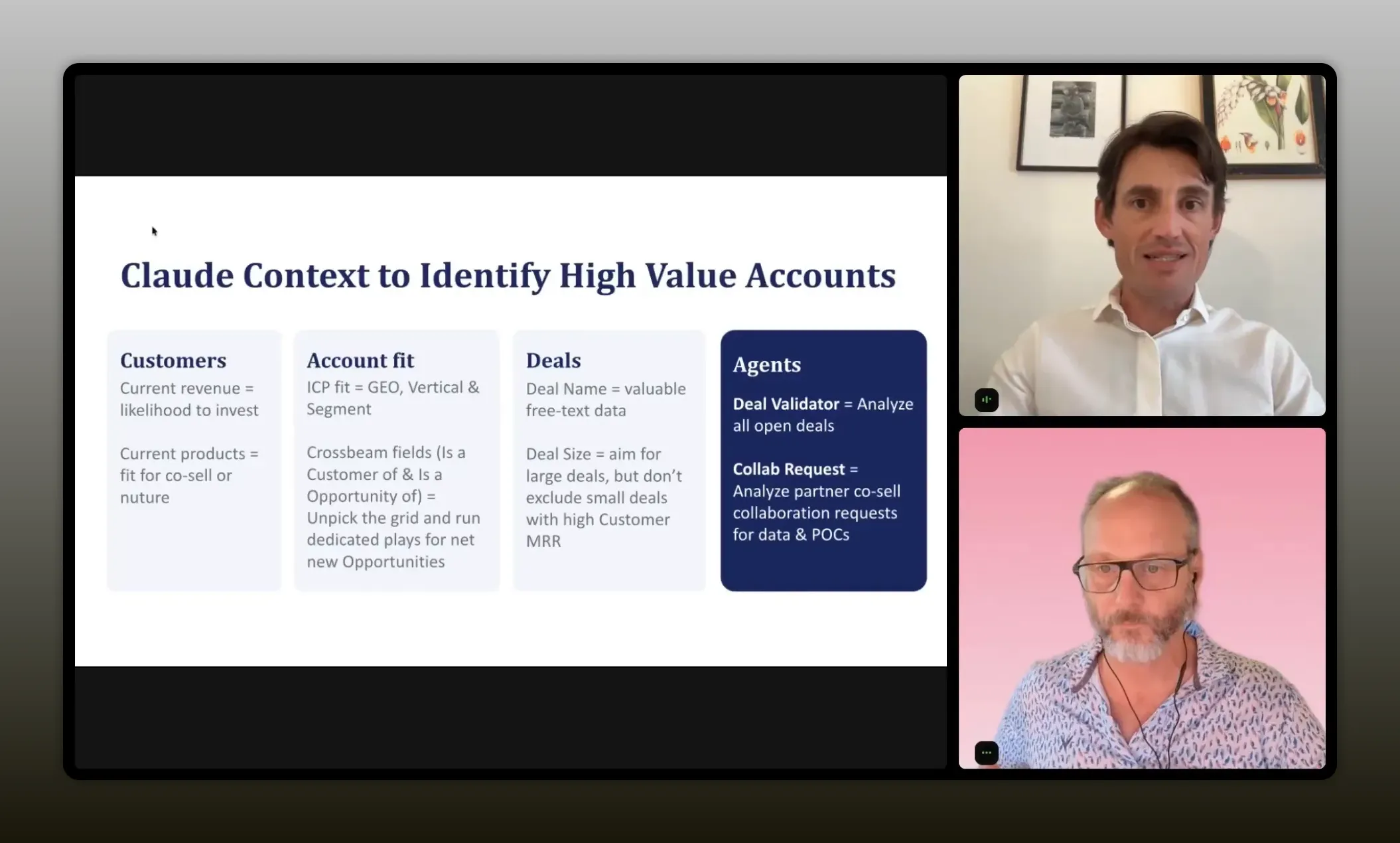
“Aim for larger deals, but do not exclude small opportunities attached to high-value customers.” -Russell
This is the kind of pattern a manual spreadsheet review can miss. A proper priority model sees the account as a complete commercial relationship, not as one isolated deal value.
Use AI to validate and prepare the play
AI is useful here because it can process a large amount of unstructured information quickly. It can review deal names, notes, account histories, partner context, and other fields to identify patterns that would be time-consuming to inspect manually.
But AI should be treated as an analyst, not a magic wand. It cannot correct a broken process or compensate for unreliable source data. Your CRM fields, overlap definitions, and enrichment inputs still determine the quality of the output.
Two useful agent workflows are:
- Deal validation agent: Review a priority list and flag whether each account appears active, partner-relevant, correctly categorized, and worth human follow-up.
- Collaboration request agent: Gather the available account context when a partner asks for help, reducing the time you spend searching across systems.
Use these workflows to create concise account briefs for sales and partners. A useful brief might include the account owner, current stage, last activity, products involved, customer value, partner relevance, intent signals, and recommended next step. You still need human judgment, but you arrive prepared.
This approach aligns with the broader idea that AI should strengthen disciplined workflows rather than replace them. The practical playbook for partnerships, data, and AI offers additional guidance on using AI with clear data strategy and human oversight.
Enrich the accounts and the people behind them
CRM and ecosystem data get stronger when you layer in enrichment. Tools such as Clay and Apollo can help fill gaps in firmographic and contact information. The point is not to collect every possible field. The point is to capture the fields that improve a specific go-to-market motion.
For account prioritization, useful enrichment commonly includes company size, geography, vertical, and technology context. For outreach and events, enrich contact job title, persona, and actual contact location.
That last point is painfully practical. If your CRM stores only company headquarters, you can easily invite someone in Texas to a San Francisco event. It wastes your budget, creates a poor brand experience, and signals that you did not take the time to understand who you were contacting.
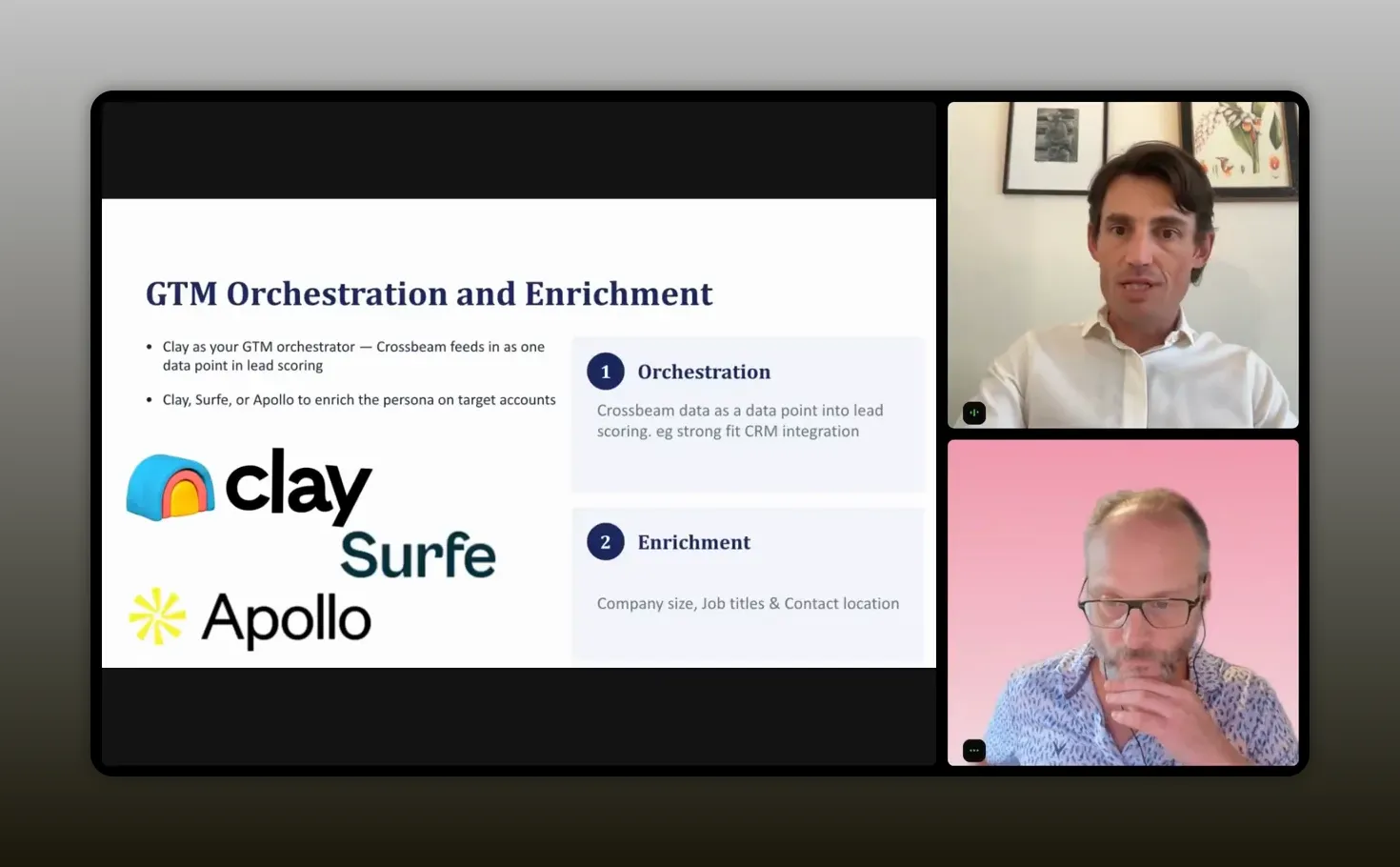
“The right company is not enough. You need the right persona in the right location.” -Russell
Use enrichment to improve lead routing
Enrichment can also make your partner-sourced leads more effective. If an account uses a particular platform or has a known technology stack, route it to a rep who understands that environment. Then alert the relevant partner that work is underway.
That produces a far better experience than randomly assigning an account and hoping the receiving rep can explain the joint value proposition. Partner data should sharpen relevance, not create extra coordination work.
Layer in intent data before you ask sales to act
Not every overlapping account is in market. That is why intent data is so valuable. It helps you identify which accounts are researching relevant solutions, engaging with content, showing product interest, or signaling an active buying cycle.
Russell’s recommendation is to combine intent data with CRM and ecosystem overlaps rather than treating any one dataset as complete. A priority account becomes much more compelling when you can say:
- The account matches the ICP.
- It overlaps with a strategic partner.
- It has an active or recently touched opportunity.
- It uses a relevant technology stack.
- It is showing current intent or engagement.
Intent can come from sources such as product analytics, content downloads, website behavior, conversational intelligence, review-site activity, or dedicated intent platforms. Tools mentioned in this category include G2, Demandbase, and 6sense.
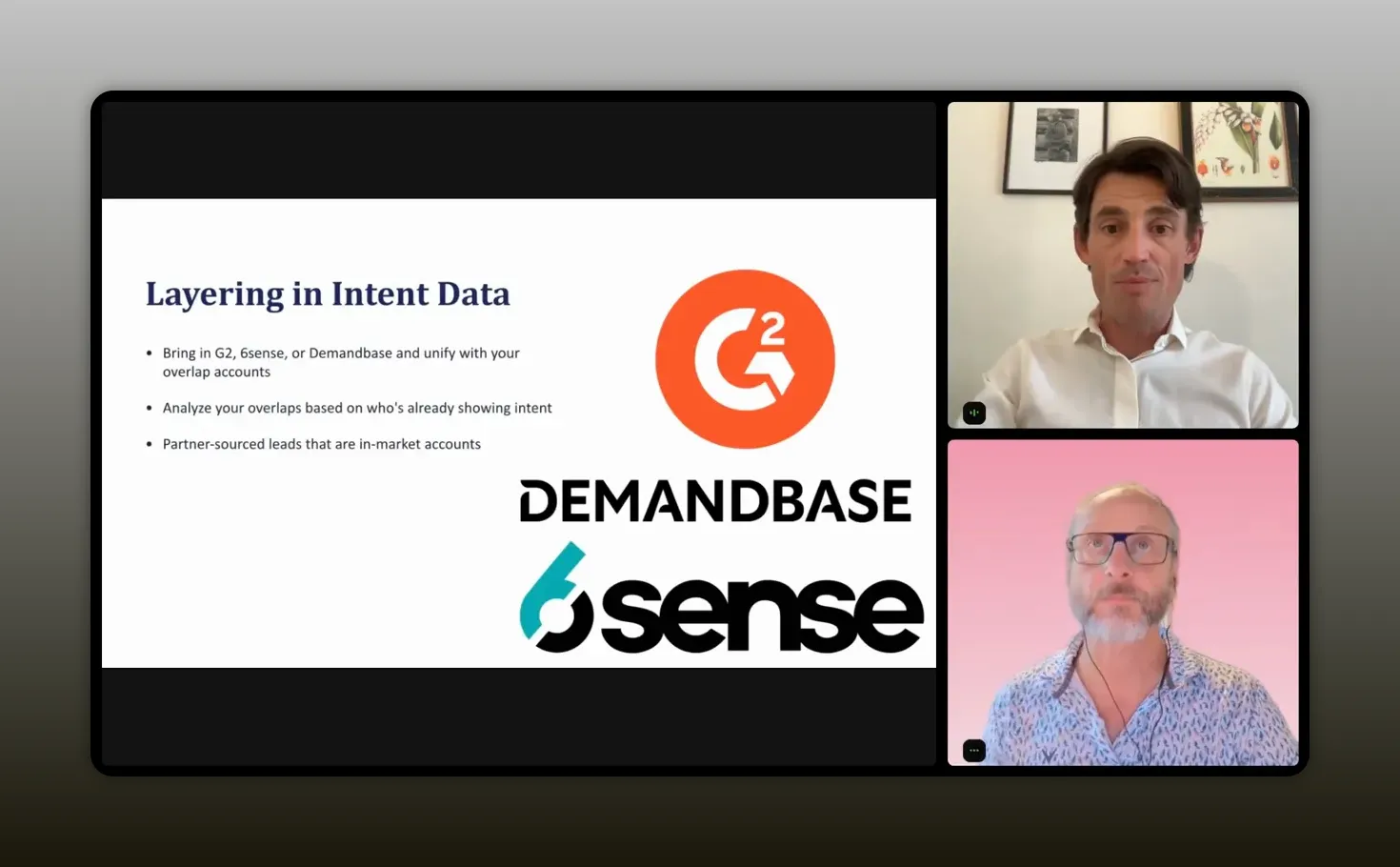
“An overlap becomes powerful when you can show that the account is in market and has a reason to engage now.” -Russell
Intent data usually costs more than basic enrichment, so use it deliberately. Focus it on your most strategic segments, key partner motions, or highest-potential accounts. The objective is not to generate a longer prospecting list. It is to create partner-qualified leads that sales trusts.
Create go-to-market plays by partner type
The best use of partner data depends on the partner model. Russell sees different approaches for solution partners and technology partners.
Existing-deal plays with solution partners
You do not always need a sophisticated ecosystem platform to get started with a solution partner. Ask for a small customer list, perhaps five to ten accounts, and test a focused motion. A spreadsheet can be enough.
Make it easy for the partner to participate. Avoid excessive deal-registration friction. Create clear rules for commissions and net-new opportunities. Make time with sellers easy to schedule. Ensure your own reps are compensated fairly for the work.
Starting small lets you prove value before requesting more sensitive data. This is especially important with global systems integrators and large agencies, where customer data may be siloed by country or business unit. A France team may have very different systems and permissions than a UK team.
Expansion plays with technology partners
For geographic expansion, vertical expansion, or onboarding net-new technology partners, overlap data becomes much more valuable. It helps you identify where both companies have traction, which segments have shared demand, and which partner relationships are worth prioritizing.
Managing this across many partners with CSV files does not scale. A shared ecosystem-data approach makes it easier to identify patterns, prioritize territories, and find repeatable plays.
Build an active solution partner network
One of the strongest flywheel plays is to create an “active solution partners” audience in your CRM. Maintain that list carefully, then share it with complementary technology partners that operate in the same stack.
This enables a solution partner to bring a fuller implementation story to customers. Rather than selling one tool in isolation, the agency can package a connected solution with the technologies and services needed to make it work.
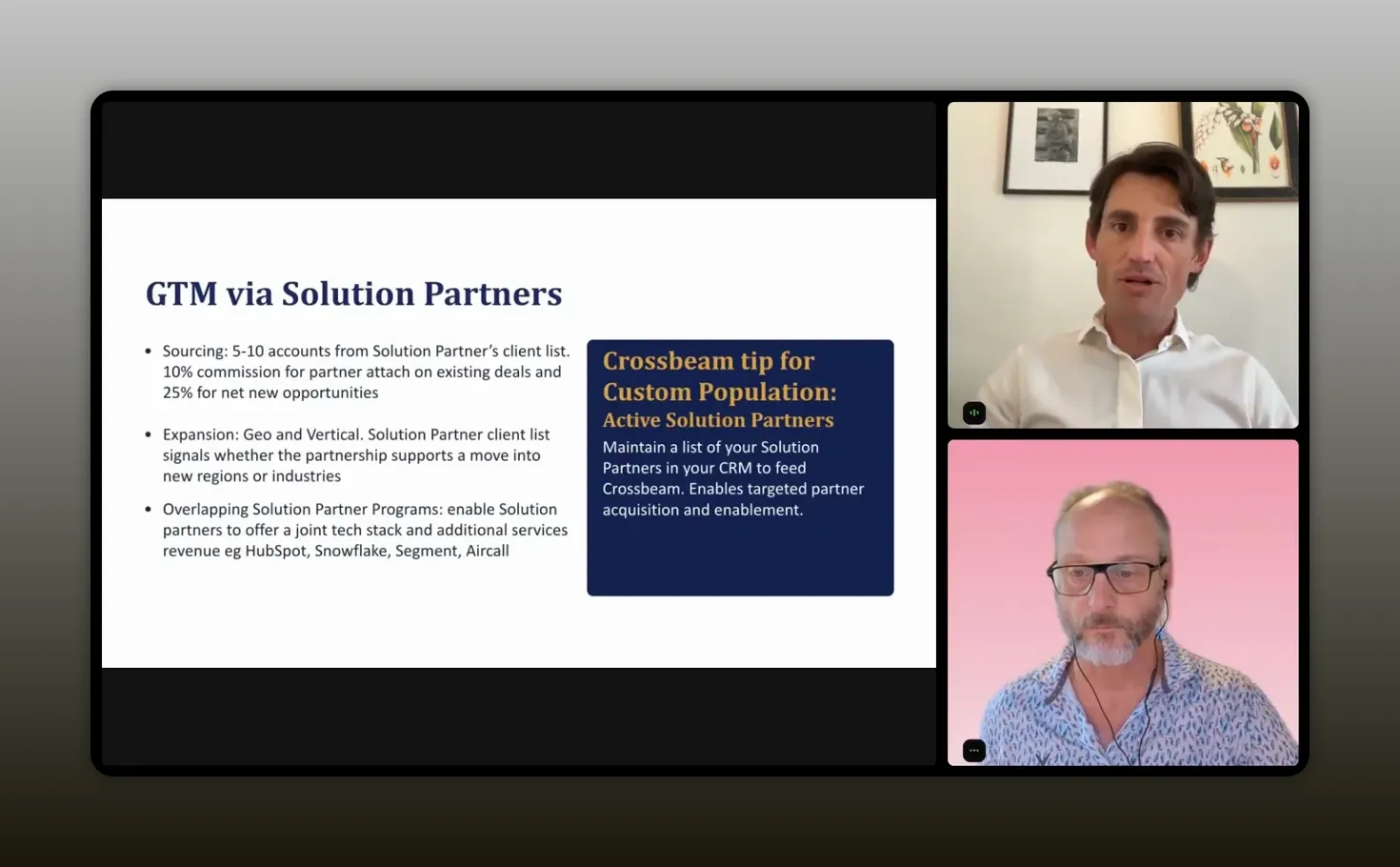
“The strongest joint motion helps a solution partner show up with the whole stack, not just one product.” -Russell
Examples discussed include combinations involving HubSpot, Snowflake, Segment, and Aircall. When solution partners understand how related technologies work together, they can implement faster and offer better services. Customers benefit because they are not paying an agency to learn a new tool from scratch.
If agencies are central to your growth model, this practical guide to partnering with agencies can help you design the right model, joint offer, enablement, and operating rhythm.
Earn trust before asking for partner data
Customer lists are sensitive. Agencies and systems integrators may worry about account protection, commission complexity, sales conflict, or simply losing control of their customer relationships. You do not solve that concern with a data request alone.
Money helps, but it is not the complete answer. Commission can motivate participation, particularly when you make the commercial terms straightforward. Yet the bigger unlock is often the services opportunity that sits around the technology.
Partners want to know whether they can package, price, and sell additional services. In joint events, Russell found that agencies were especially interested in concrete service packages and the pricing behind them. They want evidence that a peer has created a profitable model, not a vague promise that a partnership could be valuable.
Build that confidence through:
- Region-specific and product-specific case studies
- Clear, simple commission structures
- Low-friction deal collaboration
- Joint service packages with visible commercial upside
- Small pilots with five to ten accounts
- Partner marketing and field events that do not require heavy sales involvement
Across markets, the desire not to be first is fairly universal. Partners want social proof. Show that comparable firms are offering a service, succeeding with it, and earning revenue from it. That helps the partnership feel less like a risk and more like a workable business model.
Recommended tools
Your stack should support a focused workflow, not create more dashboards. The tools below are useful when connected to a clear data strategy.
- CRM: HubSpot or Salesforce for account, deal, ownership, and activity data.
- Ecosystem data: Crossbeam for identifying and analyzing partner account overlaps.
- Enrichment and orchestration: Clay, Apollo, and Surfe for account, contact, and workflow enrichment.
- Intent: G2, Demandbase, 6sense, product analytics, and content engagement signals.
- Conversation intelligence: Call data and notes that reveal active pain points, technologies, and buying context.
- AI agents: Deal-validation and collaboration-request workflows that summarize context and identify priority accounts.
Start with the data you already have. Clean the fields that matter. Add enrichment where it unlocks targeting. Then layer intent and AI into an operating motion that sales and partners can actually use.
Conclusion
Your path from a thousand overlaps to a hundred credible deals is not more data for its own sake. It is better judgment applied to connected data. Clean the CRM enough to trust it, separate customer and opportunity overlap, enrich the people and accounts that matter, add current intent, and use AI to validate rather than blindly automate. If you consistently bring sales a short list of relevant, active, partner-qualified opportunities, you will build trust, create repeatable revenue plays, and make partnership work easier to explain at every level of the business.
FAQs
What is the best first step for turning partner overlaps into pipeline?
Start with your CRM data. Filter for late-stage or recently touched opportunities, validate account ownership and deal context, then compare that focused list with partner overlap data.
Why is CRM data quality so important for co-selling?
Partner data becomes useful only when it is connected to reliable deal, account, revenue, and activity information. Poor CRM data creates irrelevant lists, weak outreach, and wasted sales effort.
Should you prioritize large deals only?
No. Larger deals often deserve attention, but a small opportunity can be strategically important when it is attached to a high-value customer, a renewal risk, or a meaningful expansion opportunity.
How should you use AI in a co-selling workflow?
Use AI to review unstructured deal data, validate account relevance, summarize partner context, and prepare collaboration briefs. Keep human review in the process and do not expect AI to fix weak source data.
How can you get agencies to share customer data?
Begin with a small pilot, make commercial terms simple, reduce deal-registration friction, protect partner relationships, and show region-specific proof that the joint solution creates profitable services revenue.